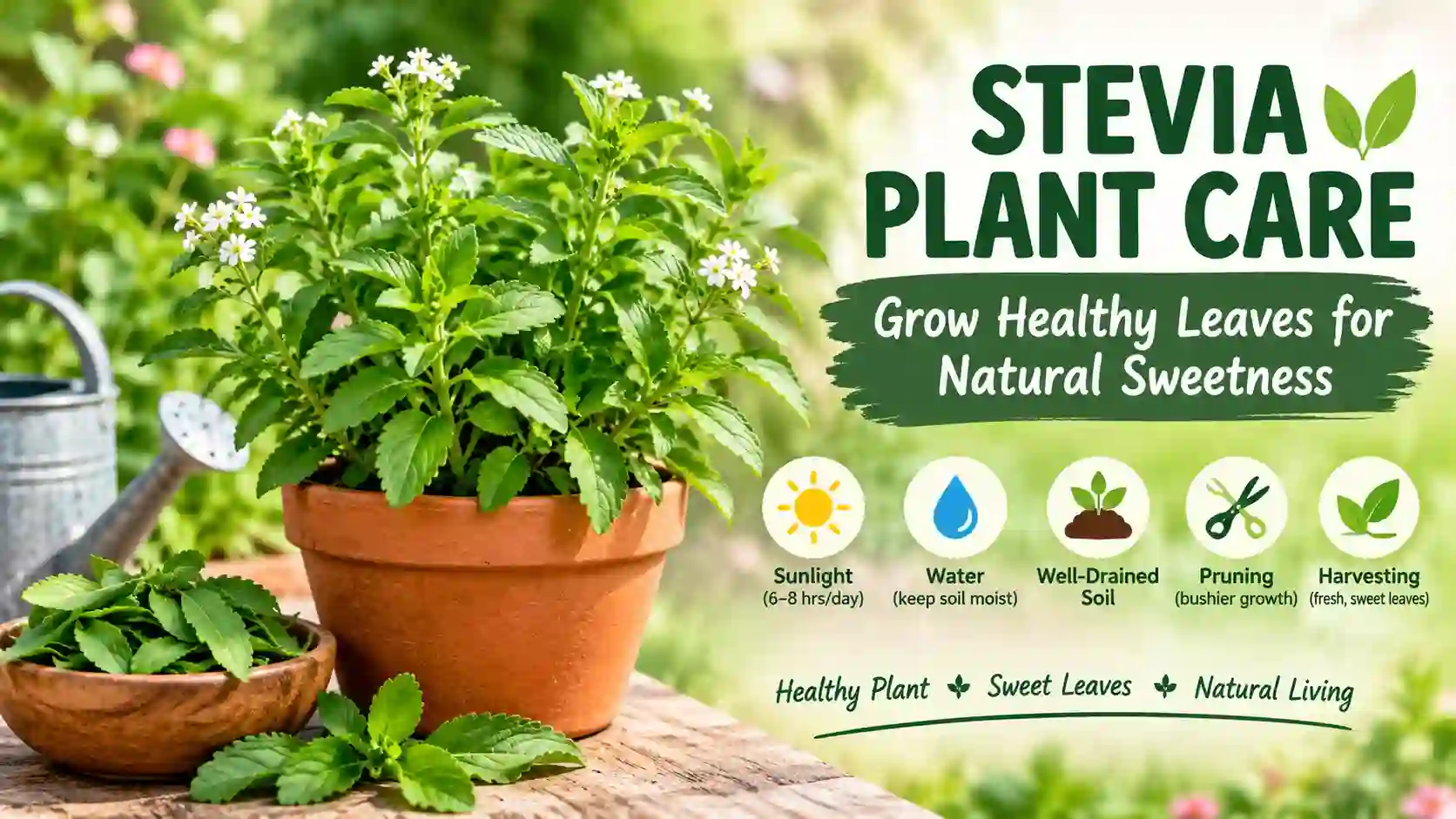
Growing your own stevia plant gives you a fresh supply of naturally sweet leaves for home use. Unlike ordinary garden herbs, stevia (Stevia rebaudiana) is valued for the sweet compounds in its leaves, which can be used fresh or dried.
However, getting a healthy plant with plenty of leaves requires the right balance of sunlight, water, soil, and pruning. Too little light can produce weak stems, while waterlogged soil may damage the roots. Allowing the plant to flower too early can also change its growth pattern and reduce the supply of tender leaves.
This guide explains how to grow stevia in pots or garden beds, harvest and dry its leaves, encourage bushier growth, and solve common problems. Whether you’re starting with a nursery plant or growing stevia from seed, you’ll learn how to keep it productive throughout the growing season.
Quick Answer:
Stevia plant care requires at least 6–8 hours of sunlight, warm temperatures, consistently moist but well-drained soil, and regular harvesting. Grow Stevia rebaudiana in a sunny garden bed or container with drainage holes. Water when the soil surface begins to dry, feed lightly during active growth, and pinch stem tips to encourage bushier growth. Protect the plant from frost, as stevia is a tender perennial that grows best in warm conditions.
What Is a Stevia Plant?
Stevia (Stevia rebaudiana) is a leafy herb native to parts of South America, particularly Paraguay and Brazil. It belongs to the sunflower family, Asteraceae, and is grown for its naturally sweet leaves.
The leaves contain steviol glycosides, including stevioside and rebaudioside A, which provide their characteristic sweetness. The plant can grow as a tender perennial in warm climates, although gardeners often grow it as an annual where winters are cold.
Why grow stevia at home?
- Fresh sweet leaves: Harvest leaves as needed for homemade herbal preparations and other culinary uses.
- Container-friendly growth: Stevia can grow in pots on sunny balconies, patios, and garden terraces.
- Repeat harvesting: Regularly pinching and harvesting healthy stems encourages branching.
- Useful herb garden addition: It can grow alongside other herbs with similar sunlight and drainage requirements.
- Flexible growing options: Start with seeds, nursery seedlings, or stem cuttings.
Keep in mind that fresh stevia leaves taste different from commercial stevia products. Their sweetness can be accompanied by a noticeable herbal, bitter, or licorice-like aftertaste.
Ideal Growing Conditions for Stevia
Stevia grows best when its basic needs are met consistently. It likes sunshine and warmth but does not thrive in soil that remains waterlogged.
| Growing factor | Recommended conditions |
|---|---|
| Sunlight | About 6–8 hours of sunlight daily |
| Watering | Even moisture without saturated soil |
| Soil | Fertile, loose, well-draining soil |
| Soil pH | Approximately 6.0–7.5 |
| Temperature | Warm conditions, ideally around 65–85°F (18–29°C) |
| Fertilizer | Light to moderate feeding during active growth |
| Pruning | Pinch growing tips to encourage branching |
| Winter care | Protect from frost and prolonged cold |
These are practical starting points, not rigid limits. Hot climates, pot size, local rainfall, and the variety you grow can change the plant’s needs.
How Much Sunlight Does a Stevia Plant Need?
Stevia generally grows best with six to eight hours of sunlight each day. Strong light helps the plant develop sturdy stems and abundant leafy growth.
In mild weather, a sunny garden bed or open patio is usually suitable. In very hot climates, intense afternoon sun can stress container plants, particularly when the roots dry out quickly.
For outdoor stevia plants:
- Choose a sunny location with good airflow.
- Provide morning sun and some afternoon protection during extreme heat.
- Avoid dark corners and heavily shaded garden beds.
- Move container plants gradually when increasing their sun exposure.
For indoor stevia plants:
Place the pot near your brightest suitable window. A grow light can help if natural light is insufficient, particularly during short winter days.
If the stems become long and thin, with large gaps between leaves, the plant may need more light. Brown, crispy patches can indicate sun scorch, heat stress, or inadequate moisture.
Practical tip: When moving a stevia plant from a shaded nursery to full sun, increase its exposure gradually over about a week. This helps reduce the risk of leaf damage.
What Is the Best Soil for Stevia?
Stevia needs soil that retains enough moisture to support leafy growth but drains freely around its roots.
For containers, a quality potting mix amended with perlite or pumice works well. A little mature compost can improve nutrient availability and water retention without making the mix excessively dense.
A practical starting mix is:
- Two parts quality potting mix.
- One part mature compost.
- One part perlite or pumice.
Choose a pot with drainage holes and avoid filling it with heavy garden soil, which can compact in containers.
For garden beds, loosen compacted ground and incorporate organic matter where appropriate. If water regularly collects around the planting area after rain, improve drainage before planting stevia.
Why this matters: Roots need oxygen as well as water. Constantly saturated soil can cause root damage, even when the plant initially looks thirsty or wilted.
What Temperature Does Stevia Prefer?
Stevia is a warm-season herb. It grows actively in mild to warm conditions and can suffer when exposed to frost.
Temperatures around 65–85°F (18–29°C) are a useful target for active growth. The plant may tolerate warmer weather if its roots remain adequately moist and the foliage receives some relief from extreme heat.
If you live in a hot region, check container moisture frequently during summer. In colder regions, bring potted plants indoors before frost or grow new plants each spring.
Stevia can survive as a perennial in suitable climates, but its aboveground growth may decline during unfavorable weather. Its winter performance depends on temperature, drainage, and growing conditions.
How to Water a Stevia Plant Correctly
Stevia prefers consistent moisture, especially during active growth. However, frequent watering without checking the soil can lead to root problems.
A simple watering routine
- Check the soil surface. Feel the upper inch of soil with your finger.
- Assess the moisture. If it still feels damp, wait before watering.
- Water thoroughly. When the surface begins to dry, water evenly around the root zone.
- Allow excess water to drain. Do not leave the pot sitting in collected water.
- Recheck during hot weather. Small containers may dry quickly in direct sun or strong wind.
The goal is to keep the soil evenly moist without making it soggy.
How often should you water stevia?
There is no reliable schedule for every plant. A small pot in hot weather may need water much more frequently than a large container in mild conditions.
Check the soil daily during heat waves, especially if the plant is growing in a terracotta pot. Water less frequently when the weather is cool or growth slows.
Signs of underwatering
- Drooping leaves and soft stems.
- Soil that feels dry below the surface.
- Leaves recovering after thorough watering.
If the plant wilts in dry soil, water it thoroughly and allow excess water to drain. Avoid giving tiny amounts repeatedly, which may not moisten the entire root ball.
Signs of overwatering
- Yellowing leaves despite wet soil.
- Soil that stays saturated for several days.
- Poor growth or soft, damaged roots.
- An unpleasant smell from the potting mix in advanced cases.
If these signs appear, check drainage and inspect the roots if necessary. Do not automatically add more water just because the leaves are drooping.
Image suggestion: Create a three-panel infographic showing a healthy stevia plant, an underwatered plant with drooping leaves, and an overwatered plant with yellow leaves and wet soil.
How to Fertilize Stevia for Healthy Leaf Growth
Stevia benefits from moderate nutrition during its active growing season. The goal is to support steady leaf production without encouraging weak, overly lush growth.
Best fertilizer for stevia
A balanced, complete fertilizer used according to its label is a sensible choice for container-grown stevia. You can also use a suitable organic fertilizer if its nutrient content and application instructions are clear.
Follow these practices:
- Begin feeding once the plant is established and growing actively.
- Apply fertilizer according to the label rather than guessing the dose.
- Avoid excessive nitrogen, which can encourage soft growth.
- Reduce feeding when growth slows in cooler weather.
- Do not fertilize a plant suffering from root rot or severe water stress.
If you use a potting mix that already contains fertilizer, additional feeding may not be necessary immediately after planting.
Does fertilizer make stevia leaves sweeter?
Not necessarily. Fertilizer primarily supports plant growth and nutrient supply. Leaf sweetness and flavor also depend on genetics, growing conditions, maturity, and the composition of the leaf’s steviol glycosides.
Excessive fertilizer is not a dependable way to improve sweetness. Focus on healthy roots, sufficient light, and steady growth instead.
How to Prune Stevia for a Bushier Plant
Pruning is one of the most useful techniques for keeping stevia compact and productive. If the plant grows tall with a single main stem, it may become less convenient to harvest and more likely to flop over.
Pinching the growing tips encourages side shoots to develop, producing a fuller plant with more harvestable stems.
Step-by-step pruning guide
- Wait until the plant is established and has several sets of healthy leaves.
- Identify the growing tip at the end of a stem.
- Pinch or cut just above a healthy pair of leaves.
- Allow the side shoots to grow before pinching again.
- Remove dead, damaged, or diseased stems as needed.
Use clean scissors when cutting stems. Avoid removing too much foliage at one time, because the remaining leaves help the plant continue growing.
When should you prune stevia?
Light pinching can begin once the young plant is established. Continue shaping it during spring and summer while it is actively growing.
If flower buds begin to form, you can pinch them back if your goal is continued leafy growth. However, flowering is a normal part of the plant’s life cycle, and it does not automatically mean the plant is unhealthy.
Expert tip: Combine pruning with harvesting. Taking small amounts from several healthy stems encourages a balanced shape and avoids stripping one branch of all its leaves.
How to Grow Stevia in Pots
Growing stevia in pots is a practical option if you have a balcony, patio, or limited garden space. Containers also make it easier to protect the plant from cold weather.
Choosing the right pot
Choose a container with drainage holes and enough space for the roots to develop. A pot around 10–12 inches wide is a reasonable starting point for one established plant, although larger plants may need more room.
A pot that is too small dries out quickly and restricts root growth. An excessively large pot filled with moisture-retentive soil can remain wet longer than expected.
Planting stevia in a container
- Fill the pot with a loose, well-draining potting mix.
- Place the seedling at approximately the same depth it was growing previously.
- Firm the soil gently around the roots.
- Water thoroughly and let the excess drain.
- Place the pot in a bright location.
- Monitor soil moisture while the plant establishes.
Avoid burying the stem deeply or packing the soil tightly. Both can interfere with healthy growth.
Where should you place a potted stevia plant?
Choose a location with plenty of sunlight and convenient access for watering and harvesting. In hot weather, a spot with morning sun and afternoon shade may be better than an exposed surface that becomes extremely hot.
If you grow stevia indoors, ensure the window provides enough light to prevent weak, stretched growth.
How to Grow Stevia from Seeds or Cuttings
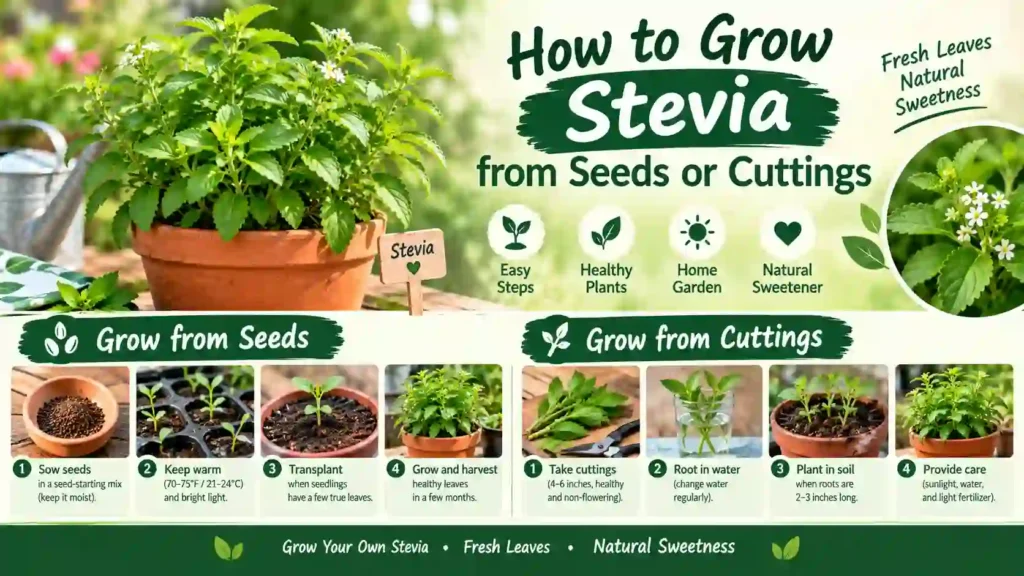
Stevia can be propagated from seed or stem cuttings. Starting with a nursery plant is often easier for beginners, but propagation can be useful when you want several plants.
Growing stevia from seeds
Stevia seeds can be slow or inconsistent to germinate, and seed viability varies. Use fresh seed from a reliable supplier when possible.
- Fill a seed tray with fine, moist seed-starting mix.
- Sow the seeds according to the packet’s depth instructions.
- Keep the mix evenly moist but not saturated.
- Provide warmth and bright, indirect light.
- Allow time for germination, which may be uneven.
- Transplant seedlings when they are strong enough to handle.
Do not assume that every seed will germinate. If seedlings fail to appear, check seed freshness, temperature, and the moisture level of the mix before repeatedly watering it.
Propagating stevia from stem cuttings
Stem cuttings can be a useful alternative to seeds.
- Choose a healthy, nonflowering stem.
- Cut a section about 4–6 inches long using clean scissors.
- Remove the leaves from the lower portion.
- Place the cut end into moist, well-draining propagation mix.
- Keep the cutting warm in bright, indirect light.
- Maintain moderate moisture while roots develop.
- Gradually introduce stronger light once the cutting is established.
Rooting time varies with temperature, cutting condition, and humidity. Avoid tugging repeatedly on the cutting to check for roots.
When and How to Harvest Stevia Leaves
Harvesting encourages you to use the plant while also helping maintain its shape. The best approach is to take healthy leaves and shoot tips without removing too much foliage at once.
When is stevia ready to harvest?
You can begin light harvesting once the plant is well established, actively growing, and has enough foliage to recover from cutting.
For a young plant, take only a few leaves at first. A larger, bushier plant can support more substantial harvesting.
How to harvest stevia without damaging the plant
- Select healthy stems with plenty of leaves remaining.
- Pick individual leaves or cut small stem tips.
- Use clean scissors to make neat cuts.
- Leave enough foliage for continued photosynthesis.
- Harvest regularly during active growth rather than stripping the plant at once.
Many gardeners harvest more heavily before flowering or before the end of the growing season. The ideal timing depends on your climate and whether you intend to preserve leaves for later use.
How to dry stevia leaves
Drying is a convenient way to store stevia for later use.
- Rinse leaves if needed and dry their surfaces thoroughly.
- Remove damaged or diseased leaves.
- Spread healthy leaves in a single layer in a clean, well-ventilated drying area away from direct sunlight.
- Alternatively, use a food dehydrator at a suitable low temperature according to its instructions.
- Once completely dry and brittle, store the leaves in a clean, dry, airtight container away from heat and light.
Do not seal leaves while they still contain moisture. Residual moisture can encourage mold during storage.
Can you use fresh stevia leaves?
Yes, fresh leaves can be used in small amounts to sweeten suitable foods and drinks. Their flavor can be stronger and more herbal than refined stevia products, so start with a small quantity.
Homegrown leaves are not identical to commercially purified stevia sweeteners. If you need consistent sweetness, remember that leaf size, growing conditions, and variety can affect the result.
Common Stevia Plant Problems and How to Fix Them
Most stevia problems become easier to solve when you examine the soil, light, and recent weather together.
1. Yellow leaves
Yellowing can result from overwatering, poor drainage, low light, nutrient problems, or natural aging.
What to do: Check the soil before watering again. If it remains wet, improve drainage and inspect the roots if symptoms continue.
2. Leggy growth
Long stems with widely spaced leaves often indicate inadequate light.
What to do: Move the plant to a brighter position gradually and pinch growing tips to encourage side branches.
3. Brown or crispy leaves
Heat stress, dry soil, sun scorch, or fertilizer buildup can damage leaf edges.
What to do: Check soil moisture, provide relief from extreme afternoon heat, and review recent fertilizer applications.
4. Pests on leaves
Aphids, spider mites, and whiteflies may attack stevia, particularly when plants are stressed or airflow is poor.
What to do: Inspect the undersides of leaves, isolate infested container plants, and rinse off pests where practical. If necessary, use a product labeled for the plant and intended use.
5. Wilting despite wet soil
Damaged roots cannot absorb water properly, so the plant may wilt even when the soil is wet.
What to do: Check drainage and inspect the roots if the plant continues declining. Remove badly decayed tissue and repot healthy portions in fresh, well-draining mix when feasible.
Important: One symptom rarely identifies the cause with certainty. For example, yellow leaves can indicate both excessive moisture and nutrient deficiency. Check the soil, roots, light exposure, and recent care changes before treating the plant.
Seasonal Stevia Plant Care
Stevia’s care needs change as temperatures and day length change. Adjusting your routine helps maintain healthy growth without overwatering or overfeeding.
| Season | What to do |
|---|---|
| Spring | Start seeds or cuttings, transplant established seedlings, and begin regular feeding during active growth |
| Summer | Provide sufficient sunlight, check soil moisture frequently, prune, and harvest leaves |
| Autumn | Harvest remaining healthy leaves and prepare plants for cooler conditions |
| Winter | Protect from frost, reduce watering as growth slows, and provide adequate light if growing indoors |
Can stevia survive winter?
Stevia is frost-sensitive. In warm climates, it may survive as a perennial, but cold or freezing weather can damage or kill the plant.
If winters are cold, grow stevia in a container and move it to a protected space before frost. Reduce watering if growth slows, but do not let the root ball dry out completely for extended periods while the plant remains alive.
In regions with mild winters, a sheltered outdoor location may be sufficient. The best approach depends on your local minimum temperatures and the plant’s condition.
Frequently Asked Questions About Stevia Plant Care
How often should I water a stevia plant?
Check the top inch of soil and water when it begins to dry. Stevia prefers consistent moisture, but the soil should never remain waterlogged. Hot weather and small pots usually require more frequent checks.
Does stevia grow better in pots or in the ground?
Both options work well. Pots offer better control over drainage and make it easier to protect plants from frost. Garden beds provide more room for root development when the soil drains well.
How much sunlight does stevia need?
Stevia generally needs six to eight hours of sunlight daily for strong leafy growth. In very hot climates, afternoon shade can reduce heat stress and leaf scorch.
Why is my stevia plant flowering?
Flowering is a natural part of stevia’s life cycle. Changes in day length, temperature, plant maturity, and growing conditions can influence when it flowers. Pinch flower buds if you prefer to focus on leafy growth, but remember that flowering is not necessarily a sign of poor health.
Can stevia grow indoors year-round?
Yes, provided it receives enough light, warmth, and suitable watering. A bright window or grow light can help maintain growth. Indoor plants may become leggy if light levels are too low.
How do I make my stevia plant bushier?
Pinch the growing tips above a pair of healthy leaves. This encourages side shoots and creates a fuller plant. Repeat light pinching during active growth rather than removing too much foliage at once.
Why are my stevia leaves not sweet?
Sweetness varies with the plant’s genetics, growing conditions, leaf maturity, and steviol glycoside content. Harvesting healthy leaves and providing suitable sunlight and nutrition support plant growth, but they cannot guarantee a particular sweetness level.
Can I grow stevia from a leaf cutting?
A single leaf generally will not produce a complete new stevia plant. Use a healthy stem cutting with at least one suitable node, or grow stevia from seed.
Is stevia a perennial or an annual?
Stevia is a tender perennial in suitable warm climates. Where frost occurs, it is often grown as an annual unless the plant can be protected indoors through winter.
When is the best time to harvest stevia leaves?
Harvest once the plant is established and has plenty of healthy foliage. You can take small amounts throughout active growth and collect more before cold weather or the end of the growing season.
Can I use homegrown stevia leaves in tea?
Yes, fresh or properly dried leaves can be used in tea. Start with a small amount because the sweetness and aftertaste can vary. Store dried leaves in an airtight container only after they are completely dry.
Related Herb Care Guides for Internal Linking
If your gardening website covers herbs and edible plants, these related topics can help readers explore further:
- Basil Plant Care: Growing Healthy, Fragrant Leaves
- Mint Plant Care: How to Grow Lush Mint at Home
- Lemongrass Plant Care: Growing Healthy, Aromatic Stalks
- Rosemary Plant Care: Growing a Healthy, Fragrant Herb
- Cilantro Plant Care: How to Grow Fresh, Flavorful Leaves
- How to Grow Herbs in Pots: A Practical Guide for Beginners
Add links to these topics where they naturally support the reader’s next question.
Conclusion
Successful stevia plant care depends on sunlight, consistent moisture, well-draining soil, moderate feeding, and regular pruning. Whether you grow it in a garden bed or a container, these basics help the plant produce healthy leaves throughout the growing season.
Pay attention to changes in leaf color, stem growth, and soil moisture. If the plant becomes leggy, improve its light exposure. If the leaves turn yellow while the soil remains wet, investigate drainage before watering again.
Harvest gradually, dry leaves thoroughly if you plan to store them, and protect the plant from frost. With a little attention to its growing conditions, you can enjoy a productive stevia plant and a convenient supply of naturally sweet leaves at home.