
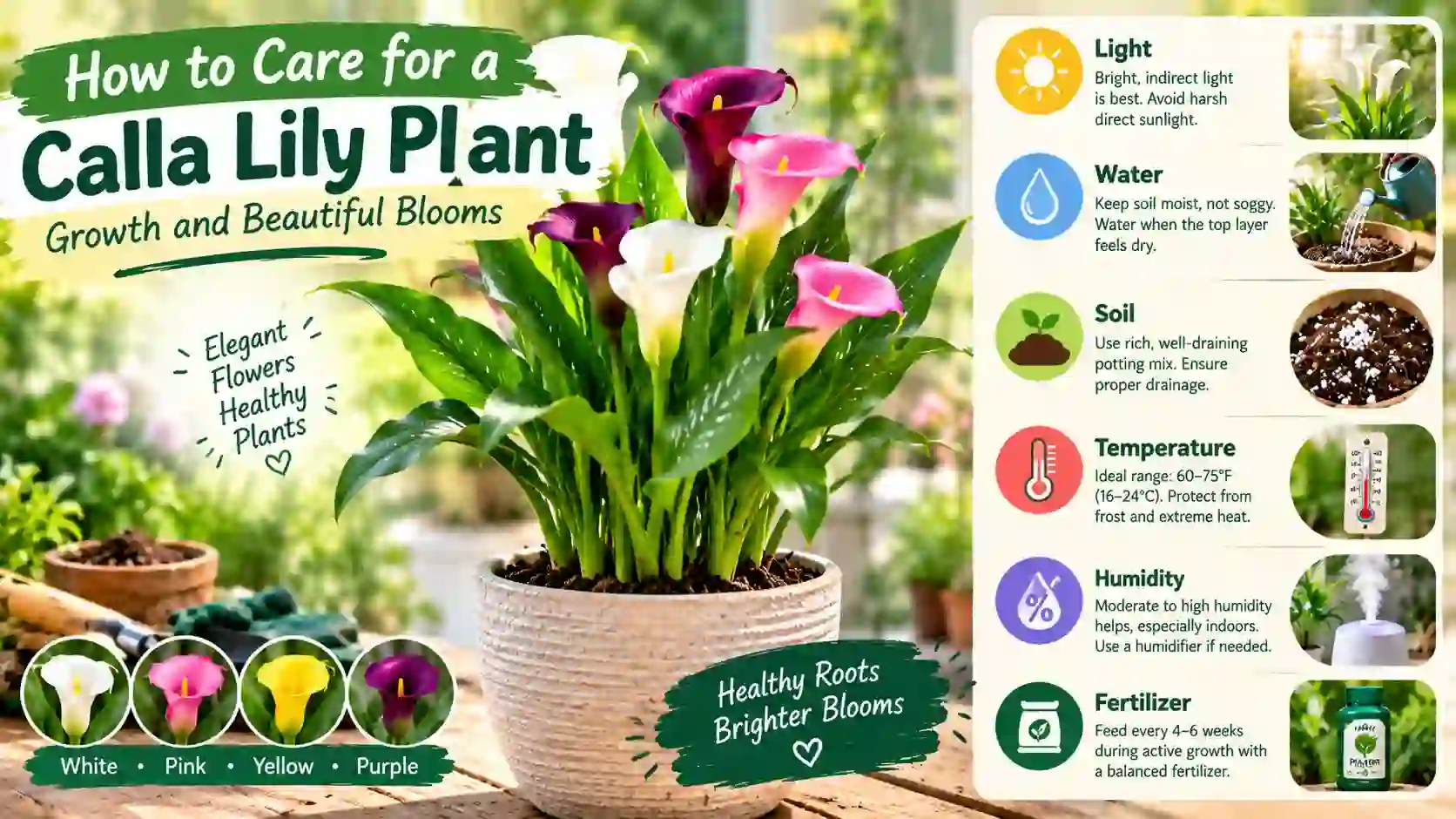
Calla lilies are known for their elegant, trumpet-shaped flowers and smooth, arrow-shaped leaves. They grow beautifully in containers, garden beds, and decorative indoor displays when their basic needs are met.
However, calla lilies can confuse new gardeners. A plant may produce plenty of leaves but few flowers, develop yellow foliage, or suddenly stop growing after blooming. These changes often relate to light, watering, temperature, or the plant’s natural growth cycle.
Learning how to care for a calla lily plant means understanding more than its watering schedule. You also need to know whether you are growing a tender indoor calla, a garden variety, or a plant that is preparing for dormancy.
This guide explains how to encourage healthy foliage, support repeat flowering, prevent common problems, and help your calla lily return with fresh growth in the next growing season.
Quick Answer:
To care for a calla lily plant, provide bright, indirect light, rich but well-draining soil, and consistent moisture during active growth. Water when the soil surface begins to dry, and feed lightly while the plant is growing or flowering. Calla lilies (Zantedeschia species) also need suitable temperatures and a seasonal rest period. After flowering, some varieties naturally enter dormancy, so reduce watering as the foliage dies back rather than treating every yellow leaf as a problem.
1. Understand Your Calla Lily’s Growing Cycle
Before adjusting watering or fertilizer, understand how calla lilies grow. Most garden and florist calla lilies grow from underground rhizomes or similar fleshy storage structures, depending on the species and cultivar. These structures store energy for future growth and flowering.
Many popular callas are hybrids of Zantedeschia. Their growing habits differ, so one care routine may not suit every variety.

White calla lily (Zantedeschia aethiopica)
This species often stays evergreen in mild, moist conditions. It can grow larger than many colorful calla hybrids and may tolerate wetter soil when actively growing, although stagnant water and poor oxygen around roots remain risks.

Colorful calla lily hybrids
Pink, yellow, orange, purple, and burgundy varieties are often grown from seasonal rhizomes. They generally prefer well-draining soil during growth and a drier rest period after the foliage dies back.
Why dormancy matters
A calla lily may stop producing leaves after flowering and gradually turn yellow. For many colorful hybrids, this is a normal part of the annual cycle rather than a sign that the plant is dying.
The key is to distinguish natural dormancy from root rot. Foliage that declines gradually at the end of the growing season is different from a plant whose leaves collapse while its soil remains soggy.
Practical tip: Check the plant label for the species or cultivar. It can help you determine whether your calla should remain leafy year-round or needs a dry resting period.
Image suggestion: A comparison infographic showing a leafy white calla lily and colorful calla hybrids, with their differing growth and dormancy habits.
2. Choose the Best Location and Lighting
Calla lilies need enough light to develop strong stems and produce flowers. Insufficient light can encourage leafy growth while reducing flowering, particularly indoors.
Most callas perform well in bright light. The ideal amount of direct sunlight depends on your climate, variety, and whether the plant is growing indoors or outdoors.
Best lighting conditions
- Indoors: Place your calla lily near a bright window where it receives plenty of daylight. Gentle morning sunlight is often helpful.
- Outdoors in mild weather: Morning sun with some afternoon shade is a good starting point for many colorful hybrids.
- In hot climates: Protect plants from intense afternoon sun, which can scorch leaves and dry containers quickly.
- In deep shade: Move the plant to a brighter location gradually if it produces weak stems or fails to flower.
White Zantedeschia aethiopica may tolerate more sun when its roots have adequate moisture and temperatures are suitable. Colorful hybrids may benefit from protection during the hottest part of the day.
Signs your calla lily needs more light
- Leaves grow tall and floppy.
- Flowering is limited despite healthy-looking foliage.
- Stems lean toward the window.
- New growth becomes weak or sparse.
However, poor flowering can also result from immature rhizomes, excess nitrogen, or an incomplete growing cycle.
Expert tip: If your plant grows plenty of leaves but produces no flowers, assess its light exposure before increasing fertilizer. More fertilizer will not compensate for insufficient light.
Image suggestion: A calla lily beside a bright window, with visual examples of ideal light, deep shade, and harsh afternoon sunlight.
3. How to Water a Calla Lily Plant Correctly
Calla lilies generally need consistent moisture while they are actively growing. Their soil should not repeatedly dry out completely during vigorous growth, but it must also drain properly.
The biggest mistake is following a rigid watering calendar. A small pot in warm sunlight may dry rapidly, while a large pot in a cool room can remain wet for days.
Follow these watering steps

Step 1: Check soil moisture
Touch the top inch of soil. If it is beginning to dry during active growth, check the moisture slightly deeper before watering.

Step 2: Water thoroughly
Apply water evenly across the soil until excess drains from the pot. Avoid repeatedly adding small splashes that wet only the surface.

Step 3: Let excess water escape
Empty the saucer or outer decorative pot. Roots need oxygen, even when the plant prefers moist soil.

Step 4: Adjust as growth changes
Water more carefully as flowering ends and the foliage begins to die back. Reduce watering during dormancy for varieties that require a dry rest.
How often should you water a calla lily?
There is no single schedule for every calla lily. During active growth, you may need to water every few days in warm conditions or less frequently in cool, humid weather.
| Growing condition | Watering approach |
|---|---|
| Active growth and flowering | Keep the soil consistently moist but not waterlogged |
| Hot, sunny weather | Check moisture more frequently |
| Cool or cloudy weather | Allow more time between watering |
| Indoor container | Check the soil before each watering |
| Leaves naturally dying back | Reduce watering as dormancy approaches |
| Dormant colorful hybrid | Keep the storage structure relatively dry, following its specific care needs |
Overwatering versus underwatering
| Sign | Possible overwatering | Possible underwatering |
|---|---|---|
| Soil | Remains wet for a long time | Becomes very dry |
| Leaves | Yellowing or collapsing | Wilting, curling, or dry edges |
| Roots or rhizomes | May become soft and rotten | May dry out or shrink |
| Best response | Check drainage and inspect for rot | Rehydrate dry soil thoroughly |
Symptoms can overlap, so check the soil and roots instead of diagnosing the problem from leaf color alone.
Important: If a calla lily wilts while its soil is wet, do not immediately add more water. Poor drainage or root damage may be preventing the plant from taking up moisture.
Image suggestion: A four-step calla lily watering infographic showing soil checking, thorough watering, drainage, and reduced watering during dormancy.
4. Use the Right Soil and Pot
Calla lilies grow best in soil that retains enough moisture for active growth without becoming stagnant. A rich, well-draining potting mix helps supply water and nutrients while allowing air to reach the roots.
What soil is best for calla lilies?
For container-grown callas, use a quality potting mix that retains moisture while draining freely. A general indoor or outdoor container mix can work well if it does not become compacted.
If the mix stays soggy, improve its structure with perlite or fine bark. If it dries too quickly, a mix with better moisture retention may be more appropriate.
Garden-grown callas need soil that suits their species. White calla lilies may tolerate consistently moist garden soil, while many colorful hybrids are more vulnerable to rot in poorly drained conditions.
How to choose the right pot
Choose a pot with drainage holes and enough room for the roots to develop. Avoid moving a small rhizome into an excessively large container because the unused soil can remain wet for too long.
Terracotta pots dry faster than plastic or glazed ceramic pots. This can help gardeners who tend to overwater, but it may require more frequent checks in hot weather.
Common mistake: Adding gravel to the bottom of a pot does not solve poor drainage. A suitable potting mix and unobstructed drainage holes are more effective.
Image suggestion: A cutaway illustration of a calla lily container showing a healthy rhizome, well-draining soil, roots, and open drainage holes.
5. Maintain the Right Temperature and Humidity
Calla lilies generally grow best in mild to warm conditions, although temperature preferences vary by variety. Many popular callas perform well around 60–75°F (16–24°C) during active growth.
Very hot weather can shorten flowering and stress the foliage. Cold conditions can damage tender plants, particularly colorful hybrids.
Temperature care tips
- Keep indoor plants away from cold drafts and sudden temperature changes.
- Protect tender varieties from frost.
- During hot weather, provide suitable afternoon shade and monitor container moisture.
- Avoid placing indoor plants directly beside heaters or air-conditioning vents.
Do calla lilies need high humidity?
Calla lilies can grow in ordinary household humidity when their watering, temperature, and light needs are met. They do not always require a humidifier.
In dry indoor air, maintain consistent soil moisture and keep the plant away from hot, drying airflow. Good air circulation is also important because stagnant, damp conditions can encourage disease.
Practical observation: If leaf edges become brown, check soil moisture, sunlight, and root condition before assuming the air is too dry. Excessive fertilizer and intense sunlight can produce similar symptoms.
Image suggestion: A healthy calla lily in a bright room with temperature icons and a shaded outdoor placement example.
6. How to Fertilize a Calla Lily for Better Blooms
Calla lilies need nutrients to develop strong foliage and flowers. However, applying too much fertilizer can encourage leaf growth at the expense of flowering or cause salt buildup around the roots.
Use a balanced, water-soluble fertilizer or a suitable flowering-plant fertilizer according to its label. Fertilize during active growth, especially when the plant is establishing leaves and flower stems.
Best fertilizing practices
- Begin feeding when new growth appears and the plant is actively growing.
- Apply fertilizer at the recommended rate for container plants.
- Avoid feeding a dormant plant or one with severely damaged roots.
- Reduce or stop feeding when growth naturally slows and foliage dies back.
- Avoid combining multiple fertilizers unless their combined nutrient levels are understood.
A balanced fertilizer is a sensible starting point. You do not need an unusually high-phosphorus product simply because you want more flowers.
Why is your calla lily growing leaves but not flowering?
Excess nitrogen is one possible reason, but it is not the only one. Consider these factors:
- Insufficient light: The plant may not receive enough energy to flower.
- Immature rhizomes: A young or undersized storage structure may need more time.
- Incorrect seasonal care: Some hybrids need a complete growth and rest cycle.
- Excessively wet soil: Damaged roots may prevent healthy flowering.
- Recent disturbance: Repotting or moving the plant can temporarily interrupt growth.
Expert tip: Correct light, watering, and seasonal care before increasing fertilizer. A healthy growth cycle is more important than a stronger feeding schedule.
Image suggestion: An infographic showing a flowering calla lily, measured fertilizer application, and a comparison of healthy flowering versus excessive leafy growth.
7. How to Encourage More Calla Lily Flowers
Calla lilies produce their distinctive blooms when their growing conditions and seasonal cycle are suitable. Each colorful flower-like structure is called a spathe, which surrounds a central spike known as the spadix.
Although people commonly call the spathe a flower, the true flowers are tiny and located on the spadix.
Five ways to support flowering
1. Provide enough light. Bright conditions help the plant build the energy needed for flower production. Increase light gradually if the plant has been growing in shade.
2. Maintain consistent moisture. During active growth, avoid letting the soil repeatedly dry out completely. At the same time, ensure excess water can escape.
3. Feed moderately. Supply nutrients during active growth without overfertilizing. Excessive nitrogen may encourage foliage instead of balanced growth.
4. Respect the growing cycle. Many colorful hybrids need a period of reduced growth or dormancy before their next season. Do not force constant growth by keeping dormant rhizomes wet.
5. Remove spent blooms. Cut faded flower stems near their base with clean tools. This improves the plant’s appearance and prevents energy from going into seed production when seeds are not wanted.
When do calla lilies bloom?
Blooming time depends on the species, cultivar, climate, and planting date. Many callas flower during spring or summer, but greenhouse-grown and container-grown plants may follow different schedules.
If your plant is healthy but has not flowered, review its light exposure and growth history before assuming something is wrong.
Image suggestion: A flowering calla lily with labeled spathe and spadix, plus a simple diagram showing light, watering, and seasonal rest as flowering factors.
8. Pruning and Maintaining Healthy Foliage
Calla lilies need only light maintenance. Removing dead leaves and faded flower stems helps keep the plant tidy and makes it easier to inspect for pests and disease.
How to prune a calla lily
- Remove faded flowers: Cut the flower stem close to its base once the bloom has finished.
- Remove dead leaves: Trim completely yellow or brown foliage with clean scissors or pruning shears.
- Keep healthy green leaves: They continue producing energy for the plant and its underground storage structure.
- Allow natural dieback: If the variety enters dormancy, let the foliage yellow and die back gradually.
Do not cut away all green leaves immediately after flowering. For seasonal hybrids, those leaves may still be replenishing the rhizome for the next growing cycle.
Should you cut back calla lilies after flowering?
You can remove spent blooms, but the foliage should usually remain until it naturally begins to die back. Once a dormant variety has finished its growth cycle, remove the dead foliage and follow the appropriate storage or winter-care method.
Image suggestion: A pruning guide showing the correct removal of a faded calla lily flower and a fully yellow leaf while preserving healthy foliage.
9. How to Propagate a Calla Lily Plant
Calla lilies can be propagated by dividing established underground storage structures. This is generally more reliable for home gardeners than growing plants from seed, which can take longer and may not produce offspring identical to hybrid parent plants.
Propagating by division
The best timing depends on the plant’s growing cycle and climate. For many seasonal colorful hybrids, division is easiest when the plant is dormant or just before active growth resumes.
- Gently lift the plant or remove it from its container.
- Brush away enough soil to inspect the rhizome or storage structure.
- Identify natural divisions with healthy growing points.
- Separate suitable sections using a clean, sharp tool if necessary.
- Allow any fresh cuts to dry briefly in a clean, shaded place if appropriate for the variety.
- Plant the divisions in suitable, well-draining soil at the correct depth.
- Water according to the species and its stage of growth.
Not every calla lily has the same underground structure, so do not divide a plant blindly. White calla lilies and colorful hybrids may require different approaches.
Common propagation mistakes
- Dividing storage structures that are too small or weak.
- Using dirty cutting tools.
- Planting damaged divisions in soggy soil.
- Watering heavily before new roots have developed.
- Expecting a newly divided plant to flower immediately.
Practical tip: Choose firm, healthy divisions with visible growing points. Discard sections that are extensively soft, rotten, or diseased.
Image suggestion: A step-by-step propagation infographic showing a mature calla lily, healthy divisions, planting, and new growth.
10. Common Calla Lily Problems and How to Fix Them
Calla lily problems are easier to resolve when you examine the entire plant, including the soil and underground storage structure.

Problem 1: Yellow Leaves
Possible causes: Overwatering, poor drainage, insufficient light, nutrient problems, or natural dormancy.
What to do: Check soil moisture and the growing season. If yellowing occurs gradually after flowering, dormancy may be normal. If the soil remains wet and the plant declines rapidly, investigate root damage.

Problem 2: Drooping Leaves
Possible causes: Dry soil, waterlogged roots, excessive heat, or recent transplant stress.
What to do: Check moisture below the surface. Water if the root zone is dry; if it is wet, improve drainage and inspect the roots rather than adding more water.

Problem 3: Brown Leaf Edges
Possible causes: Heat stress, irregular watering, fertilizer salt buildup, or excessive sunlight.
What to do: Move the plant out of harsh afternoon sun, review watering habits, and avoid excessive fertilizer. Trim only the damaged tissue if the rest of the leaf remains healthy.

Problem 4: No Flowers
Possible causes: Insufficient light, immature rhizomes, excess nitrogen, or an incomplete growth cycle.
What to do: Improve light gradually, use moderate feeding, and allow the plant to complete its natural seasonal cycle.

Problem 5: Rhizome or Root Rot
Possible causes: Persistently waterlogged soil, poor drainage, or diseased planting material.
What to do: Remove the plant carefully and inspect the underground structure. Trim clearly rotten tissue with clean tools, discard severely diseased material, and replant healthy sections in appropriate soil.
Why is my calla lily dying after flowering?
For many colorful calla lily hybrids, post-flowering leaf dieback is a normal part of dormancy. If the plant gradually loses its leaves after the flowering season, reduce watering as the foliage dies back.
However, rapid collapse during active growth, especially in wet soil, can indicate root or rhizome rot. Check the plant before assuming it is dormant.
Image suggestion: A calla lily troubleshooting infographic comparing healthy growth, normal seasonal dieback, overwatering, and rhizome rot.
11. Seasonal Calla Lily Care
Calla lily care changes with the season. The most important adjustment is knowing when to support active growth and when to reduce watering.
Spring: Encourage new growth
- Plant or repot healthy storage structures when conditions suit the variety.
- Place emerging plants in bright light.
- Begin watering as growth develops, keeping the soil appropriately moist.
- Start moderate feeding once active growth is established.
Summer: Support foliage and flowers
- Monitor soil moisture during warm weather.
- Protect plants from extreme afternoon heat.
- Remove faded flower stems.
- Check regularly for pests and leaf damage.
Autumn: Prepare for seasonal changes
- Watch for natural yellowing in seasonal hybrids.
- Reduce fertilizer as growth slows.
- Allow foliage to die back naturally when dormancy begins.
- Protect tender varieties from cold weather.
Winter: Protect dormant or tender plants
- For dormant colorful hybrids, keep the storage structures relatively dry and protected from frost.
- Store lifted rhizomes in a cool, dry, ventilated place where appropriate for the variety.
- Keep evergreen types growing in suitable light and temperature conditions.
- Avoid treating all calla lilies as if they need the same winter rest.
In warm climates, some callas can remain in the ground, while others need protection from excessive rain or heat. Your local climate and the specific variety determine the best approach.
Image suggestion: A four-season calla lily care calendar showing spring growth, summer flowering, autumn dieback, and winter dormancy.
12. Indoor vs. Outdoor Calla Lily Care
Calla lilies can grow in containers indoors or outdoors and in suitable garden beds. The best setup depends on your climate, variety, and available space.
| Care factor | Indoor calla lily | Outdoor calla lily |
|---|---|---|
| Light | Bright window or suitable grow light | Sun or partial shade, depending on variety and climate |
| Watering | Check potting mix frequently | Account for rainfall and soil drainage |
| Temperature | Protect from drafts and heat vents | Protect tender varieties from frost and extreme heat |
| Soil | Moisture-retentive, well-draining potting mix | Suitable garden soil with drainage appropriate to the species |
| Flowering | Depends on light and the plant’s growth cycle | Depends on light, climate, and seasonal timing |
| Dormancy | Manage according to the variety | Allow seasonal dieback or protect the plant as needed |
Which is better for beginners?
Growing calla lilies in containers makes it easier to manage soil, drainage, and seasonal protection. It also allows you to move tender varieties when temperatures become unsuitable.
Outdoor planting can be rewarding if your soil and climate match the plant’s needs. However, a poorly drained garden bed may create problems that are harder to correct than those in a container.
Image suggestion: A side-by-side image of a potted indoor calla lily and colorful calla lilies growing in a garden bed.
13. Important Safety Note: Are Calla Lilies Toxic?
Calla lilies contain insoluble calcium oxalate crystals that can irritate the mouth and digestive tract when chewed or swallowed.
Keep the plant away from children and pets that may bite its leaves, stems, or underground structures. Wear gardening gloves if you have sensitive skin, and wash your hands after handling damaged plant tissue.
If a person or pet chews or swallows part of the plant, seek advice from a medical professional or veterinarian. Do not induce vomiting unless a qualified professional instructs you to do so.
This safety consideration is particularly important for households with curious pets.
Image suggestion: A small, tasteful plant-safety icon beside a calla lily, with a reminder to keep the plant out of reach of children and pets.
14. Expert Tips for Healthier Calla Lilies
A few practical habits can prevent many common problems.
1. Identify the variety before changing care. Evergreen white callas and seasonal colorful hybrids can have different moisture and dormancy needs.
2. Do not judge watering by the surface alone. The top layer may be dry while the lower soil remains saturated. Check below the surface before adding water.
3. Avoid forcing flowers with fertilizer. Correct light, healthy roots, and the right growth cycle matter more than heavy feeding.
4. Keep the foliage until it naturally declines. Green leaves replenish energy stored underground for future growth.
5. Use clean pruning tools. This reduces the chance of transferring disease between plants.
6. Watch for rapid changes. A plant that suddenly collapses in wet soil needs closer inspection than one that slowly yellows after flowering.
7. Do not overpot. A container that is too large may retain more moisture than the root system can use.
8. Protect plants from weather extremes. Heat, frost, and prolonged rain can all affect calla lilies, depending on the variety.
9. Be patient after repotting or division. New roots and flowers may take time to develop.
10. Keep a simple care record. Note when flowering begins, when leaves decline, and how quickly the soil dries. These observations help you distinguish normal seasonal changes from recurring care problems.
15. Frequently Asked Questions About Calla Lily Care
How often should I water a calla lily plant?
During active growth, water when the soil surface begins to dry and keep the root zone consistently moist without waterlogging it. Water less as seasonal varieties enter dormancy.
Do calla lilies need full sun or shade?
Many calla lilies grow well in bright light with some direct sun. In hot climates, afternoon shade can prevent leaf scorch. White callas may tolerate more sun under suitable moisture conditions.
Why is my calla lily not flowering?
Insufficient light, excess nitrogen, immature rhizomes, root problems, or an incomplete seasonal cycle can prevent flowering. Review these factors before adding more fertilizer.
Can calla lilies grow indoors?
Yes. Calla lilies can grow indoors near a bright window or under a suitable grow light. Provide good drainage, consistent moisture during active growth, and the correct seasonal rest if your variety needs one.
Should I cut back my calla lily after flowering?
Remove faded flower stems, but keep healthy green leaves. Allow the foliage to die back naturally before cutting it away when the plant enters dormancy.
Do calla lilies come back every year?
Many calla lilies are perennial plants when grown in suitable conditions. Whether they return outdoors depends on the species, winter temperatures, drainage, and seasonal care. Tender varieties may need protection or storage.
Can I grow calla lilies in pots?
Yes. Use a pot with drainage holes and a moisture-retentive but well-draining mix. Container growing also makes it easier to protect tender plants from unsuitable weather.
What is the best fertilizer for calla lilies?
A balanced fertilizer or a suitable flowering-plant fertilizer can work well during active growth. Follow the label instructions and avoid excessive nitrogen or heavy feeding during dormancy.
Why are my calla lily leaves turning yellow?
Yellow leaves can indicate overwatering, poor drainage, nutrient issues, or natural dormancy. Check the soil and consider the plant’s growth stage before deciding on a treatment.
Are calla lilies safe for cats and dogs?
No. Calla lilies contain calcium oxalate crystals that can cause oral irritation and other symptoms if chewed. Keep them away from pets and contact a veterinarian if ingestion occurs.
Can calla lilies grow in water?
Some calla lilies tolerate consistently moist conditions, and certain species can grow near water. However, keeping container-grown rhizomes submerged in stagnant water can cause rot. Use a growing setup suited to the particular species.
How long do calla lily blooms last?
Individual blooms can remain attractive for several weeks under favorable conditions. Their lifespan depends on the variety, temperature, light, and growing environment.
Conclusion
The secret to healthy calla lilies is balancing consistent moisture with good drainage, providing enough light, and respecting the plant’s natural growing cycle.
When learning how to care for a calla lily plant, start by identifying your variety. Give it bright light, suitable soil, moderate feeding, and the right amount of water during active growth. Remove faded flowers, preserve healthy foliage, and adjust watering when the plant enters dormancy.
If your calla lily develops yellow leaves or stops flowering, check its growing conditions before assuming the plant is dying. Often, a few thoughtful adjustments can help it recover.
With the right care, calla lilies can reward you with elegant blooms and attractive foliage season after season.