
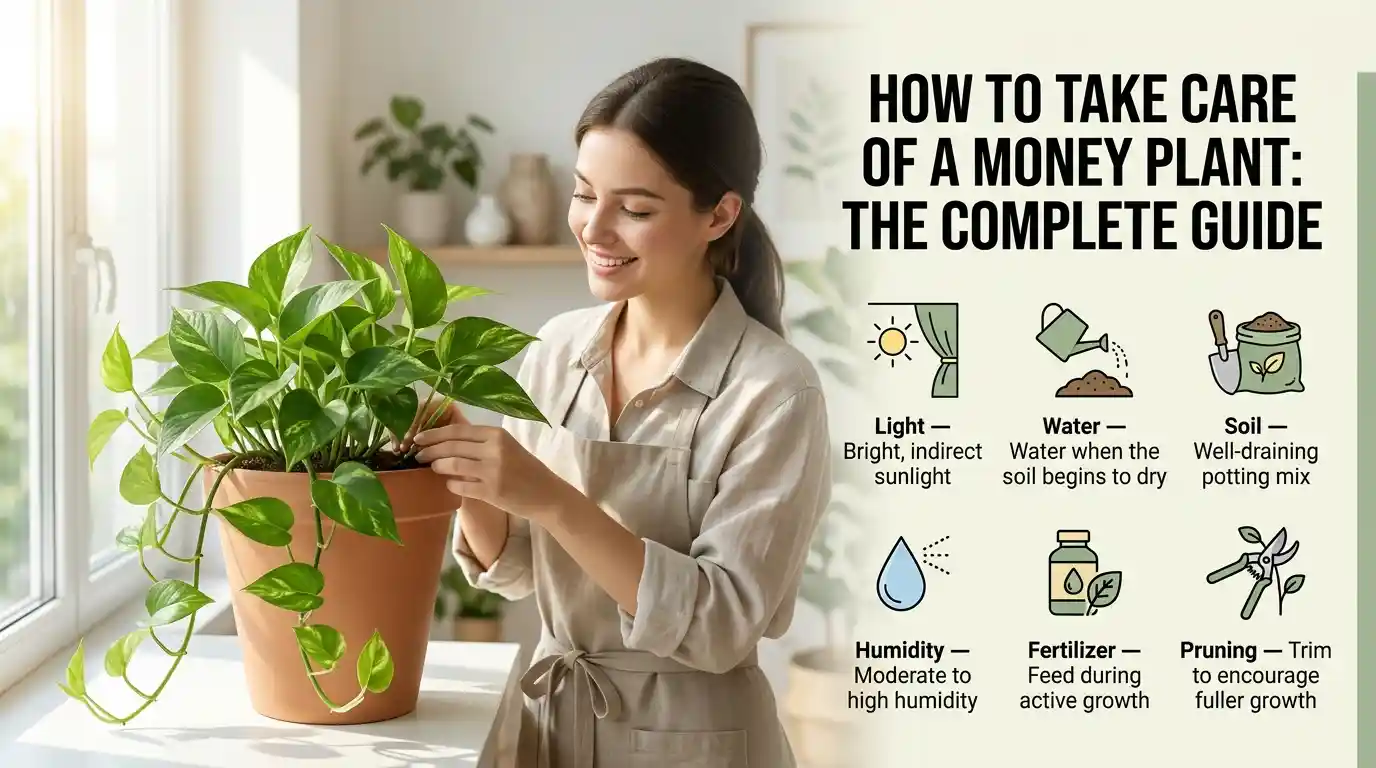
The money plant has a reputation for being unkillable. That reputation is mostly deserved, which is exactly why so many people end up losing theirs: they assume it needs no attention at all, then water it every day, park it in a dark corner, or leave it sitting in a pot with no drainage.
Learning how to take care of a money plant is less about doing more and more about doing the right few things consistently. Get light, water and drainage right, and this plant will reward you with long trailing vines for years.
This guide explains what each care step does, why it matters, and what to do when leaves turn yellow, brown or droopy.
Quick Answer
To take care of a money plant (pothos, Epipremnum aureum), give it bright indirect light, water only when the top 2-3 cm (about 1 inch) of soil is dry, and use a pot with drainage holes. Keep it between 15-30°C (60-85°F), feed lightly every 4-6 weeks in spring and summer, and trim it occasionally to keep it full.
First, Which “Money Plant” Do You Have?
The name is used for several different plants, and their care differs. Check yours before following any advice.
| Common name | Botanical name | What it looks like | Care difference |
|---|---|---|---|
| Money plant (most common in South Asia) | Epipremnum aureum (pothos) | Heart-shaped, glossy leaves, often green with yellow or white marbling, trailing vines | Covered in this guide |
| Jade plant / “money plant” | Crassula ovata | Thick, oval, succulent leaves on woody stems | Needs much less water and strong sunlight |
| Money tree | Pachira aquatica | Braided trunk with palm-like leaf clusters | Needs more light and less water than pothos |
If your plant has soft, heart-shaped leaves and long vines that root from the stem, it is pothos, and everything below applies directly.
Image suggestion: A side-by-side identification photo of pothos, jade plant and Pachira money tree with labels.
Light: The Most Overlooked Factor
Best light: bright, indirect light. A spot a metre or two from an east or north-facing window, or near a south or west window behind a sheer curtain, works well.
Why it matters: Light is the plant’s food source. In low light, pothos survives but grows slowly, produces smaller leaves, develops long gaps between leaves (leggy growth), and variegated types lose their yellow or white patterns and turn plain green.
What to avoid: Hours of direct afternoon sun, especially through glass in hot weather. It scorches leaves, leaving pale or brown patches.
Practical tip: If you can comfortably read a book in the spot without turning on a lamp during the day, it is usually enough. Rotate the pot every couple of weeks so growth stays even.
Watering: Where Most Money Plants Go Wrong
Overwatering is the most common reason money plants decline. Constantly wet soil pushes out air, roots start to rot, and the leaves yellow and droop, which looks just like thirst. Many beginners respond by watering even more, which finishes the plant off.
The rule that works: water thoroughly, then wait until the top 2-3 cm (1 inch) of soil is dry.
How to check:
- Push a finger into the soil up to the second knuckle.
- If it feels damp, wait a few days.
- If it is dry, water slowly until it drains from the bottom holes.
- Empty the saucer after about 15 minutes so the roots are not sitting in water.
How often: Roughly once a week in warm weather and every 10-14 days in cooler months, but let the soil decide, not the calendar. Pot size, room temperature, light and humidity all change the timing.
Signs it needs water: slightly drooping, softer leaves that perk up within hours of watering. Pothos is forgiving of occasional dryness, far more than of soggy roots.
Image suggestion: Diagram showing the finger-test depth and a pot with drainage holes and an empty saucer.
Soil and Pots
Use a light, well-draining potting mix. A good all-purpose indoor mix with about a quarter to a third perlite or coarse sand added keeps air around the roots. Heavy garden soil compacts in a pot and holds too much water.
Drainage holes are non-negotiable. If you love a decorative pot without holes, keep the plant in a plastic nursery pot and slip it inside, removing it to water.
Pot size: Choose a pot only 2-5 cm wider than the root ball. A pot that is far too large holds excess wet soil and raises the risk of rot.
Growing a Money Plant in Water

Many people keep pothos in a bottle or vase, and it can live that way for years. To do it well:
- Change the water every 1-2 weeks, or sooner if it turns cloudy.
- Rinse the roots gently when you change the water, since slime builds up.
- Keep the leaves above the waterline; submerged leaves rot.
- Add a very small amount of diluted liquid fertilizer once a month or so, because plain water holds almost no nutrients.
- Keep the container out of direct sun, which encourages algae.
Water-grown plants usually grow more slowly and have thinner roots. If you move one to soil, expect a brief adjustment period, and keep the soil lightly moist for the first couple of weeks.
Temperature and Humidity
Pothos is comfortable between 15-30°C (60-85°F). It dislikes cold drafts, air conditioner blasts and temperatures below about 10°C, which can blacken leaves.
Average household humidity is fine. Very dry air, especially near heaters or air conditioners, can cause brown, crispy leaf tips. Grouping plants together or wiping the leaves occasionally helps, but you do not need a humidifier.
Fertilizer
Money plants are light feeders. During spring and summer, use a balanced liquid houseplant fertilizer diluted to half the label strength every 4-6 weeks. Pause in winter or when growth stalls.
Why restraint matters: Too much fertilizer builds up salts in the soil, which burn roots and cause brown leaf edges. If you see a white crust on the soil surface, flush the pot with plain water several times and skip feeding for a while.
Pruning and Shaping
Pruning makes a pothos fuller instead of long and stringy.
- Use clean scissors or pruners.
- Cut just above a node (the small bump on the stem where a leaf meets the vine).
- Remove yellow, damaged or bare vine sections.
- Do it any time in the growing season; trimming 20-30% at once is generally safe.
New shoots usually appear from the nodes just below your cut, so the plant branches out.
Climbing vs trailing: If you give the vines a moss pole or a wall to climb, mature leaves often grow noticeably larger. Left to trail, leaves stay smaller. Both are healthy; it is a style choice.
How to Propagate a Money Plant
Propagation is easy and is also the best way to rescue a leggy or partly rotted plant.
- Cut a vine section with at least 2-3 nodes and a couple of leaves.
- Remove the lowest leaf so one or two nodes are bare.
- Place the cutting in a glass of clean water with the bare nodes submerged.
- Put it in bright, indirect light and change the water weekly.
- Roots usually appear in 2-4 weeks. Pot it up when roots are 5-8 cm long, or keep it in water.
You can also root cuttings directly in moist potting mix, though checking progress is harder.
Image suggestion: Step-by-step photo of a cutting showing the node, leaf and water level.
Repotting
Repot every 1-2 years, or when roots circle the pot or poke out of the drainage holes. Spring is ideal.
- Move up only one pot size.
- Loosen tightly wound roots gently.
- Water lightly after repotting, then return to your normal schedule.
If the plant is happy in its pot, there is no need to repot just because time has passed. Refreshing the top few centimetres of soil is enough.
Troubleshooting: What Your Money Plant Is Telling You
| Symptom | Likely cause | What to do |
|---|---|---|
| Yellow leaves, soft stems, soggy soil | Overwatering or poor drainage | Let soil dry, check roots, repot in fresh mix if roots are brown and mushy |
| Yellow lower leaves, dry soil | Underwatering or old leaves naturally dying | Water thoroughly and remove old leaves |
| Brown, crispy tips | Dry air, salt buildup or irregular watering | Flush soil, water more consistently, keep away from vents |
| Brown or bleached patches | Sunburn | Move away from direct sun |
| Black, mushy stems | Root rot or cold damage | Cut healthy vines and propagate; discard rotten parts |
| Long, bare stems and small leaves | Too little light | Move closer to a brighter spot and prune |
| Loss of variegation | Low light | Increase indirect light |
| Drooping but soil is wet | Overwatering | Stop watering and check roots |
| Tiny flying insects near soil | Fungus gnats from constantly damp soil | Let top soil dry between waterings, use sticky traps |
| White cottony clusters or fine webbing | Mealybugs or spider mites | Wipe with soapy water or neem oil solution, repeat weekly |
A tip for rescuing a rotting plant: Take cuttings from the healthy vines first. Even if the roots are lost, the cuttings often become a fresh, healthy plant.
Common Mistakes to Avoid
- Watering on a fixed schedule regardless of season and soil condition.
- Using a pot without drainage holes, which traps water at the bottom.
- Keeping it in a dark corner and expecting vigorous growth.
- Heavy fertilizing to “fix” slow growth that is actually caused by low light.
- Leaving leaves dusty. Wipe them gently with a damp cloth every month or so so they can absorb light.
- Ignoring pets and children. Pothos contains calcium oxalate crystals, which can irritate the mouth and stomach if chewed. Keep it out of reach of cats, dogs and small children.
Seasonal Care Notes
Spring and summer: Growth is fastest. Water more often, feed lightly, prune and propagate. Protect from harsh midday sun.
Autumn and winter: Growth slows. Water less, stop fertilizing, and keep the plant away from cold windows and heaters.
Hot, dry climates: Check soil more often, since pots dry out faster, and avoid placing plants where glass magnifies afternoon heat.
Frequently Asked Questions
How often should I water a money plant? Usually about once a week in warm weather and every 10-14 days in cooler months. Always check that the top 2-3 cm of soil is dry first.
Can a money plant live in water forever? Yes, it can survive for years in water if you change the water regularly and give it occasional diluted fertilizer. Growth will be slower than in soil.
Does a money plant need sunlight? It needs bright, indirect light. It tolerates low light but grows poorly there, and direct hot sun can burn the leaves.
Why are my money plant leaves turning yellow? Overwatering is the most common cause. Other causes include low light, underwatering, nutrient shortage or the natural loss of old leaves.
Why are the tips turning brown? Usually dry air, fertilizer salts or uneven watering. Flush the soil, water consistently and trim the damaged tips if you like.
Can I keep a money plant indoors all the time? Yes. It is one of the most reliable indoor plants as long as it gets enough indirect light.
Is a money plant toxic to pets? Yes. It is mildly toxic to cats, dogs and humans if chewed, so keep it out of reach.
How fast does a money plant grow? In good light and warm weather, vines can grow several centimetres a week. In low light or winter, growth slows greatly.
Should I cut the long vines? Yes, trimming above a node encourages branching and a fuller plant. The cuttings can be rooted into new plants.
Can I place a money plant in the bathroom? Only if there is a window or enough light. The humidity is welcome, but a dark bathroom will lead to weak growth.
Related Topics You May Want to Read Next
- How to propagate pothos in water and soil
- Best low-light indoor plants for apartments
- How to repot an indoor plant without damaging the roots
- How to get rid of mealybugs and fungus gnats naturally
- Pet-safe houseplants
Conclusion
Caring for a money plant comes down to four habits: give it bright indirect light, let the soil dry slightly between waterings, always use a pot with drainage, and feed lightly in the growing season. Most problems, including yellow leaves, leggy vines and rot, trace back to too much water or too little light.
Start by checking your plant’s soil and its position today. Move it to a brighter spot if needed, hold off watering until the soil has dried, and trim any tired vines. Within a few weeks you should see stronger, fuller growth, and the cuttings you take can become new plants to share.