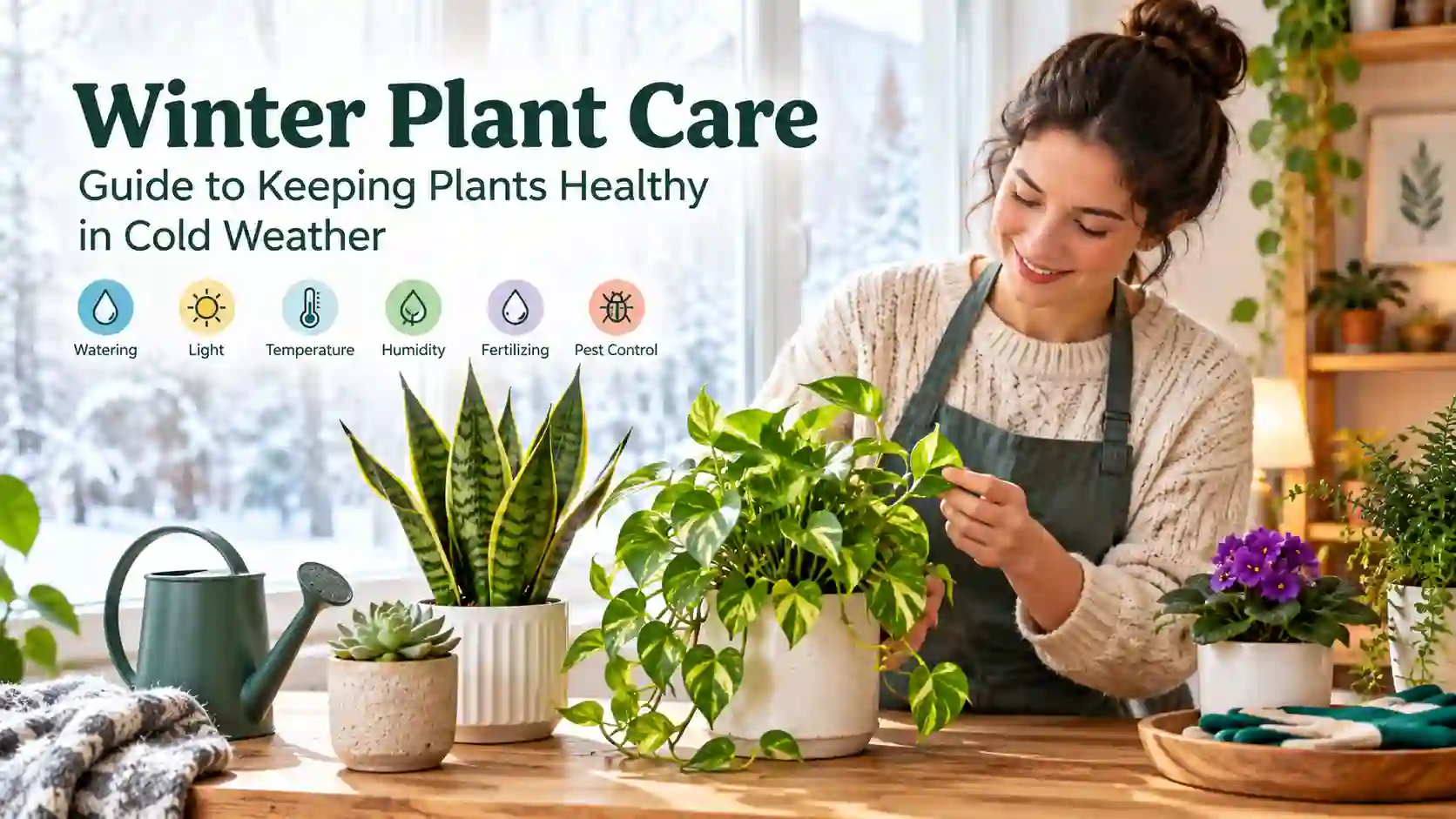
Winter can be challenging for plant lovers because familiar care routines may stop working. A plant that thrived with frequent watering in summer might develop yellow leaves when the weather cools. Another may grow slowly, lose a few leaves, or develop brown tips because indoor air has become too dry.
The solution is not to give every plant less of everything. Instead, winter plant care means understanding what changes with the season and responding to each plant’s needs.
Whether you grow pothos, snake plants, succulents, ferns, flowering houseplants, or outdoor shrubs, a few adjustments can help protect roots, preserve healthy foliage, and prepare plants for spring.
Quick Answer:
Winter plant care is mainly about adjusting watering, light, temperature, humidity, and feeding as plant growth slows. Indoor plants often need less water during winter, while outdoor plants may require frost protection, insulation around roots, and shelter from cold winds. The right approach depends on the plant species, local climate, and whether the plant grows indoors or outdoors.
1. Understand How Winter Changes Plant Growth
Most plants respond to shorter days, lower light levels, and cooler temperatures by slowing their growth. Some enter dormancy, while others continue growing slowly throughout winter.
This affects how much water and fertilizer they need.
Why plants grow more slowly in winter
Plants use light to produce energy through photosynthesis. When light becomes weaker or daylight hours decrease, many plants produce less energy and develop new leaves more slowly.
Cool temperatures can also slow water absorption and root activity. As a result, potting soil may remain wet much longer than it did during summer.
Signs your plant is entering a resting period
- New leaves appear less frequently.
- Existing growth becomes slower.
- The soil takes longer to dry.
- Some deciduous plants naturally lose their leaves.
- Flowering may decrease in plants that need longer days.
These changes are not automatically signs of poor health.
Expert tip: Compare your plant with its own previous growth rather than expecting it to look identical throughout the year. Healthy winter growth may be minimal.
2. Adjust Your Winter Watering Routine


10
Watering mistakes are among the most common causes of winter plant problems. Plants often use less water when light levels fall and growth slows. However, the correct watering frequency depends on the plant, pot size, soil mix, temperature, and indoor conditions.
How to know when a plant needs water
Follow these steps before watering:
- Check the top layer of soil with your finger.
- For larger pots, check moisture a little deeper using a finger or wooden stick.
- Consider the plant’s natural requirements. A fern may need consistently moist soil, while a snake plant prefers the soil to dry thoroughly.
- Water when the soil has reached the appropriate dryness for that species.
- Allow excess water to drain and empty the saucer.
Do not water simply because a particular number of days has passed.
Why overwatering becomes dangerous
Roots need oxygen as well as moisture. When soil remains saturated for too long, oxygen becomes limited, increasing the risk of root damage and rot.
A pot that dried quickly in warm weather may stay wet for much longer in a cool, dim room.
Winter watering guidelines by plant type
| Plant type | Winter watering approach |
|---|---|
| Snake plant | Allow the soil to dry thoroughly before watering. |
| Pothos | Water when the upper portion of the soil has dried sufficiently. |
| Peace lily | Avoid prolonged drying, but never leave the roots waterlogged. |
| Ferns | Maintain suitable moisture for the species; avoid complete drying if the fern requires consistently moist soil. |
| Cacti and succulents | Reduce watering substantially when growth slows; many need very little water during cool dormancy. |
| African violets | Water when the surface begins to dry, following the plant’s usual moisture requirements. |
These are general guidelines, not fixed schedules. Species, growing conditions, and dormancy determine the final decision.
Image suggestion: Create an infographic showing three stages: checking soil moisture, watering the root zone, and allowing excess water to drain.
3. Give Indoor Plants Enough Winter Light

Light is often the hidden reason indoor plants struggle during winter. The sun sits lower in the sky in many regions, and daylight hours are shorter. A location that provided sufficient light in summer may become too dim in winter.
Choose the right window
- South-facing windows: In the Northern Hemisphere, these often provide the strongest natural light.
- East-facing windows: They usually offer gentle morning sunlight.
- West-facing windows: They provide stronger afternoon light, which may be intense for sensitive foliage.
- North-facing windows: They generally receive less direct sunlight and may suit shade-tolerant plants, depending on the room.
Window direction is only a starting point. Trees, buildings, curtains, glass, and distance from the window all affect the light a plant receives.
Should you use a grow light?
A grow light can help when natural light is insufficient, especially for flowering plants, herbs, seedlings, and sun-loving species.
Choose a plant-appropriate light and follow the manufacturer’s recommended distance and duration. Keep the light schedule consistent, and avoid placing a powerful lamp so close that it overheats the leaves.
Signs your plant needs more light
- Stems stretch toward the window.
- New growth becomes unusually thin.
- Leaves become smaller than normal.
- Variegated foliage loses some of its pattern.
- Flowering declines or stops.
Move plants gradually toward brighter conditions when their leaves are sensitive to direct sunlight.
4. Protect Plants From Cold Temperatures and Drafts

Cold stress can damage tropical houseplants even when they never experience frost. Most common tropical houseplants prefer normal comfortable indoor temperatures and can suffer from sudden temperature changes. Iowa State University Extension recommends approximately 65–75°F (18–24°C) for many houseplants, while specific species may need different conditions.
Where should you place plants in winter?
Keep sensitive plants away from:
- Cold windows and glass that chills their leaves.
- Frequently opened exterior doors.
- Unheated rooms with large temperature swings.
- Radiators, space heaters, and hot-air vents.
- Drafty corners and exposed balconies.
A sunny windowsill may look ideal during the day but become very cold overnight. Check both daytime and nighttime conditions before leaving tropical plants directly against the glass.
What about plants outdoors?
Outdoor winter protection depends on your local minimum temperatures and the plant’s hardiness.
- Move frost-sensitive container plants into suitable shelter before damaging cold arrives.
- Group outdoor pots in a protected location when appropriate.
- Insulate containers if their roots are vulnerable to freezing.
- Use frost cloth when needed, securing it properly and removing or adjusting it when conditions improve.
- Avoid letting water collect in containers during cold weather.
Do not assume that every plant needs to come indoors. Hardy outdoor perennials and many established shrubs are adapted to seasonal cold.
5. Maintain Healthy Humidity During Winter

Indoor heating can reduce humidity, which may cause dry leaf tips, curling leaves, and poor growth in humidity-sensitive plants. Ferns and many tropical foliage plants are especially sensitive to dry indoor conditions.
Practical ways to increase humidity
Use a humidifier. A small room humidifier provides more consistent humidity than occasional spraying. Monitor the room with a hygrometer and follow the needs of your plant species.
Group plants together. Plants release moisture through transpiration, and grouping them can modestly improve the surrounding microclimate.
Try a pebble tray carefully. Place pebbles and water in a shallow tray, keeping the pot’s base above the waterline. This may provide a small local benefit, although it will not humidify a large room substantially.
Choose naturally humid rooms. A bright bathroom may suit humidity-loving plants if its temperature and lighting are appropriate.
Does misting help plants in winter?
Misting briefly wets the leaves, but it usually does not raise room humidity for long. Frequent leaf wetting may also encourage fungal problems under poor airflow.
For plants that need higher humidity, a humidifier is usually a more reliable option.
6. Should You Fertilize Plants in Winter?

For many houseplants, winter is a time to reduce or pause fertilizing. When light levels fall and growth slows, plants generally use fewer nutrients. Adding fertilizer cannot compensate for insufficient light or cold, damaged roots.
When to stop fertilizing
Reduce or pause routine feeding when:
- The plant is not producing new growth.
- The species enters seasonal dormancy.
- Indoor light levels have dropped substantially.
- The soil remains wet for long periods.
- The plant shows signs of root stress.
When winter feeding may still be appropriate
Some plants continue growing actively indoors, particularly in warm, bright conditions. Certain flowering plants, herbs, and plants under grow lights may continue to need nutrients.
If a plant is actively growing and its species-specific care requirements support feeding, use an appropriate fertilizer at the recommended concentration.
Common mistake: Feeding a yellowing plant without checking the roots, soil moisture, and light. Yellow leaves can result from several problems, and extra fertilizer may worsen root stress.
7. Prevent Pests and Diseases Before They Spread

Winter does not eliminate indoor plant pests. Spider mites, mealybugs, scale insects, and aphids can remain active indoors, particularly when plants are stressed or crowded.
A simple winter pest inspection
- Inspect the undersides of leaves and the points where leaves meet stems.
- Look for fine webbing, cottony clusters, sticky residue, or small moving insects.
- Check new growth and the soil surface.
- Isolate an affected plant from healthy plants.
- Identify the pest before choosing a treatment.
Treat infestations according to the product label and the plant’s sensitivity. Repeat inspections because some pests have life stages that survive an initial treatment.
Prevent fungal and root problems
- Use pots with functional drainage holes.
- Remove dead leaves from the soil surface.
- Avoid leaving water in saucers.
- Maintain appropriate airflow without exposing plants to cold drafts.
- Clean dusty foliage when the plant tolerates it.
Image suggestion: Show a healthy leaf beside a leaf affected by spider mites, with a magnified view of the pest and a simple inspection checklist.
8. Care for Outdoor Plants During Winter
Outdoor plants face different challenges from indoor plants. Cold winds, frost, excessive rain, frozen soil, and temperature fluctuations can all affect their survival.
The best protection depends on whether you grow plants in containers, garden beds, raised beds, or exposed balconies.
Protect roots with mulch
Mulch helps insulate the soil, reduces temperature fluctuations, and limits moisture loss. Apply an appropriate layer around outdoor perennials and shrubs after the soil has cooled, keeping mulch away from direct contact with stems and trunks.
For plants that are not cold-hardy in your region, mulch alone may not provide enough protection.
Protect containers from cold
Roots in containers experience temperature changes more quickly than roots in the ground.
- Move vulnerable pots beside a sheltered wall.
- Raise pots slightly if drainage is poor.
- Insulate the outside of containers where freezing is a concern.
- Avoid placing containers where roof runoff collects.
- Water when necessary during dry spells, provided the soil is not frozen or waterlogged.
Should you prune outdoor plants in winter?
Avoid automatically cutting back every plant. Some perennials benefit from remaining uncut until spring, while other plants require specific seasonal pruning.
Dead, broken, or diseased material may need removal, but major pruning should follow the needs of the species. Pruning at the wrong time can remove flower buds or encourage tender growth that is vulnerable to cold.
Image suggestion: A winter gardening infographic featuring mulched garden beds, insulated containers, frost cloth, and protected outdoor plants.
9. Should You Repot Plants During Winter?

For most houseplants, early spring is a better time for routine repotting because increasing daylight encourages renewed growth. Repotting during winter can add stress when plants are growing slowly.
However, delaying every repotting task is not always wise.
When you can wait until spring
Consider postponing repotting if the plant is healthy, the pot drains correctly, and its roots have adequate space.
A plant does not automatically need a larger pot simply because winter has arrived.
When repotting cannot wait
Act sooner if:
- The soil has become severely compacted or waterlogged.
- Root rot is progressing.
- The pot has broken or no longer drains.
- A serious soil or root problem requires intervention.
Use a suitable potting mix and a container with drainage holes. Avoid moving the plant into a pot that is much larger than its root system, because excess soil can remain wet for too long.
After repotting, provide suitable light and stable temperatures. Do not automatically fertilize a stressed plant immediately afterward.
10. Understand Common Winter Plant Problems
Many winter symptoms have more than one possible cause. Check soil moisture, light, temperature, and roots before changing your entire care routine.

Yellow leaves
Possible causes: overwatering, poor drainage, insufficient light, cold stress, or natural aging.
What to do: Check soil moisture and drainage first. Remove severely damaged leaves only when appropriate, and correct the underlying problem.

Brown, crispy leaf edges
Possible causes: low humidity, inconsistent watering, fertilizer salt buildup, or mineral-sensitive plants reacting to water quality.
What to do: Check moisture and humidity, review fertilizer use, and consider water quality if the problem persists.

Leggy or stretched growth
Possible cause: insufficient light relative to the plant’s needs.
What to do: Move the plant to a brighter suitable location or provide supplemental grow lighting.

Wilting despite wet soil
Possible causes: root damage, poor drainage, or cold-stressed roots.
What to do: Check the drainage holes and inspect the roots if the plant continues declining. Do not automatically add more water.

Sudden leaf drop
Possible causes: temperature changes, moving indoors, reduced light, or watering stress.
What to do: Keep conditions stable and assess the plant’s species and recent environmental changes. Some plants also shed leaves naturally.
11. Common Winter Plant Care Mistakes to Avoid
Even experienced gardeners can unintentionally stress plants by following summer routines throughout the colder months.
| Common mistake | Better approach |
|---|---|
| Watering on a fixed schedule | Check soil moisture and plant needs first. |
| Keeping plants in dark corners | Provide enough light for each species. |
| Placing plants beside heaters | Choose a stable location away from direct hot air. |
| Misting constantly for humidity | Use a humidifier when extra humidity is necessary. |
| Fertilizing every week | Feed according to active growth and species requirements. |
| Repotting every struggling plant | Diagnose the problem before disturbing the roots. |
| Ignoring outdoor container roots | Protect vulnerable pots from damaging temperature changes. |
| Assuming every yellow leaf means overwatering | Check several possible causes before taking action. |
| Bringing outdoor plants inside without inspection | Examine leaves and soil for pests before mixing plants. |
| Treating every plant identically | Adjust care for tropical plants, succulents, flowering plants, and hardy outdoor species. |
The most useful winter habit is to observe before acting. A few minutes spent checking soil, leaves, and temperatures can prevent unnecessary watering, feeding, or repotting.
12. A Simple Winter Plant Care Schedule
You do not need an elaborate daily routine to keep plants healthy. Consistent observation and timely adjustments are usually more effective than frequent intervention.
Weekly
Inspect leaves and soil
Check for pests, yellowing, unusual wilting, and soil that stays wet for too long. Water only when the plant’s needs indicate it is time.
As needed
Review light and temperature
Check for cold drafts, heater exposure, and changing sunlight. Adjust plant positions if conditions have become unsuitable.
Periodically
Review humidity and drainage
Check whether humidity-sensitive plants need extra moisture in the air. Empty saucers and make sure pots drain freely.
Late winter
Prepare for spring
Watch for fresh growth. Gradually resume normal watering and feeding as appropriate, and plan routine repotting when conditions favor recovery.
13. Winter Plant Care for Different Growing Environments
Not every winter looks the same. A cold outdoor garden, a heated apartment, and a warm subtropical balcony require different strategies.
Indoor houseplants
Prioritize stable temperatures, suitable light, careful watering, and pest inspections. Tropical plants are particularly vulnerable to cold drafts and sudden temperature drops.
Outdoor garden plants
Focus on frost tolerance, root protection, mulch, drainage, and appropriate seasonal pruning. Protect tender species before damaging weather arrives.
Balcony and container plants
Monitor pots more closely because small containers can dry out or cool down faster than garden soil. Move vulnerable plants to sheltered positions and prevent water from collecting around roots.
Succulents and cacti
Many species need much less water during cool, low-light periods. Keep their soil well drained, and distinguish cold-hardy varieties from tropical succulents that need protection.
Flowering plants
Light, temperature, and moisture requirements vary considerably. African violets, orchids, poinsettias, and other flowering plants should receive species-specific care rather than a universal winter routine.
For further reading on your website, useful related articles include snake plant care, aloe vera plant care, pothos plant care, and houseplant watering problems. These are research links, not verified URLs to specific articles on your website.
Frequently Asked Questions About Winter Plant Care
1. How often should I water plants in winter?
There is no universal watering schedule. Check the soil and consider each plant’s moisture requirements. Many houseplants need less frequent watering in winter because lower light and cooler conditions slow growth and evaporation.
2. Should I fertilize indoor plants during winter?
Most houseplants need little or no fertilizer while growth is slow. However, actively growing plants under suitable light may still benefit from feeding. Follow the plant’s specific requirements and the fertilizer label.
3. How do I keep houseplants alive in winter?
Provide adequate light, stable temperatures, appropriate watering, and good drainage. Protect plants from cold drafts and direct heater airflow. Inspect leaves regularly for pests and disease.
4. Why are my indoor plant leaves turning yellow in winter?
Yellow leaves can result from overwatering, low light, cold stress, nutrient problems, or natural aging. Check the soil and growing conditions before deciding on a treatment.
5. Should I bring all outdoor plants inside during winter?
No. Bring indoors only plants that need protection and can adapt to indoor conditions. Hardy perennials, many shrubs, and cold-tolerant plants can often remain outside when properly suited to the local climate.
6. Do plants need sunlight every day during winter?
Most green plants need regular light, although the amount varies by species. If natural light is insufficient, a suitable grow light can help. Some dormant plants have very different seasonal requirements.
7. How can I protect plants from frost?
Move vulnerable container plants into shelter, use suitable frost cloth, and protect sensitive roots. Check local forecasts and the plant’s cold tolerance before freezing temperatures arrive.
8. Is misting plants good for winter care?
Misting may briefly wet foliage, but it does not reliably maintain higher humidity. A humidifier or appropriate plant grouping is generally more effective for humidity-sensitive species.
9. Should I prune plants in winter?
It depends on the species. Remove dead or diseased material when appropriate, but postpone major pruning if it could remove flower buds or stimulate vulnerable new growth.
10. When should I restart normal plant care after winter?
Begin adjusting your routine when light levels increase and the plant shows signs of active growth. Gradually increase watering and resume appropriate feeding rather than changing everything at once.
Conclusion: Keep Your Plants Healthy Throughout Winter
Successful winter plant care comes down to understanding how each plant responds to seasonal changes. Shorter days, cooler temperatures, dry indoor air, and slower growth all affect watering, lighting, feeding, and protection.
Start with the essentials: check soil moisture before watering, provide suitable light, protect sensitive plants from cold drafts, and maintain healthy drainage. For outdoor plants, focus on their cold tolerance and protect vulnerable roots before severe weather arrives.
Most importantly, observe your plants before making changes. When you match your care routine to their actual needs, you can reduce winter stress and help them enter spring in better condition.
Winter Plant Care: Keep Your Plants Healthy