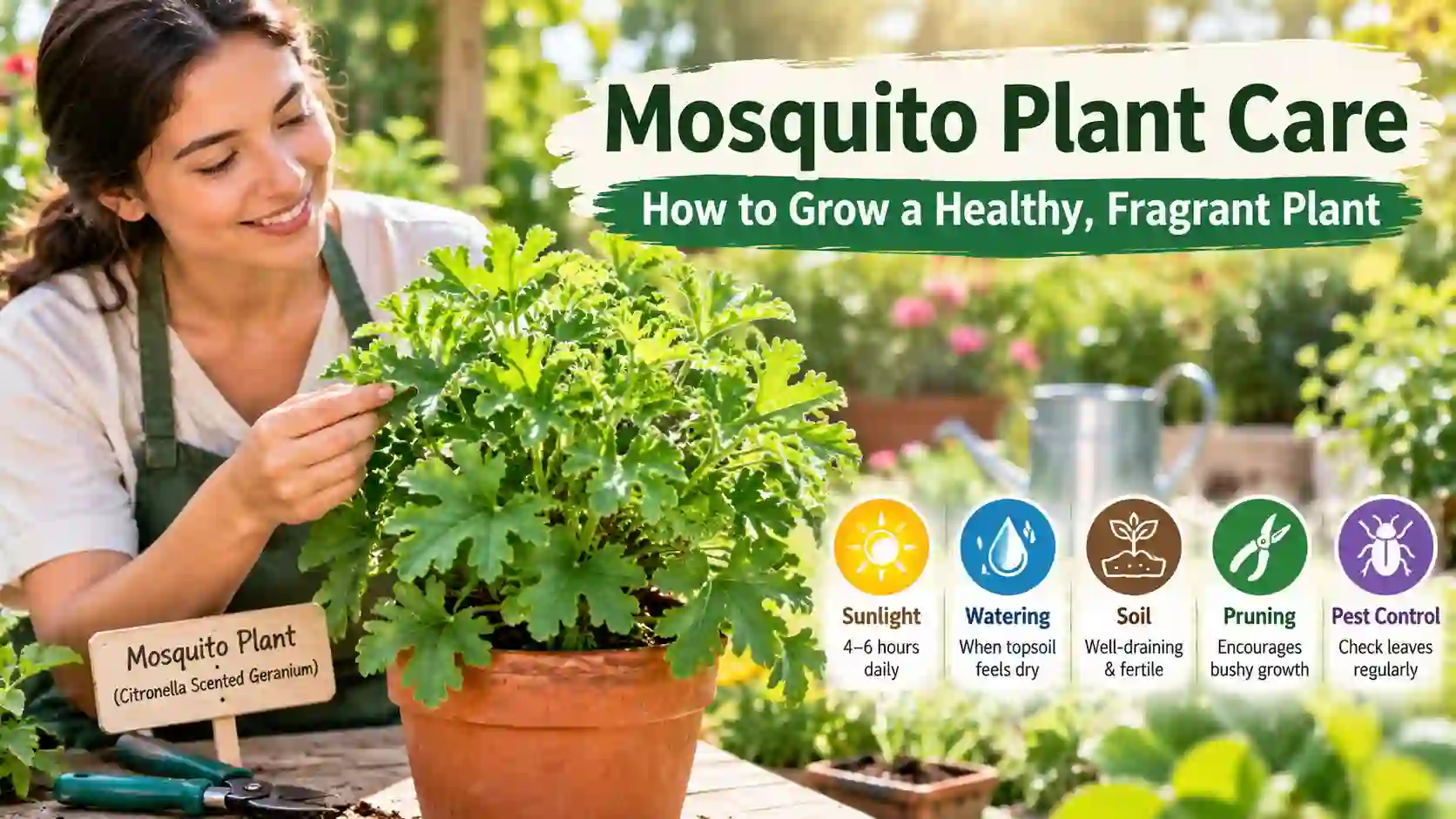
A mosquito plant can add attractive foliage, a refreshing citrus-like fragrance, and a touch of greenery to your patio, balcony, or garden. It is often marketed as a natural way to keep mosquitoes away, making it especially popular with people who enjoy spending time outdoors.
However, keeping this plant healthy requires more than placing it beside a doorway and watering it occasionally. Too little sunlight can cause weak, stretched growth, while excessive watering can damage its roots. Without regular pruning, the plant may also become leggy and lose its compact shape.
This guide explains how to care for a mosquito plant indoors and outdoors, choose the right soil, manage watering, encourage bushier growth, and troubleshoot common problems. It also explains what this fragrant plant can—and cannot—do to help with mosquitoes.
Quick Answer:
Mosquito plant care is relatively easy when you provide plenty of sunlight, well-draining soil, moderate watering, and regular pruning. The plant commonly sold as a mosquito plant is a citronella-scented geranium, often labeled Pelargonium × citrosum. Grow it in a sunny location, water when the top inch of soil feels dry, and protect it from frost. Although its citrus-like fragrance is appealing, the plant alone is not a reliable way to repel mosquitoes.
What Is a Mosquito Plant?


The mosquito plant is a fragrant ornamental plant usually sold as a citronella-scented geranium. Its botanical name is commonly given as Pelargonium × citrosum, although plant labels and commercial varieties can vary.
It belongs to the geranium family and is grown mainly for its aromatic, green foliage. When you gently rub a leaf, it releases a noticeable citrus-like scent.
Unlike true citronella grass (Cymbopogon species), this plant is a geranium with a similar fragrance. That distinction matters when buying a plant or researching mosquito-repellent claims.
Why gardeners grow mosquito plants
- Fragrant foliage: The leaves release a fresh, citrus-like aroma when touched.
- Decorative growth: Its attractive leaves work well in patio pots, balcony containers, and garden beds.
- Easy maintenance: It responds well to regular pruning and straightforward watering.
- Container-friendly habit: You can move it to brighter locations or shelter it during cold weather.
- Propagation potential: Healthy stem cuttings can produce additional plants.
Important: Do not confuse an attractive, fragrant plant with a proven mosquito-control method. Research published in 2026 found that whole citronella-scented geranium plants did not reduce mosquito captures under the tested field conditions.
Ideal Growing Conditions for a Mosquito Plant
The right growing conditions make the difference between a compact, leafy plant and one with weak stems, pale leaves, or root problems.
| Growing factor | What the plant needs |
|---|---|
| Sunlight | About 4–6 hours or more of direct sun, with protection from extreme afternoon heat |
| Water | Water when the upper inch of soil feels dry |
| Soil | Loose, fertile, well-draining potting mix |
| Temperature | Warm conditions; protect from frost |
| Humidity | Average household humidity is generally suitable |
| Container | A pot with unobstructed drainage holes |
| Fertilizer | Moderate feeding during active growth |
These are practical starting points rather than rigid rules. Sun intensity, pot size, airflow, and temperature all affect how quickly the soil dries.
How Much Sunlight Does a Mosquito Plant Need?

Mosquito plants grow best in a bright location with several hours of direct sunlight. Morning sun is especially useful because it provides strong light without the intense heat of a hot afternoon.
For outdoor plants:
- Choose a sunny patio, balcony, or garden position.
- Aim for approximately four to six hours of direct sun or more, adjusting for local conditions.
- Provide light afternoon shade during periods of extreme heat.
- Rotate container plants occasionally to encourage even growth.
For indoor plants:
Place the pot near a bright south- or west-facing window where the plant receives adequate light. If the stems become long and weak or the leaves lose their healthy color, insufficient light may be the cause.
A common mistake is moving a nursery plant directly into intense midday sun. Gradually increase its sun exposure over seven to ten days to reduce leaf scorch.
What Is the Best Soil for a Mosquito Plant?
Mosquito plants need soil that retains enough moisture for their roots without remaining soggy.
A practical container mix includes:
- Two parts quality potting mix.
- One part perlite or pumice for improved aeration.
- A pot with drainage holes at the bottom.
You can also use a commercial potting mix formulated for geraniums or other container plants.
Avoid heavy garden soil in pots because it can compact and restrict airflow around the roots. A thick layer of gravel at the bottom is unnecessary; use a well-draining mix throughout the container instead.
Expert tip: If the soil stays wet several days after watering, investigate the drainage and the potting mix before changing your watering schedule. Poor aeration can cause root stress even when you follow a seemingly reasonable routine.
What Temperature Is Best for Mosquito Plants?
Mosquito plants prefer warm growing conditions and do not tolerate frost well. They generally perform best in mild to warm weather with adequate light and airflow.
In hot climates, protect container plants from intense afternoon heat if the leaves wilt or scorch. In cooler weather, bring potted plants indoors before frost threatens them.
Indoors, keep the plant away from cold drafts, air-conditioning vents, and sudden temperature changes.
How to Water a Mosquito Plant Correctly

Watering is one of the most important parts of mosquito plant care. The goal is to provide enough moisture for healthy growth while allowing excess water to drain freely.
Step-by-step watering routine
- Check the soil. Insert a finger about one inch into the potting mix.
- Assess moisture. If the soil still feels damp, wait and check again later.
- Water thoroughly. When the upper layer feels dry, water slowly around the soil surface.
- Allow drainage. Continue until excess water flows from the drainage holes.
- Empty the saucer. Do not leave the pot standing in collected water.
The soil may dry quickly during hot, windy weather and much more slowly during cooler or cloudy periods. Check the plant rather than watering automatically on a fixed schedule.
Signs of overwatering and underwatering
| Symptom | Possible cause | What to do |
|---|---|---|
| Yellow leaves and consistently wet soil | Overwatering or poor drainage | Let the mix dry appropriately and inspect drainage |
| Soft, dark stems near the soil | Possible stem or root rot | Check the roots and remove decayed tissue where appropriate |
| Limp leaves and very dry soil | Underwatering | Water thoroughly and allow excess water to drain |
| Brown, crispy leaf edges | Heat, dry conditions, or salt buildup | Check moisture, sunlight, and fertilizer use |
| Soil remains wet for days | Heavy mix, oversized pot, or poor drainage | Improve the mix and review container size |
Yellow leaves alone do not prove overwatering. Older leaves naturally age, and nutrient issues or sudden environmental changes can produce similar symptoms.
Image suggestion: Create a side-by-side educational graphic showing a healthy mosquito plant, an overwatered plant with yellow leaves, and an underwatered plant with wilted foliage.
How to Fertilize a Mosquito Plant for Healthy Growth
Mosquito plants do not require heavy feeding. A balanced fertilizer used conservatively during active growth is usually sufficient for container plants.
A simple feeding schedule
- Feed during spring and summer when the plant is actively growing.
- Use a balanced, water-soluble fertilizer according to its label.
- Consider a half-strength solution if the product instructions permit it and the plant is growing in a regularly fertilized potting mix.
- Reduce or stop feeding during slow winter growth.
- Water the soil before fertilizing if it is very dry.
Excess fertilizer can cause salt buildup, brown leaf tips, and weak growth. It may also encourage foliage at the expense of a balanced plant shape.
If growth is poor, check light, root health, and watering before adding more fertilizer. Extra nutrients cannot compensate for a plant growing in persistently wet soil.
How to Prune a Mosquito Plant for Bushier Growth

Pruning encourages branching and helps maintain a compact, attractive shape. Without it, a mosquito plant may develop long stems with leaves concentrated near their tips.
How to prune it properly
- Use clean, sharp pruning scissors.
- Identify a healthy leaf node, where a leaf joins the stem.
- Trim a long stem just above the node.
- Remove dead, damaged, or crowded growth.
- Pinch the tips of young shoots to encourage branching.
Avoid removing too much foliage at once. Light, repeated pruning is generally easier for the plant to recover from than a severe cutback.
You can also use healthy cuttings to propagate new plants.
Expert tip: If your plant becomes leggy indoors, improve its light exposure as well as pruning it. Cutting back weak growth without correcting insufficient light often leads to the same problem returning.
How to Grow a Mosquito Plant Indoors

A mosquito plant can grow indoors if it receives enough light and has suitable drainage. The main challenge is usually insufficient sunlight combined with soil that dries slowly.
Follow these guidelines:
- Place it beside your brightest suitable window.
- Choose a pot with drainage holes.
- Keep the foliage away from cold drafts and hot heating vents.
- Water only when the upper layer of soil feels dry.
- Rotate the pot periodically for balanced growth.
- Check the undersides of leaves for pests.
If your home has limited natural light, a suitable grow light can help. Use it according to the manufacturer’s distance and timing recommendations.
Avoid placing the pot in a dark corner simply because you want the fragrance near a seating area. Healthy growth depends on light, not the plant’s intended decorative position.
How to Grow a Mosquito Plant Outdoors
Outdoor growing is often easier because sunlight and airflow are more abundant. However, intense heat, heavy rain, and poorly drained soil can create problems.
Choose a patio container or garden bed that receives generous sunlight without exposing the plant to damaging heat all day. Use well-draining soil and check moisture more frequently during hot weather.
In a humid or rainy climate, ensure water drains quickly after rainfall. In very hot weather, inspect the soil daily rather than assuming the plant needs water every day.
For container plants, move the pot to a sheltered location during prolonged heavy rain or cold spells when practical.
Can you grow a mosquito plant in the ground?
Yes, if your climate is warm enough and the soil drains well. In climates with frost, containers are often more practical because they allow you to move the plant indoors or into shelter.
In tropical and subtropical regions, heat and rainfall patterns matter as much as seasonal temperature. A sunny location with good drainage is generally preferable to a low-lying area where water collects.
How to Propagate a Mosquito Plant from Cuttings

Propagating a mosquito plant from stem cuttings is an inexpensive way to grow additional plants for your home or garden. Spring and summer are usually the easiest seasons because the plant is actively growing.
Step-by-step propagation
- Select a healthy stem. Choose a nonflowering shoot with several healthy leaves and no visible pests.
- Make a clean cut. Cut a section approximately 4–6 inches long, just below a leaf node.
- Prepare the cutting. Remove leaves from the lower portion so they will not sit beneath the soil.
- Plant the stem. Insert the lower node into a small pot filled with moist, well-draining propagation mix.
- Provide bright light. Keep the cutting in a warm location with bright, indirect light while roots develop.
- Maintain moderate moisture. Keep the mix lightly moist, not waterlogged.
- Check for new growth. Once the cutting establishes roots and begins growing, gradually introduce it to stronger sunlight.
Rooting time varies with temperature, light, and cutting condition. Do not pull the cutting out repeatedly to check its progress; gentle resistance or new growth can indicate that roots are developing.
Image suggestion: Use a three-panel illustration showing stem preparation, planting in potting mix, and a rooted cutting producing new leaves.
Common Mosquito Plant Problems and How to Fix Them
Most mosquito plant problems come from unsuitable growing conditions rather than complicated diseases. Identifying the pattern of symptoms helps you correct the cause without unnecessary treatments.

1. Yellow leaves
Yellowing can result from overwatering, poor drainage, low light, or natural aging.
Fix: Check the soil moisture first. If the mix is constantly wet, improve drainage and inspect the roots. If only older leaves yellow occasionally, monitor the plant before making major changes.

2. Long, weak stems
This usually indicates insufficient light, although excessive fertilizer can contribute to unbalanced growth.
Fix: Move the plant to a brighter location gradually. Prune stretched stems above healthy nodes to encourage branching.

3. Brown or crispy leaves
Strong afternoon sun, dry soil, fertilizer salts, or hot drying winds can damage leaf edges.
Fix: Check soil moisture and recent weather. Provide afternoon shade during extreme heat and flush excess fertilizer salts from the soil when drainage is good.

4. Sticky leaves or tiny insects
Aphids, whiteflies, and spider mites may affect stressed or crowded plants.
Fix: Inspect the undersides of leaves, isolate heavily infested indoor plants, and rinse off pests where practical. If necessary, use a labeled insecticidal soap according to its directions.

5. Soft stems and rotting roots
Persistently wet soil and poor aeration can encourage root or stem decay.
Fix: Remove the plant from its pot and inspect the roots. Healthy roots are generally firm; decayed roots are often brown or black and soft. Remove severely damaged portions with clean tools and repot healthy tissue in fresh, airy mix.
Does a Mosquito Plant Actually Repel Mosquitoes?
This is one of the most important questions to address because the plant is often sold specifically for mosquito control.
The short answer is no—not reliably when the plant is simply growing nearby.
The citronella-like fragrance may make the plant appealing, but its presence alone does not provide dependable protection against mosquito bites.
A 2026 field study evaluated citronella-scented geraniums and other ornamental plants. Researchers found that the whole geranium plants did not significantly reduce mosquito captures under the tested conditions.
The distinction between a living plant and a formulated repellent is important. A concentrated ingredient in a tested product can behave differently from the small amounts of volatile compounds released by a plant.
What should you do if mosquitoes are a problem?
- Remove standing water from plant saucers, buckets, and other containers.
- Empty and clean water-holding containers regularly.
- Use an effective, appropriately labeled mosquito repellent on exposed skin.
- Wear long sleeves and trousers when mosquito activity is high.
- Use screens or other suitable barriers to keep mosquitoes out of living spaces.
For personal protection, products containing DEET, picaridin, or other locally approved, evidence-supported active ingredients are more dependable than relying on ornamental plants. Follow the product label and local public-health advice.
You can still grow a mosquito plant for its fragrance and decorative foliage. Just treat it as an ornamental plant rather than your primary mosquito-control strategy.
Seasonal Mosquito Plant Care
Adjusting care to the weather is often more effective than following a fixed weekly routine.
| Season | Recommended care |
|---|---|
| Spring | Increase sunlight gradually, begin feeding during active growth, and prune lightly |
| Summer | Monitor soil moisture frequently, provide shade during extreme heat, and check for pests |
| Autumn | Reduce fertilizer as growth slows and remove dead or damaged leaves |
| Winter | Protect from frost, provide the brightest available light, and water less frequently if growth slows |
In warm climates, the plant may continue growing through much of the year. During very hot weather, however, growth may slow even when the plant is receiving adequate care.
The key is to respond to actual conditions. A pot exposed to hot sun and wind dries differently from one sitting indoors near a cool window.
Frequently Asked Questions About Mosquito Plant Care
How often should I water a mosquito plant?
Water when the top inch of soil feels dry, then allow excess water to drain. Check more frequently in hot weather and less frequently when conditions are cool or cloudy.
Can a mosquito plant grow indoors?
Yes. It needs a bright window, well-draining soil, a pot with drainage holes, and careful watering. Insufficient light is a common reason indoor plants become leggy.
Does a mosquito plant need full sun?
It grows well with several hours of direct sunlight daily. In extremely hot conditions, morning sun and light afternoon shade can help prevent scorching.
Why is my mosquito plant dying?
Common causes include overwatering, poor drainage, insufficient sunlight, extreme heat, and root rot. Examine the soil and roots before deciding which treatment is appropriate.
Can I grow a mosquito plant in a pot?
Yes. A container is an excellent choice because you can control the soil mix, manage drainage, and move the plant when temperatures become unsuitable.
How do I make my mosquito plant bushier?
Pinch growing tips and prune long stems just above healthy leaf nodes. Also provide adequate light, since pruning alone will not correct weak growth caused by darkness.
Can I propagate a mosquito plant in water?
Stem cuttings can sometimes root in water. However, using a clean container and changing the water regularly is important. Once roots develop, transfer the cutting carefully into a well-draining potting mix.
Is a mosquito plant the same as citronella grass?
No. The commonly sold mosquito plant is a scented geranium, while citronella grass belongs to the genus Cymbopogon. Their botanical identities and growing habits differ.
Can mosquito plants survive winter outdoors?
They are sensitive to frost. In cold climates, bring container plants into a protected space before freezing temperatures arrive. In mild climates, sheltered outdoor growth may be possible.
Does crushing mosquito plant leaves keep mosquitoes away?
Crushing the leaves releases their fragrance, but this should not be treated as reliable bite protection. Avoid rubbing plant material or essential oils on your skin without checking for irritation risks, and use a proven repellent when protection is needed.
Related Plant Care Topics for Internal Linking
If you are building a comprehensive gardening website, these related articles can help readers explore useful next steps:
- Citronella Grass Care: Growing Fragrant, Healthy Grass
- Geranium Plant Care: Healthy Growth and Colorful Blooms
- How to Grow Lemongrass in Pots
- How to Water Potted Plants Correctly
- Best Soil for Container Gardening
- Natural Ways to Reduce Mosquitoes Around Your Garden
Add internal links only when the corresponding articles are available on your website.
Conclusion
Successful mosquito plant care comes down to providing sufficient sunlight, well-draining soil, careful watering, and regular pruning. With these basics in place, the plant can develop attractive foliage and a pleasant citrus-like fragrance in a pot, on a balcony, or in a sunny garden.
Pay attention to changing weather, inspect leaves regularly, and adjust watering to the soil rather than a rigid schedule. If your plant becomes leggy or develops yellow leaves, investigate light and moisture before adding fertilizer or attempting other treatments.
Most importantly, enjoy the mosquito plant for what it does well: adding fragrance and greenery to your growing space. For dependable mosquito protection, combine good garden hygiene with an effective, appropriately labeled repellent rather than relying on the plant alone.