Curry leaf plant care is essential if you want a healthy plant that produces plenty of fragrant leaves for your kitchen. The curry leaf plant is a tropical, aromatic tree prized in South Asian cooking, especially in Indian, Pakistani, and Sri Lankan dishes.
Although curry leaf plants grow well in warm climates, they can struggle when their roots stay wet, sunlight is insufficient, or temperatures drop too low. Container-grown plants may also grow slowly if their pots are too small or their roots lack room to develop.
The good news is that curry leaf plants are manageable once you understand their growing needs. Whether you grow yours in a garden, on a sunny patio, or indoors near a bright window, the right routine can encourage stronger branches and healthier foliage.
This guide explains how to grow curry leaf plants, water them correctly, choose suitable soil, encourage fresh leaves, and troubleshoot common problems.
Quick Answer:
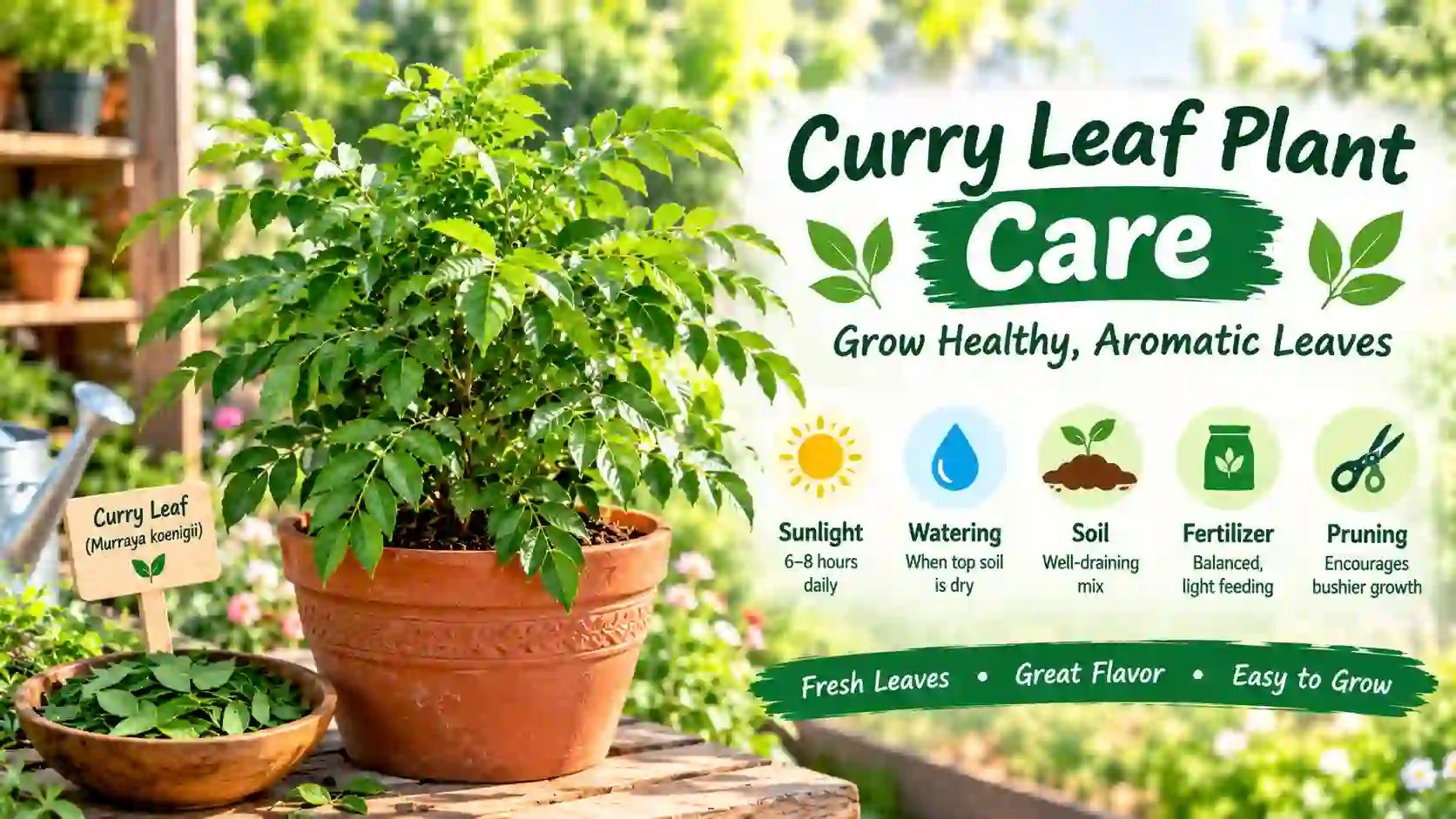
Curry leaf plant care starts with plenty of sunlight, warm temperatures, well-draining soil, and careful watering. Grow your curry leaf plant (Murraya koenigii) in a sunny location and water when the upper layer of soil begins to dry. Use a pot with drainage holes, feed lightly during active growth, and protect the plant from frost. Regular pruning encourages branching and gives you more fresh, aromatic leaves for cooking.
Understand the Curry Leaf Plant
The curry leaf plant, scientifically known as Murraya koenigii, belongs to the citrus family, Rutaceae. It is a tropical to subtropical plant that can grow into a small tree under suitable conditions.
Its glossy, pinnate leaves consist of multiple small leaflets arranged along a central stem. These leaves release a distinctive aroma when crushed and are commonly used fresh in cooking.
Why grow curry leaves at home?
- Fresh flavor: Harvest leaves whenever a recipe calls for them.
- Convenience: Keep a useful culinary herb close to your kitchen.
- Long-term growth: A well-maintained plant can provide leaves for years.
- Flexible growing options: Grow it in a garden bed, container, or suitable indoor space.
One important distinction: the curry leaf plant is not the same as the curry plant (Helichrysum italicum), an unrelated herb with a different aroma. Always look for Murraya koenigii when buying a plant for cooking.
How Much Sunlight Does a Curry Leaf Plant Need?

Curry leaf plants grow best with abundant sunlight. Strong light supports compact growth, healthy foliage, and the development of new shoots.
Aim for approximately 6–8 hours of sunlight daily when growing an established plant outdoors. In extremely hot climates, protection from the harshest afternoon sun may help prevent leaf scorch, particularly in containers.
Best locations for curry leaf plants
| Growing location | Suitability | Practical advice |
|---|---|---|
| Sunny outdoor garden | Excellent | Choose a warm, bright position with good drainage |
| Sunny patio or balcony | Excellent | Rotate the pot occasionally for even growth |
| Bright indoor window | Possible | Use the sunniest available window |
| Dim room or shaded corner | Poor | Supplement with a suitable grow light if needed |
How to introduce sunlight safely
If your plant has spent weeks in a shaded nursery, do not immediately place it in intense midday sun.
- Start with gentle morning sunlight.
- Increase exposure gradually over several days.
- Observe the leaves for pale patches, browning, or wilting.
- Adjust the location if the foliage shows signs of sun stress.
Expert tip: If your curry leaf plant produces long, weak stems with widely spaced leaves, check its light levels before adding fertilizer. Insufficient sunlight can limit growth even when nutrients are available.
Image suggestion: A 16:9 infographic comparing a compact, healthy curry leaf plant in bright sunlight with a sparse plant growing in deep shade.
Choose the Best Soil for Curry Leaf Plants
Healthy roots are the foundation of a productive curry leaf plant. The soil should hold enough moisture for the roots while allowing excess water to drain freely.
Heavy, compacted soil can remain wet for too long. This reduces oxygen around the roots and increases the risk of root damage.
What soil mix works best?
For a curry leaf plant growing in a container, start with:
- Two parts quality potting mix.
- One part perlite or pumice.
- Optional fine compost, provided the mix remains airy and drains well.
This is a practical starting recipe rather than a strict formula. If your potting mix already drains well, you may not need additional amendments.
Garden-grown plants benefit from soil that drains well and contains organic matter. If your garden has heavy clay soil, consider a raised bed or container rather than planting in a persistently waterlogged area.
Does curry leaf need acidic soil?
Curry leaf plants generally grow well in slightly acidic to neutral soil. A mildly acidic soil around pH 6–7 is a useful target for container growing, although drainage and root health are equally important.
Avoid repeatedly adding lime, sulfur, or other pH-adjusting products without first testing the soil.
Practical tip: After watering, check how quickly the container drains. If water pools on the surface or the soil remains soggy for extended periods, improve the mix and drainage before changing your fertilizer routine.
Image suggestion: A labeled soil infographic showing potting mix, perlite, compost, and a container with open drainage holes.
How to Water a Curry Leaf Plant Correctly
Curry leaf plants need regular moisture during active growth, but they do not tolerate constantly waterlogged roots.
The correct watering frequency depends on temperature, sunlight, pot size, soil composition, and the plant’s growth stage. A small container in hot weather may dry much faster than a large pot in a cool room.
Step-by-step watering method
Step 1: Check the soil
Feel the upper inch or two of soil. If it has started to dry, check slightly deeper before deciding whether to water.
Step 2: Water thoroughly
Apply water evenly around the root zone until excess water exits the drainage holes.
Step 3: Allow drainage
Empty the saucer after watering. Do not leave the container standing in water.
Step 4: Check again
Let the surface begin drying before watering again. Avoid letting the entire root ball become bone-dry for extended periods.
How often should you water curry leaves?
Use these guidelines as a starting point:
- Hot summer weather: Check container soil daily because it may dry quickly.
- Warm growing weather: Water when the upper layer dries and the root zone needs moisture.
- Cooler weather: Check less frequently as growth and evaporation slow.
- Indoor growing: Use soil moisture rather than a calendar to determine when to water.
Do not assume a drooping plant always needs water. Both underwatering and root damage from excessive moisture can cause wilting.
Image suggestion: A 16:9 watering guide showing soil checking, thorough watering, drainage, and the soil drying before the next watering.
Temperature and Humidity Requirements
Curry leaf plants prefer warm conditions and can struggle with prolonged cold exposure. Temperature management is particularly important for plants grown in containers because their roots are more exposed to changing conditions.
Ideal growing conditions
- Temperature: Warm conditions around 65–85°F (18–29°C) generally support growth.
- Cold protection: Protect plants from frost and prolonged cold weather.
- Humidity: Average household humidity can work, although dry indoor air may contribute to leaf stress.
- Air circulation: Provide gentle airflow and avoid persistently damp, stagnant conditions.
These ranges are practical guidelines, not rigid limits. Established plants may tolerate brief fluctuations, while young plants and stressed specimens are more vulnerable.
How to protect curry leaves during winter
If temperatures fall in your area, move container-grown plants to a bright, protected location before frost threatens.
Reduce watering when growth slows, but do not leave the root ball completely dry for long periods. Avoid placing the plant directly against a cold window or beside a heating vent.
In a warm climate, an outdoor curry leaf plant may continue growing through much of the year. In cooler regions, growth may slow or leaves may drop during winter.
Image suggestion: A split-panel image showing a healthy curry leaf plant on a sunny summer patio and a protected container plant near a bright indoor window during winter.
How to Fertilize Curry Leaf Plants for Healthy Foliage
Curry leaf plants need nutrients to produce new shoots and aromatic leaves. However, excessive feeding can damage roots, contribute to salt buildup, and encourage weak growth when light is inadequate.
Which fertilizer should you use?
A balanced fertilizer suitable for edible plants is a practical option. Follow the product label and select a rate appropriate for container-grown plants.
You can also use mature compost to improve soil structure and supply some nutrients. Compost alone may not meet every plant’s nutritional needs, especially in a small container.
A simple feeding routine
- Begin feeding when the plant is actively producing new growth.
- Apply fertilizer according to the label.
- Feed only when the plant is reasonably healthy and the soil drains well.
- Reduce or pause feeding during periods of slow growth.
- Watch for salt buildup, leaf-tip damage, or unusual changes after application.
For many actively growing container plants, a light monthly feeding may be a reasonable starting point, depending on the fertilizer strength and growing conditions.
Why are curry leaf plants not growing after fertilizing?
Additional fertilizer will not fix every growth problem. If the plant receives little sunlight, remains waterlogged, or has damaged roots, it may still grow poorly.
Check the growing conditions first. Feed only when nutrients are likely to be limiting growth.
Image suggestion: Show a curry leaf plant receiving a measured application of fertilizer, with a small comparison panel illustrating healthy foliage versus possible fertilizer burn.
How to Prune a Curry Leaf Plant for More Leaves
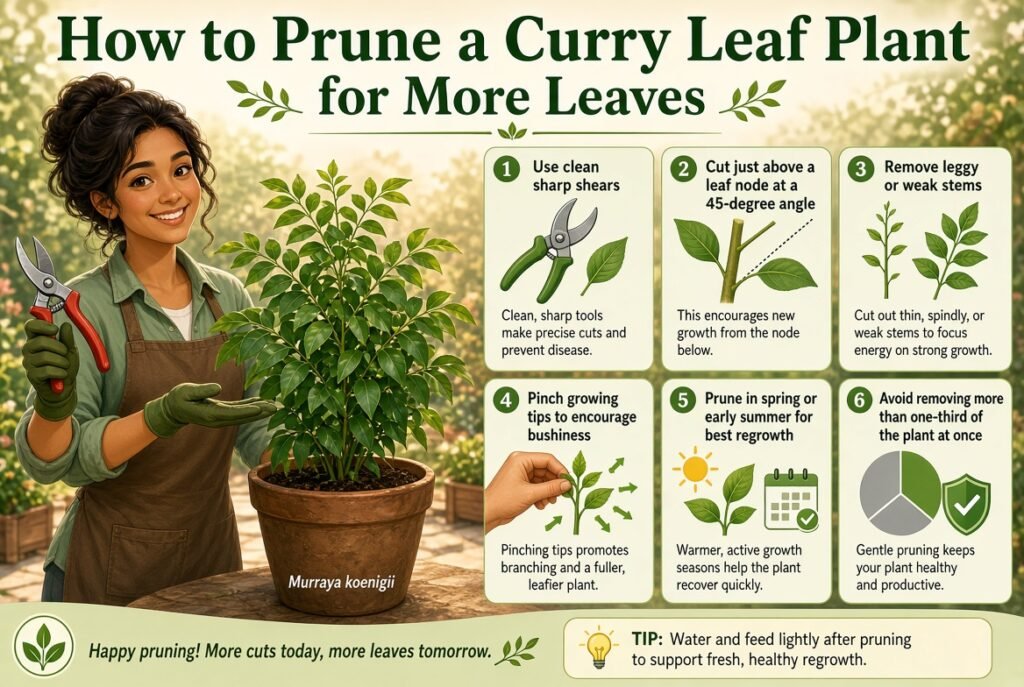
Pruning encourages branching and helps keep a curry leaf plant manageable, especially in containers. It also makes harvesting easier.
An unpruned young plant may develop a tall, narrow shape. Carefully removing the growing tip can encourage side shoots and a fuller canopy.
How to prune correctly
1. Use clean pruning shears
Clean tools help reduce the spread of plant diseases and make neat cuts.
2. Trim above a healthy node
A node is the point where leaves or branches emerge. Cutting above a suitable node can encourage branching.
3. Shape gradually
Remove weak or crowded shoots and avoid cutting away too much foliage at once.
When should you prune?
Prune during active growth, when the plant can respond with new shoots. In warm climates, this may be possible for much of the year.
Avoid heavy pruning when the plant is severely stressed, newly transplanted, or struggling with root damage.
Wear gloves if you have sensitive skin, and clean your tools after pruning.
Image suggestion: A before-and-after comparison showing a tall curry leaf plant and a fuller, well-branched plant after careful pruning.
How to Grow Curry Leaf Plants in Pots
Container growing is ideal when garden space is limited or when you need to move the plant indoors during cold weather.
However, container plants need more attention to watering and nutrients because their roots have less room to spread.
Choosing the right pot
Select a sturdy pot with drainage holes. A young plant can start in a medium-sized container, while a larger specimen may need a heavier pot for stability.
Avoid choosing an excessively large container. A large volume of unused soil can remain wet for too long, especially when the plant is small.
When should you repot?
Repot when roots crowd the container, water runs through unusually quickly, or the soil structure deteriorates.
Choose a pot only modestly larger than the current root ball. Use fresh, well-draining potting mix and water thoroughly after repotting.
Allow the plant to settle before applying fertilizer or performing heavy pruning.
Image suggestion: Show a young curry leaf plant in a starter pot, a mature plant in a larger container, and a close-up of drainage holes.
How to Propagate Curry Leaf Plants
Curry leaf plants can be propagated from fresh seed or suitable stem cuttings. Success varies with seed freshness, temperature, moisture, and the condition of the cutting.
Growing curry leaves from seeds
Fresh seeds generally offer better prospects than old, dried seeds. Curry leaf seeds are enclosed in dark fruits, and their viability can decline during storage.
- Obtain fresh, viable seed from a reliable source.
- Prepare a clean, moist seed-starting mix.
- Sow the seed according to the supplier’s guidance.
- Keep the mix warm and evenly moist, not saturated.
- Provide bright light once seedlings emerge.
- Transplant seedlings carefully after they develop sufficient growth.
Germination may be slow or uneven. Do not discard a seed tray too early if conditions remain suitable.
Growing curry leaves from cuttings
Stem cuttings can be less predictable than seed propagation. Use healthy, semi-mature material and a suitable propagation medium.
- Take cuttings from a healthy plant.
- Remove leaves from the portion that will sit in the medium.
- Insert the cutting into a moist, well-aerated propagation mix.
- Maintain warmth, bright indirect light, and suitable humidity.
- Check gently for root development rather than repeatedly pulling on the cutting.
Not every cutting will root. If propagation success is important, start several cuttings instead of relying on one.
Image suggestion: Create a side-by-side propagation infographic showing fresh curry leaf seeds, a young seedling, a prepared stem cutting, and a rooted young plant.
How to Harvest Curry Leaves Without Damaging the Plant
Regular harvesting provides fresh leaves and can help maintain a manageable plant shape. However, removing too much foliage from a young or stressed plant can slow its development.
Best way to harvest curry leaves
- Wait until the plant has established healthy growth and several leafy branches.
- Select a healthy branch with plenty of mature leaflets.
- Harvest a small leafy sprig using clean scissors.
- Leave enough foliage for continued growth.
- Avoid stripping every branch or repeatedly cutting the same weak shoot.
Use fresh leaves promptly for the best aroma. You can also wash and dry them carefully, then refrigerate or freeze them for later use.
When is the best time to harvest?
Harvest whenever the plant is actively growing and has enough foliage to spare. Young plants benefit from light harvesting until their branching structure becomes stronger.
Expert tip: If your plant produces many long stems but few side branches, combine selective harvesting with light pruning. This helps shape the plant without removing excessive foliage.
Image suggestion: A close-up of hands harvesting a leafy curry leaf sprig from a mature potted plant, with a bowl of freshly picked leaves beside it.
Common Curry Leaf Plant Problems and Their Solutions
Curry leaf plants often show visible symptoms before their health declines significantly. The challenge is identifying the underlying cause rather than treating every symptom the same way.
Yellow leaves
Possible causes: Excessive watering, poor drainage, insufficient light, or nutrient problems.
What to do: Check soil moisture first. If the soil stays wet, improve drainage before adding fertilizer.
Brown or crispy leaf edges
Possible causes: Dry soil, excessive heat, fertilizer salts, or environmental stress.
What to do: Review recent watering, sunlight exposure, and fertilizer use. Do not assume the plant needs more water without checking the soil.
Slow or leggy growth
Possible causes: Insufficient light, root restriction, cool conditions, or inadequate nutrition.
What to do: Improve light gradually, inspect the roots if necessary, and feed only when active growth and nutrient needs justify it.
Sticky leaves or visible pests
Possible causes: Aphids, scale insects, or other sap-feeding pests.
What to do: Inspect leaf undersides and stems, isolate the plant if necessary, and use a suitable treatment labeled for edible plants.
Why is my curry leaf plant losing leaves?
Leaf drop can occur after a sudden change in temperature, insufficient light, drought, excessive moisture, or root damage.
Check the plant’s recent history:
- Was it moved from a nursery or outdoor garden?
- Has the weather become colder?
- Is the soil remaining wet for too long?
- Has the plant been exposed to intense heat?
- Are pests visible on the leaves or stems?
Correct the most likely cause and keep the plant’s conditions stable. Avoid changing the watering schedule, fertilizer, and location all at once.
Curry Leaf Plant Care Through the Seasons
Your care routine should change with the plant’s growth and local weather. A curry leaf plant in a warm outdoor garden may behave differently from one growing indoors or in a cooler climate.
| Season | Main care priorities |
|---|---|
| Spring | Encourage new growth, resume suitable feeding, and prune lightly |
| Summer | Monitor soil moisture, provide adequate sunlight, and protect from extreme heat |
| Autumn | Reduce feeding if growth slows and inspect for pests |
| Winter | Protect from cold, reduce watering as needed, and provide the brightest available light |
Special care for hot weather
In hot climates, container soil can dry rapidly. Check it frequently during heat waves, especially if the plant receives direct sunlight.
If leaves become scorched, provide protection from intense afternoon sun while maintaining good overall light.
Special care for cold weather
Curry leaf plants are tropical and are vulnerable to frost. Move potted plants to a warm, bright, protected location before freezing conditions arrive.
When growth slows, reduce watering according to soil moisture. Do not continue feeding heavily when the plant is barely growing.
Image suggestion: A four-season curry leaf plant care infographic showing spring pruning, summer watering, autumn maintenance, and winter frost protection.
Common Curry Leaf Plant Care Mistakes to Avoid
Small mistakes can gradually reduce leaf production and weaken the plant.
- Watering too frequently: Roots need oxygen as well as moisture. Check the soil before watering.
- Growing in deep shade: Inadequate light often produces weak growth and fewer usable leaves.
- Using heavy soil: Compacted soil can retain excess moisture and restrict root development.
- Overfertilizing: Too much fertilizer may damage roots instead of improving growth.
- Harvesting too aggressively: Young plants need enough foliage to support continued development.
- Ignoring cold weather: Prolonged cold exposure can cause serious damage.
- Choosing a pot without drainage: Excess water must be able to escape.
- Expecting immediate growth: Young plants may take time to establish a strong root system and branching structure.
The most useful habit is to observe your plant regularly. Changes in leaf color, soil moisture, and new growth often provide early clues about what needs attention.
Frequently Asked Questions About Curry Leaf Plant Care
How much sunlight does a curry leaf plant need?
An established outdoor plant generally benefits from around 6–8 hours of sunlight daily. In extremely hot weather, some afternoon protection may prevent leaf scorch.
How often should I water my curry leaf plant?
Water when the upper layer of soil begins to dry and the root zone needs moisture. Container size, temperature, sunlight, and soil composition determine how often watering is necessary.
Can I grow a curry leaf plant indoors?
Yes. Place it near a bright, sunny window and use a pot with drainage holes. If natural light is insufficient, a suitable grow light can help support healthy growth.
Why is my curry leaf plant not growing?
Common reasons include insufficient sunlight, cool temperatures, restricted roots, poor drainage, and nutrient deficiencies. Check these conditions before adding fertilizer.
What is the best fertilizer for curry leaf plants?
A balanced fertilizer suitable for edible plants is a practical option. Apply it according to the label during active growth, and avoid overfeeding.
How do I make my curry leaf plant bushier?
Pinch or prune growing tips when the plant is healthy and actively growing. This can encourage side branches and create a fuller shape.
Can curry leaf plants survive winter?
They may survive mild winters in suitable outdoor conditions, but frost can damage or kill them. In colder areas, move container-grown plants into a protected location.
Can I grow curry leaves from a cutting?
Yes, stem cuttings can work, although rooting success varies. Use healthy material, a suitable propagation medium, warmth, and consistent moisture without waterlogging.
Why are my curry leaf leaves turning yellow?
Yellowing may result from overwatering, poor drainage, inadequate light, or nutrient problems. Check the soil and roots before deciding on a treatment.
When can I start harvesting curry leaves?
Begin light harvesting once the plant is established and has enough healthy foliage. Avoid removing too many leaves or branches from a small plant.
Does a curry leaf plant need pruning?
Pruning is useful for shaping the plant and encouraging branching. Remove weak or crowded growth and avoid heavy pruning when the plant is stressed.
Why is my curry leaf plant losing leaves in winter?
Cool temperatures, reduced light, and changes in watering can trigger leaf loss. Keep the plant warm, provide bright light, and avoid waterlogged soil.
Related Topics for Internal Linking
If you publish other gardening guides, these related topics can help readers continue learning:
- How to Grow Herbs in Pots
- Best Soil for Indoor Plants
- How to Fix Yellow Leaves on Plants
- How to Grow Mint at Home
- How to Grow Coriander in Containers
- How to Prune Plants for Bushier Growth
- How to Protect Tropical Plants in Winter
Use descriptive anchor text and link only to relevant articles that are available on your website.
Conclusion
Successful curry leaf plant care depends on consistent sunlight, well-draining soil, careful watering, and protection from cold weather.
Start by choosing a bright location and a suitable container. Check the soil before watering, feed moderately during active growth, and prune selectively to encourage branching. Harvest leaves gradually so the plant can continue producing fresh foliage.
If your curry leaf plant begins to yellow, lose leaves, or grow slowly, investigate its growing conditions before applying treatments. With patience and a routine suited to your climate, you can maintain a healthy plant and enjoy fresh, aromatic curry leaves at home.