
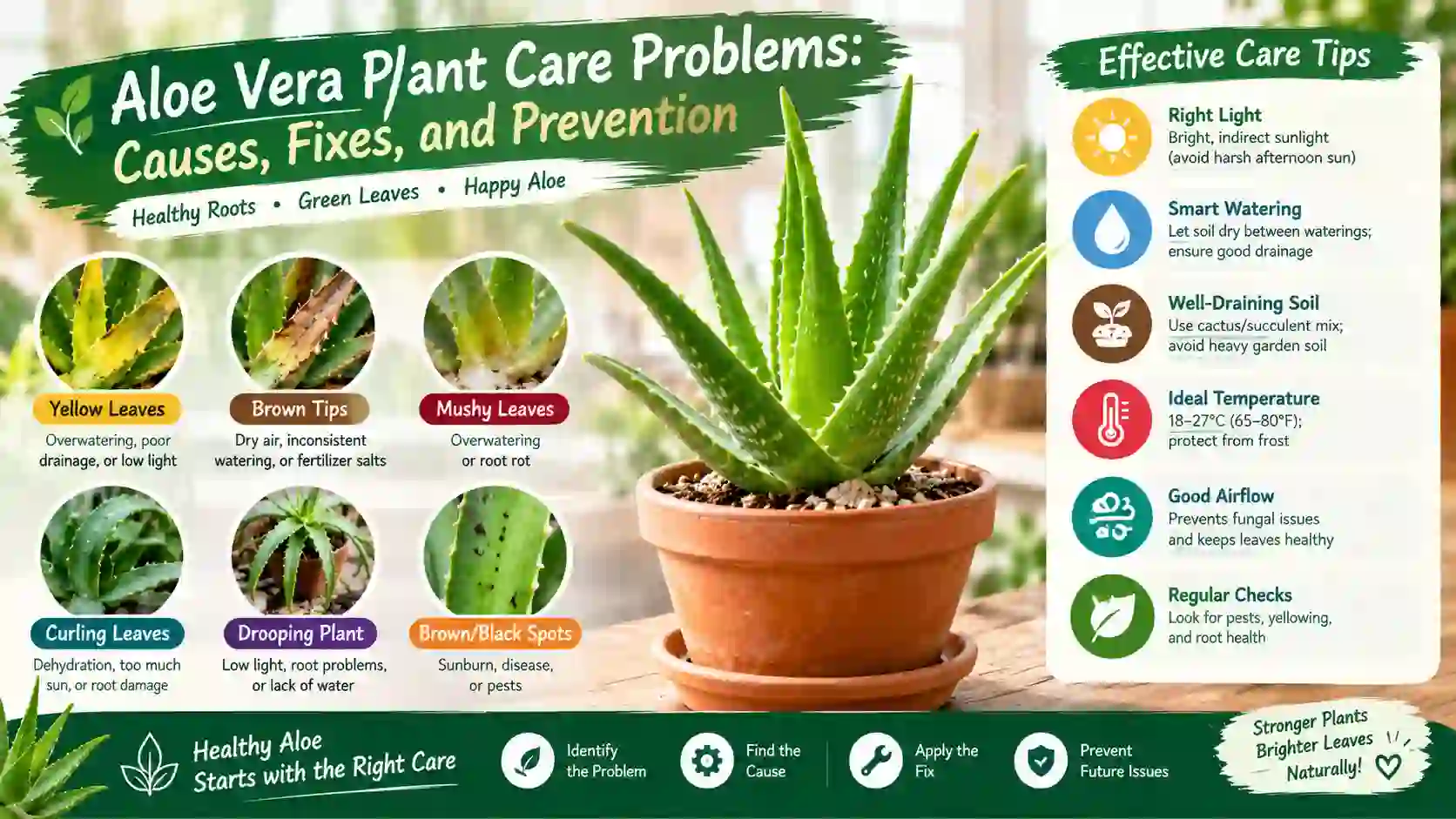
Aloe vera is a popular succulent because it stores water in its thick, fleshy leaves and usually needs little maintenance. However, even a hardy plant can develop problems when its growing conditions are unsuitable.
If your aloe vera has turned brown, become soft, developed yellow leaves, or stopped growing, the symptoms can be confusing. Brown leaves do not always mean the plant needs water, and yellow leaves do not automatically mean it needs fertilizer.
The key is to look at the whole plant, including its leaves, base, roots, pot, and soil. This guide explains the most common aloe vera plant care problems, how to recognize their causes, and what to do to help your plant recover.
Quick Answer
The most common aloe vera plant care problems include brown tips, yellow leaves, soft or mushy stems, curling leaves, drooping, root rot, and slow growth. Overwatering and poor drainage are frequent causes, but too much direct sun, insufficient light, cold temperatures, and pests can also damage aloe vera. To fix the problem, inspect the leaves and roots, check soil moisture, adjust the plant’s light exposure, and use a pot with drainage holes. Identify the cause before watering or fertilizing, because the wrong treatment can make a struggling aloe worse.
1. Identify the Problem Before Treating Your Aloe
Aloe vera symptoms often overlap, so one visual clue rarely tells the whole story. A drooping plant, for example, may have dehydrated roots or roots damaged by excess moisture.
Start with these checks:
- Touch the leaves. Firm leaves are generally healthier than leaves that feel translucent, mushy, or unusually limp.
- Check the soil several inches below the surface. Dry surface soil does not guarantee that the root zone is dry.
- Inspect the base of the plant. A dark, soft, or foul-smelling base may indicate rot.
- Review recent changes. Moving the plant into stronger sunlight, repotting it, or leaving it near a cold window can trigger stress.
- Look for pests. Small insects, cottony patches, sticky residue, or unusual spotting may indicate an infestation.
Aloe vera grows best in a well-drained growing medium, with watering adjusted to how quickly the soil dries. Extension guidance also recommends avoiding standing water and protecting the plant from cold conditions.
Image suggestion: Create a troubleshooting infographic showing a healthy aloe vera beside examples of yellow leaves, brown tips, mushy leaves, and drooping growth.
2. Aloe Vera Leaves Turning Yellow


The cause may be excess water, insufficient light, sun stress, pests, or normal aging of an older lower leaf.
Why aloe vera leaves turn yellow
- Overwatering: Roots remain wet for too long and may lose their ability to absorb water and nutrients.
- Poor drainage: Dense soil or a pot without drainage holes traps moisture around the roots.
- Insufficient light: A plant kept in a dark corner may produce weak growth and lose its healthy color.
- Excessive sunlight: A sudden move into intense direct sun can damage leaves, sometimes causing pale, yellow, or brown patches.
- Natural aging: One old leaf near the bottom may gradually yellow while the rest of the plant remains healthy.
How to fix yellow aloe vera leaves
- Check soil moisture before watering again.
- If the soil is wet for several days, inspect the drainage holes and consider whether the mix is too dense.
- If leaves are soft and yellow and the base smells unpleasant, inspect the roots for rot.
- Move the plant to a bright location and introduce stronger sunlight gradually.
- Remove a completely dead leaf with a clean tool, but do not cut healthy leaves unnecessarily.
Do not fertilize a yellowing plant automatically. Fertilizer will not fix damaged roots, waterlogged soil, or light stress.
Important: Yellow leaves that feel soft and watery suggest a different problem from yellow leaves that feel thin, dry, and wrinkled. Always assess both texture and soil moisture.
3. Aloe Vera Leaves Turning Brown
Brown leaves can result from sunburn, watering problems, cold exposure, physical damage, or leaf disease. The pattern and location of the damage help narrow down the cause.
| What you notice | Possible cause | What to do |
|---|---|---|
| Dry, crispy tips | Inconsistent watering, root stress, or environmental stress | Check the soil and roots before adjusting watering |
| Pale brown or bleached patches on the sun-facing side | Sunburn after a sudden increase in sunlight | Move to bright, filtered light and acclimate gradually |
| Brown, soft leaves near the base | Possible rot from excess moisture | Inspect the base and roots immediately |
| Dark spots that spread | Possible disease or persistent moisture on damaged tissue | Isolate the plant and inspect the spots closely |
| Damage after a cold night | Cold injury | Move the aloe to a warmer, draft-free location |
Excess moisture and poor growing conditions can cause brown tips and leaf spots. Aloe may also develop diseases such as aloe rust, so persistent or spreading spots deserve closer inspection.
How to prevent brown leaves
- Keep aloe away from cold drafts and frosty outdoor conditions.
- Provide strong light without abruptly exposing indoor-grown leaves to harsh midday sun.
- Use a pot with drainage holes and a fast-draining succulent mix.
- Avoid leaving water trapped around the plant’s crown.
- Do not repeatedly cut brown tips if the damage is minor and stable.
Brown tissue usually does not turn green again. Focus on preventing additional damage and encouraging healthy new growth.
4. Aloe Vera Leaves Becoming Soft or Mushy


Soft, translucent, or mushy leaves are a warning sign. When the base or roots are also soft, overwatering and rot are major concerns.
Aloe stores water in its leaves. It does not need frequent watering, especially when indoor temperatures are cool or sunlight is limited.
Common causes
- Watering before the soil has dried.
- Growing the plant in ordinary potting soil that stays wet for too long.
- Using a decorative pot without drainage.
- Allowing the inner pot to stand in water.
- Cold damage that weakens leaf tissue.
How to rescue a mushy aloe vera plant
- Stop watering while you assess the plant.
- Remove the plant from its pot if the soil is saturated or the base is deteriorating.
- Gently remove wet soil and inspect the roots.
- Trim clearly rotten roots with a clean, sharp tool.
- If the crown or stem base is extensively rotten, healthy offsets may be the best chance of saving the plant.
- Repot any salvageable plant in fresh, well-draining succulent mix and a pot with drainage holes.
Do not simply leave a severely rotting plant in wet soil and hope it dries out. Root damage can continue even when watering stops.
After repotting, avoid immediately soaking a plant with freshly cut roots. Allow wounds to dry and follow a conservative watering schedule appropriate to the extent of root damage.
When recovery is unlikely: If the central growing point and the entire stem base have become soft and rotten, the main plant may not recover. A healthy, firm offset can sometimes be separated and grown independently.
5. Aloe Vera Leaves Curling Inward
Curling or folding leaves may indicate that the plant is conserving moisture. However, leaf curling can also result from root damage, intense light, or cold stress.
How to tell what is happening
- Dry soil and thin, folded leaves: The plant may be dehydrated.
- Wet soil and limp leaves: The roots may be damaged and unable to supply water properly.
- Curling after a move to a sunny window: Sun or heat stress may be responsible.
- Curling after exposure to cold: Temperature damage may be involved.
What to do
First, check the moisture in the root zone. If the soil is completely dry and the leaves are thinner than usual, water the plant thoroughly and allow excess water to drain. If the soil is still wet, do not add more water; investigate drainage and root health instead.
Aloe can tolerate dry conditions, but prolonged dehydration can cause leaves to wrinkle and curl. Conversely, overwatering may produce similar-looking symptoms because damaged roots cannot function properly.
Expert tip: Never diagnose dehydration from curled leaves alone. Check the soil and the firmness of the plant’s base before watering.
6. Aloe Vera Plant Drooping or Falling Over
A healthy aloe generally holds its fleshy leaves upright or spreads them outward in a firm rosette. Drooping can indicate weak growth, damaged roots, or leaves that have become too heavy for an unstable plant.
Likely causes
- Too little light: Leaves may become elongated, weak, or stretched toward a window.
- Root rot: Damaged roots cannot anchor the plant or absorb water effectively.
- Dehydration: Leaves may lose firmness and bend.
- A top-heavy plant: A large rosette may become unstable in a small or lightweight pot.
- Crowded offsets: Numerous pups can make the plant cluster unevenly.
How to correct drooping
- Move the aloe to a brighter location if it has been growing in low light.
- Rotate the pot periodically so growth receives more even light.
- Check roots if the plant wobbles at the base or the soil stays wet.
- Use a stable pot that is appropriately sized for the root system.
- Separate offsets if crowding is severe.
Do not bury the crown deeply to hold the plant upright. Keeping the base near the soil surface helps reduce the risk of crown rot.
If the leaves are firm and healthy but spread outward naturally, the plant may simply be growing into its normal shape rather than showing a problem.
7. Aloe Vera Has Brown or Black Spots
Spots can develop from sun damage, physical injury, fungal disease, pests, or moisture-related tissue damage. The location, texture, and progression of the spots matter.
Common patterns
- Dry, pale patches: May indicate sunburn or old physical damage.
- Dark, water-soaked spots: Can signal tissue breakdown or infection.
- Small black spots that spread: May require investigation for leaf disease.
- Spots with visible insects or fine webbing: May be associated with pest activity.
Aloe can be affected by pests such as aphids, mealybugs, and scale, as well as diseases including leaf spot and aloe rust.
Treatment steps
- Separate a plant with unexplained, spreading spots from nearby plants.
- Keep the leaves dry when watering and improve airflow around the plant.
- Remove badly damaged leaves with clean tools when necessary.
- Inspect the leaf undersides, leaf joints, and crown for insects.
- Correct persistent wet soil and poor drainage.
- If spots continue spreading despite better care, seek a diagnosis from a local plant clinic or extension service.
Avoid applying a fungicide without identifying the likely disease and checking that the product is suitable for the plant and intended use.
8. Aloe Vera Roots Rotting
Healthy aloe roots are generally firm. Rotten roots may appear brown or black, feel soft, and break apart easily. A sour or unpleasant smell from the soil is another warning sign.
Why aloe vera develops root rot
Root rot commonly develops when soil remains wet for too long. Poor drainage, oversized pots, low light, and frequent watering can all contribute. Some root diseases are caused by pathogens, so excess moisture is a major risk factor rather than the only possible cause.
How to treat aloe vera root rot

Step 1: Remove the plant
Gently lift the aloe from its pot if the soil remains wet or the plant is deteriorating. Remove loose, soggy soil without pulling healthy roots apart.

Step 2: Inspect and trim
Use a clean, sharp tool to remove soft, decayed roots. Keep firm roots and avoid unnecessary cutting.

Step 3: Repot correctly
Use fresh cactus or succulent mix in a pot with drainage holes. Choose a container that fits the remaining root system instead of a much larger pot.

Step 4: Adjust aftercare
Keep the plant warm, provide bright light, and avoid immediate heavy watering. Resume watering cautiously once the roots and any cut surfaces have had suitable time to recover.
Aloe care guidance from university extensions consistently emphasizes fast drainage, allowing soil to dry between waterings, and preventing water from collecting beneath the pot.
Image suggestion: Create a step-by-step root-rot recovery infographic showing inspection, removal of rotten roots, repotting in gritty soil, and healthy new growth.
9. Aloe Vera Growing Slowly or Becoming Leggy
Aloe vera is not a fast-growing plant in every environment. Slow growth is often normal during cooler months, but stretched leaves or a leaning rosette may indicate inadequate light.
What causes slow or weak growth?
- Low light reduces the energy available for growth.
- Damaged roots limit water and nutrient uptake.
- Frequent watering can keep roots unhealthy.
- Cold conditions slow growth.
- Severe crowding can limit space for new roots and offsets.
- Excess fertilizer can damage roots instead of encouraging healthy growth.
How to encourage stronger growth
Place the plant near a bright window where it receives plenty of light. Introduce direct sun gradually, especially if the aloe has been kept indoors in a dim location. Rotate the pot periodically to prevent the plant from leaning heavily in one direction.
During active growth, water thoroughly when the soil has dried out. Use a suitable succulent mix, and apply a diluted, balanced fertilizer sparingly only when needed.
Avoid trying to force growth with frequent fertilizer applications. More fertilizer cannot compensate for inadequate light or unhealthy roots.
Related article opportunity: Link to your Aloe Plant Care Indoor: Complete Guide to Healthy Growth article for advice on lighting, watering, and indoor placement.
10. Aloe Vera Leaves Shriveling or Looking Thin
Thin, wrinkled leaves often mean the plant has lost stored moisture. However, root damage can produce a similar appearance because unhealthy roots cannot absorb water effectively.
How to distinguish underwatering from root problems
| Sign | Possible underwatering | Possible root damage |
|---|---|---|
| Soil | Dry deep into the pot | Often stays wet for too long |
| Leaves | Thin, wrinkled, or folded | May be limp, yellow, or soft |
| Roots | Usually firm if healthy | May be dark, soft, or decaying |
| Response to watering | Often improves gradually | May not improve and can worsen |
How to restore leaf firmness
If the soil is completely dry and the roots are healthy, water the plant thoroughly until excess water drains from the bottom. Empty the saucer and allow the soil to dry before watering again.
If the leaves remain shriveled despite watering, inspect the roots rather than repeatedly adding more water. A root-bound plant or a potting mix that repels water may also prevent effective watering.
Do not expect damaged leaves to regain their original shape immediately. Judge recovery by the condition of the crown and the health of new growth over time.
11. Aloe Vera Has Pests
Aloe vera is relatively resilient, but it can still attract insects and mites. Pests may weaken the plant, leave discolored patches, or cause sticky residue.

Mealybugs
Look for white, cotton-like clusters around leaf bases, crevices, and roots. Isolate the plant and remove visible insects carefully with a cotton swab. Check hidden areas again after treatment.

Scale insects
These may look like small brown or tan bumps attached to leaves. Inspect whether the bumps are insects rather than natural leaf markings, then remove them carefully and monitor for recurrence.

Fungus gnats
Small black flies hovering over the soil often indicate persistently damp potting mix. Allow the mix to dry appropriately, remove standing water, and check nearby houseplants for the same problem.
Mealybugs and scale are recognized aloe pests, while fungus gnats are commonly associated with moist potting soil.
A practical pest-control routine
- Isolate the affected aloe from other plants.
- Inspect leaf joints, the crown, and the soil surface.
- Remove visible pests with an appropriate gentle method.
- If necessary, use a product labeled for the specific pest and for use on the plant.
- Follow label instructions and repeat inspections, because eggs or hidden insects may survive the first treatment.
Avoid spraying a stressed aloe with several products at once. Test any permitted treatment as directed, and keep the plant out of intense direct sun while treated if the label advises it.
12. Aloe Vera Turning Red, Purple, or Reddish Brown
Aloe leaves sometimes develop red or reddish-brown tones when the plant experiences bright light, temperature changes, or other environmental stress. Some variation in color can be normal, depending on the plant and growing conditions.
Should you be worried?
- Uniform reddish tones with firm leaves: The plant may be responding to strong light or other environmental conditions.
- Redness after moving outdoors: The change may reflect sudden exposure to stronger sunlight.
- Redness combined with shriveling or brown patches: Check for dehydration, sunburn, and root problems.
- Dark, soft, or spreading damaged areas: Investigate tissue damage or disease.
How to manage color changes
If the plant was recently moved into stronger sunlight, give it time to acclimate in a bright but less intense location. Check the soil and roots before changing the watering routine.
Do not assume that red leaves mean the aloe needs fertilizer. First identify whether the color change coincides with a recent move, temperature change, or other stress.
13. Aloe Vera Not Producing New Leaves or Pups
Aloe vera produces new leaves from its growing center and may develop offsets, often called pups, around the base. A mature, healthy plant can produce pups, but their timing and number vary.
Reasons growth may be limited
- The plant is receiving too little light.
- Its roots are damaged or the soil drains poorly.
- Growth has slowed during a cooler or darker season.
- The plant is young or not yet producing offsets.
- Recent repotting has temporarily disrupted growth.
What you can do
Provide bright light, maintain a suitable watering routine, and avoid disturbing the roots unnecessarily. Fertilize lightly during active growth only if needed.
If you want more aloe plants, use healthy pups that have developed their own roots when possible. Separate them carefully with a clean tool, then plant them in well-draining succulent mix.
Avoid pulling small offsets away from the parent plant before they are developed enough to establish independently. Patience is usually more helpful than repeatedly repotting the plant to encourage growth.
14. Aloe Vera Problems Caused by Poor Light and Temperature
Watering is not the only factor behind unhealthy aloe. Light and temperature determine how quickly the plant uses water and how well it grows.
Light problems
Aloe needs abundant light indoors. A dim room may cause stretched growth, weak leaves, and slow development. On the other hand, moving a plant directly from a dim room into intense outdoor sun can cause sunburn.
Best approach: Increase light gradually. A bright window is often a good starting point, and a grow light can help when natural light is insufficient.
Temperature problems
Aloe vera is sensitive to cold and frost. Cold windows, drafts, and sudden temperature drops can cause discoloration and damaged tissue. Keep the plant in a warm, stable location and bring outdoor plants inside before cold conditions threaten them.
Seasonal adjustments
- Spring and summer: Growth is usually more active. Check soil moisture regularly and water when the mix has dried.
- Autumn: As light levels decline, watering may need to become less frequent.
- Winter: Growth often slows indoors. Allow the soil to dry thoroughly and avoid cold windows or excessive watering.
Do not follow a rigid weekly watering schedule. The right interval depends on the pot, soil, light, temperature, and plant size.
15. Quick Troubleshooting Chart
Use this chart to narrow down the most likely cause before changing your care routine.
| Problem | Most likely causes | First action |
|---|---|---|
| Yellow, soft leaves | Overwatering or root rot | Check soil moisture and roots |
| Brown, crispy tips | Water stress, root problems, or environmental stress | Inspect soil, roots, and leaf damage |
| Mushy leaves | Excess moisture, rot, or cold damage | Stop routine watering and inspect the base |
| Curled leaves | Dehydration, root damage, or excessive sun | Check soil and leaf firmness |
| Drooping plant | Weak light, dehydration, or damaged roots | Check light, soil, and root stability |
| Black or spreading spots | Possible disease or tissue damage | Isolate and inspect the plant |
| Thin, stretched leaves | Insufficient light | Increase light gradually |
| Shriveling leaves | Dehydration or unhealthy roots | Check soil and root condition |
| White cottony patches | Mealybugs | Isolate and treat the infestation |
| Tiny flies over soil | Persistently moist potting mix | Let the mix dry and improve drainage |
| No new growth | Low light, seasonal slowdown, or root stress | Check growing conditions before fertilizing |
| Red or purple leaves | Light or environmental stress, sometimes normal coloration | Review recent environmental changes |
These are diagnostic clues, not definitive diagnoses. Several problems can produce similar symptoms, so confirm the cause by examining the plant and its growing conditions.
16. How to Prevent
The best way to keep aloe healthy is to create conditions that suit its succulent growth habit. Consistent observation matters more than frequent intervention.
Use a pot with drainage holes
Choose a pot that allows excess water to escape freely. Terracotta can help the growing mix dry faster, especially in humid conditions. Do not let the pot sit in a saucer of standing water.
Choose fast-draining soil
Use a cactus and succulent potting mix that does not remain soggy. If your mix dries very slowly, improve its structure with suitable mineral ingredients such as pumice or perlite.
Water according to soil moisture
Water thoroughly when the soil has dried sufficiently, then let excess water drain. Reduce watering when growth slows and the soil takes longer to dry.
Provide enough light
Give aloe a bright location and introduce direct sunlight gradually. If the plant leans or becomes stretched, evaluate its light before applying fertilizer.
Avoid unnecessary feeding
Aloe generally needs little fertilizer. If you feed it, use a diluted fertilizer suitable for succulents during active growth and follow the product label.
Inspect the plant regularly
Look at the leaf bases, crown, and soil surface. Early detection of pests, root problems, and spreading spots can make treatment easier.
These preventive practices align with recommendations from NC State, Penn State, and UNH Extension.
17. Common Aloe Vera Care Mistakes to Avoid
Even well-intentioned care can harm aloe when it does not match the plant’s needs.
- Watering every week automatically: Soil may still be wet, especially in winter or low light.
- Using a pot without drainage: Excess water can collect around the roots.
- Moving aloe into full sun immediately: Leaves that developed in lower light may burn.
- Using ordinary garden soil in a container: It may become compacted and retain too much moisture.
- Fertilizing a struggling plant without checking its roots: Nutrients will not repair rot or correct poor drainage.
- Repotting repeatedly: Frequent disturbance can stress roots and delay recovery.
- Removing every imperfect leaf: Minor cosmetic damage does not always require pruning.
- Mistaking rot for thirst: Adding water to a plant with damaged roots can worsen its condition.
The most useful habit is to pause before treating a symptom. Check soil moisture, leaf texture, light exposure, and the condition of the plant’s base first.
Frequently Asked Questions
1. What is the most common aloe vera plant care problem?
Overwatering and poor drainage are among the most common problems. They can lead to yellow leaves, soft tissue, root rot, and a collapsing plant. Allow the soil to dry between waterings and use a pot with drainage holes.
2. How do I know if my aloe vera is overwatered?
Look for persistently wet soil, soft or yellow leaves, a darkened plant base, and roots that are brown or mushy. A foul smell may indicate advanced decay. Inspect the roots if these symptoms occur together.
3. Can a dying aloe vera plant be saved?
Often, yes, if some roots, the crown, or healthy offsets remain. Remove rotten tissue, correct the drainage problem, and provide suitable light. A plant with extensive crown and stem-base rot may not recover.
4. Should I cut off brown aloe vera leaves?
Remove leaves that are completely dead, badly damaged, or rotting, using a clean, sharp tool. Minor brown tips can remain if the rest of the leaf is healthy. Cutting brown tissue will not make it green again.
5. Why is my aloe vera turning yellow even though I water it correctly?
Possible causes include poor drainage, inadequate light, root damage, pests, or natural aging. Also check whether the soil dries properly between waterings. A fixed watering schedule can be unsuitable when light and temperatures change.
6. How often should I water aloe vera?
There is no universal weekly schedule. Water thoroughly when the potting mix has dried sufficiently, then allow excess water to drain. Indoor plants often need less frequent watering during cool, low-light periods.
7. Does aloe vera need direct sunlight?
Aloe needs abundant light and can tolerate direct sunlight when properly acclimated. Sudden exposure to strong sun can cause leaf damage. Increase direct exposure gradually, especially after moving the plant outdoors.
8. Why are my aloe vera leaves curling inward?
Curling may indicate dehydration, excessive light, cold stress, or damaged roots. Check whether the soil is dry or wet and examine the leaves for firmness. Do not water automatically without checking the root zone.
9. Why is my aloe vera plant drooping after repotting?
Repotting may temporarily stress roots, but persistent drooping can also indicate damaged roots, unsuitable soil, or insufficient light. Check the base and moisture level, then avoid repeated disturbance while the plant adjusts.
10. Can aloe vera recover from root rot?
Recovery is possible if enough healthy roots and living tissue remain. Remove decayed roots, use fresh, fast-draining soil, and correct the watering routine. If the main crown has rotted completely, a healthy offset may be a better option.
11. Why does my aloe vera have white patches?
White patches may be mealybugs, mineral residue, surface scarring, or other damage. Cotton-like clusters around leaf joints suggest mealybugs. Inspect closely before choosing a treatment.
12. Should I fertilize aloe vera when its leaves turn yellow?
Not automatically. Yellow leaves can result from watering problems, root damage, light stress, pests, or nutrient deficiencies. Correct the growing conditions first, then consider light feeding if the plant is otherwise healthy and actively growing.
Conclusion
Most aloe vera plant care problems become easier to solve when you examine the symptoms alongside the growing conditions. Yellow or mushy leaves may indicate excess moisture, while curling and shriveling can result from dehydration or damaged roots. Brown patches may point to sunburn, cold injury, or disease.
Start with three checks: soil moisture, root health, and light exposure. Use well-draining soil, a pot with drainage holes, and a watering routine based on how quickly the mix dries. Avoid unnecessary fertilizer and sudden changes in sunlight.
With the right adjustments, an aloe vera plant with healthy roots and a living crown can often produce firm new leaves even when older leaves remain damaged.