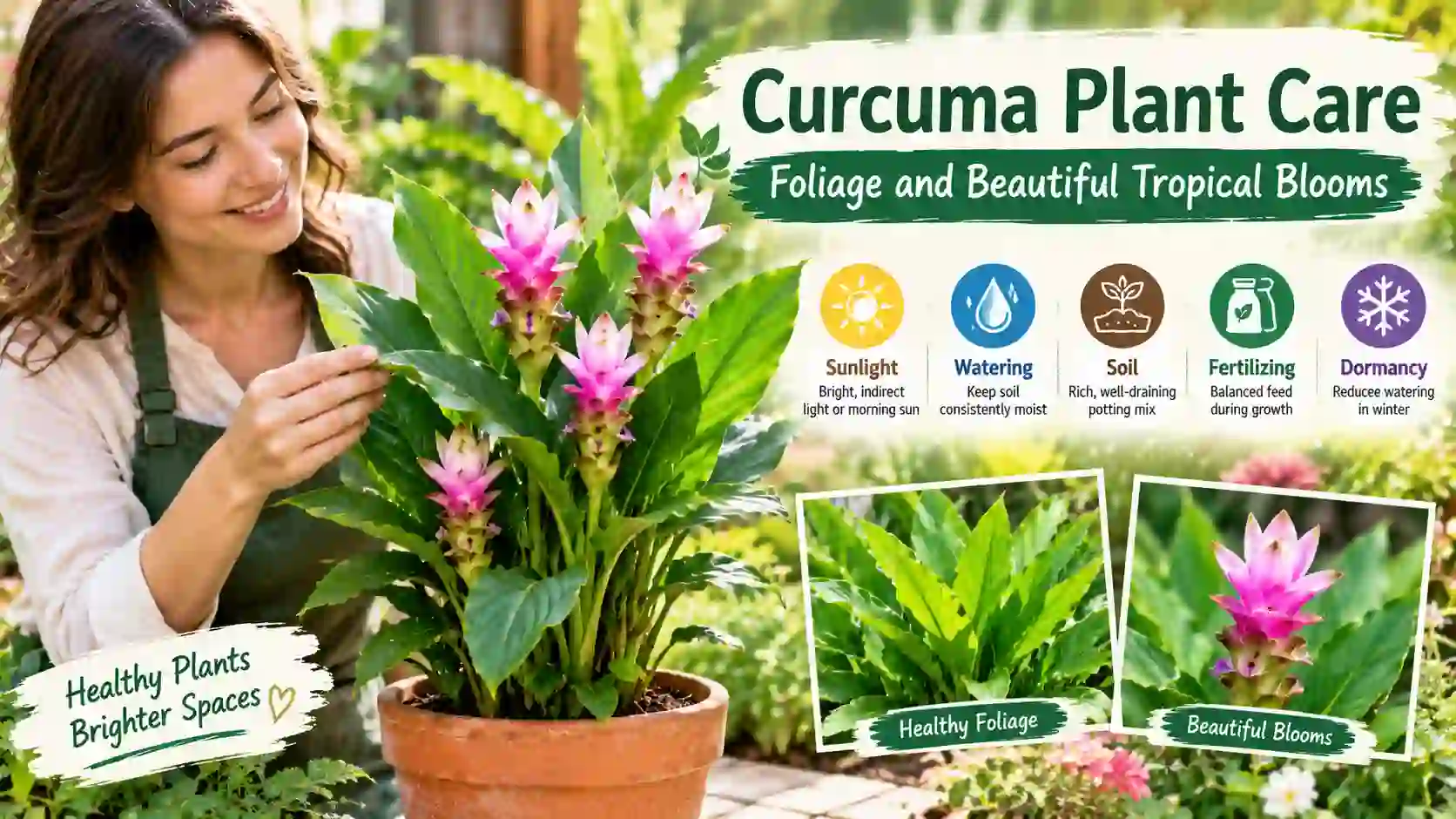
Curcuma plants bring a tropical feel to gardens, patios, and indoor spaces. Their broad green leaves and striking flower spikes make them attractive ornamental plants, while some varieties are related to the turmeric used in cooking.
However, curcuma plants can be confusing for beginners. Their leaves may turn yellow after flowering, growth can slow unexpectedly, and the plant may appear completely dead during winter dormancy. These changes do not always indicate a problem.
Successful curcuma plant care depends on understanding its seasonal growth cycle. During warm weather, the plant needs moisture, warmth, and nutrients to produce healthy foliage and flowers. During dormancy, its underground rhizomes need protection from cold and excessive moisture.
This guide explains how to grow curcuma in pots or garden beds, encourage flowering, manage dormancy, and solve common problems without unnecessary watering or fertilizer.
Quick Answer:
Curcuma plant care involves providing bright, indirect light or gentle morning sun, consistently moist but well-drained soil, warm temperatures, and moderate humidity. Water regularly during active growth, feed with a balanced fertilizer during the growing season, and protect the plant from cold weather. Many curcuma varieties naturally enter dormancy after flowering, so reduce watering when the leaves die back and resume care when new shoots emerge.
What Is a Curcuma Plant?
Curcuma is a genus of tropical plants in the ginger family, Zingiberaceae. These plants grow from underground rhizomes and are valued for their lush foliage and distinctive flowers.
Different curcuma species have different growing requirements and appearances. Popular ornamental types include Curcuma alismatifolia, often called Siam tulip, and Curcuma longa, the turmeric plant.
Ornamental curcumas produce colorful flower bracts in shades of pink, purple, white, or green, depending on the species and cultivar. Turmeric is grown primarily for its underground rhizomes rather than decorative flowers.
Why gardeners love curcuma plants
- Tropical flowers: Many ornamental varieties produce striking flower spikes during warm weather.
- Decorative foliage: Their broad, green leaves create a lush appearance in borders and containers.
- Container growing: Many varieties grow well in pots when drainage and moisture are managed correctly.
- Seasonal regrowth: Healthy rhizomes can produce fresh shoots during the next growing season.
- Garden versatility: Curcumas can brighten sheltered patios, tropical borders, and partially shaded garden beds.
Important distinction: Not every curcuma variety has identical cold tolerance, flowering habits, or mature size. Check the plant label when possible, especially if you plan to grow it outdoors year-round.
Ideal Growing Conditions for Curcuma Plants
The most important factors are warmth, suitable light, rich soil, and consistent moisture without waterlogging.
| Growing factor | Recommended conditions |
|---|---|
| Light | Bright, filtered light or gentle morning sun |
| Water | Consistently moist soil during active growth |
| Soil | Rich, loose, well-draining potting mix |
| Temperature | Warm conditions, ideally around 65–85°F (18–29°C) during growth |
| Humidity | Moderate to high humidity is beneficial |
| Fertilizer | Balanced fertilizer during active growth |
| Dormancy | Reduce watering as foliage dies back naturally |
These are general guidelines for many ornamental curcumas. Individual species and cultivars may need adjustments.
How Much Sunlight Does a Curcuma Plant Need?
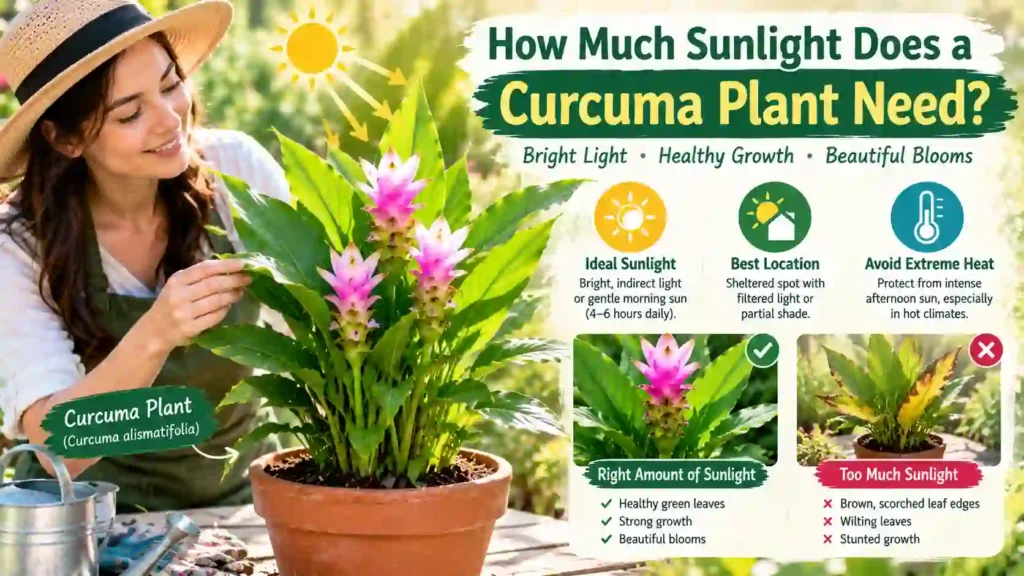
Most ornamental curcumas grow well in bright, filtered light or a location with gentle morning sun. In very hot climates, intense afternoon sunlight can scorch the leaves and cause brown patches along their edges.
For outdoor plants, choose a sheltered position with morning sunshine and partial shade later in the day. In cooler climates, some varieties tolerate more direct sunlight if the soil stays moist.
For indoor curcuma plants, place the pot near a bright window with filtered sunlight. Avoid a dark corner, as inadequate light can produce weak growth and reduce flowering.
Signs the light is unsuitable:
- Brown, scorched patches may indicate excessive sun or heat stress.
- Long, weak stems may indicate insufficient light.
- Healthy leaves with steady new growth generally suggest suitable conditions.
Acclimate nursery plants gradually when moving them into stronger outdoor light.
Image suggestion: Show a healthy curcuma in filtered light beside a second plant with scorched leaves, with simple labels explaining the difference.
What Is the Best Soil for Curcuma Plants?
Curcuma plants need soil that holds moisture but allows excess water to drain. Their roots and rhizomes can suffer when the growing medium remains saturated for long periods.
For container growing, use a high-quality potting mix amended with perlite, pumice, or fine bark to improve aeration. A mix rich in organic matter can help retain the moisture needed during active growth.
A practical starting mix is:
- Two parts quality potting mix.
- One part compost or well-aged organic matter.
- One part perlite or another suitable drainage amendment.
Use clean ingredients and a container with drainage holes. If you are planting in the ground, loosen compacted soil and improve drainage before planting.
Avoid heavy, compacted soil that stays waterlogged after rain. Also avoid extremely sandy soil that dries out too quickly unless you can monitor moisture closely.
What Temperature and Humidity Do Curcuma Plants Prefer?
Curcumas are generally warm-season plants. Many ornamental varieties grow best in warm conditions and slow down when temperatures fall.
Protect them from frost, cold winds, and prolonged chilling. In cooler regions, grow them in containers so they can be moved to shelter.
Moderate to high humidity supports healthy foliage, particularly indoors. However, high humidity combined with stagnant air and wet leaves can encourage fungal problems.
To maintain a suitable environment:
- Keep indoor plants away from cold drafts and air-conditioning vents.
- Provide gentle airflow around the foliage.
- Avoid placing the plant beside a heater that dries the leaves.
- Water the soil rather than repeatedly wetting the foliage.
How to Water a Curcuma Plant Correctly
Watering is one of the most important parts of curcuma plant care. During active growth, curcuma needs consistent moisture to support its broad leaves and flowering stems. However, moisture does not mean keeping the roots submerged in wet soil.
Step-by-step watering routine
- Check the soil. Feel the upper inch of potting mix before watering.
- Assess moisture. If the soil is still wet, wait and check again.
- Water thoroughly. When the surface begins to dry, water evenly around the root zone.
- Allow drainage. Let excess water escape through the drainage holes.
- Check the weather. Warm, sunny conditions usually increase water use, while cool weather slows it.
Plants growing in garden beds may need less frequent watering than those in small containers. A pot exposed to hot sun can dry much faster than one in partial shade.
How often should you water curcuma?
There is no universal weekly schedule. During active summer growth, you may need to check container plants daily in hot weather. In cooler conditions, watering may be needed much less frequently.
The soil should remain lightly and evenly moist during growth, not constantly saturated.
What happens when you overwater curcuma?
Overwatering can reduce oxygen around the roots and promote rhizome rot. Early warning signs may include yellowing leaves, soft stems, and soil that stays wet for an unusually long time.
If these symptoms appear, inspect the drainage and soil before adding fertilizer. If the rhizome has become soft or rotten, simply reducing watering may not be enough; the damaged tissue may need to be removed.
When should you reduce watering?
Reduce watering when the plant naturally enters dormancy and its foliage begins to yellow and die back. At this stage, the plant is no longer using as much water.
For dormant rhizomes kept in pots, avoid leaving the soil persistently wet. If you store lifted rhizomes, keep them in a suitable frost-free environment and follow the requirements of your variety.
Expert tip: A curcuma that has finished flowering is not necessarily thirsty just because its leaves are fading. Check whether the plant is entering its normal dormant period before increasing water or fertilizer.
How to Fertilize Curcuma for Healthy Growth and More Flowers
Curcuma benefits from nutrients during active growth, especially when grown in containers where available nutrients become depleted over time.
Use a balanced, complete fertilizer according to the product label. Start feeding when new shoots are actively growing, and continue during the growing season if the product instructions and plant condition support it.
Fertilizing tips
- Water the plant before applying fertilizer if the soil is very dry.
- Use the recommended dilution rather than applying extra fertilizer.
- Reduce or stop feeding when growth slows and the plant enters dormancy.
- Avoid fertilizing a plant with rotting roots or severe water stress.
- If the potting mix already contains fertilizer, account for that when planning additional feeding.
Too much fertilizer can damage roots and create excessive leaf growth without improving flowering. If your curcuma produces healthy leaves but few flowers, check light, maturity, seasonal timing, and rhizome health before increasing the fertilizer dose.
Image suggestion: Create an educational image of a gardener applying diluted liquid fertilizer to a healthy curcuma plant, with a small inset showing the correct label-measured dose.
How to Plant Curcuma Rhizomes Step by Step
Grow Indian and Eastern Spices in the UK | Garden UK
Curcuma plants grow from rhizomes, which are thick underground stems that store energy and produce new shoots and roots.
Planting healthy rhizomes correctly helps prevent rot and encourages reliable growth.
- Choose a healthy rhizome. Select firm material without soft, dark, or foul-smelling areas.
- Prepare the container. Choose a pot with drainage holes and enough room for root development.
- Add suitable soil. Fill the pot with a rich, airy, well-draining mix.
- Position the rhizome. Follow any planting-depth instructions supplied for your species. If no instructions are available, place the rhizome shallowly beneath the soil rather than burying it excessively.
- Water lightly. Moisten the soil without leaving it saturated.
- Keep it warm. Place the pot in a warm location and provide suitable light as shoots emerge.
- Increase watering gradually. As leaves develop and growth becomes active, maintain more consistent soil moisture.
One common mistake is watering a dormant rhizome heavily before it begins growing. Without active leaves and roots, the plant uses little water, so excess moisture can increase the risk of rot.
Be patient. Depending on the variety, planting conditions, and rhizome dormancy, shoots may take several weeks to appear.
How to Grow Curcuma in Pots Indoors
Growing curcuma in a pot gives you more control over soil moisture, light, and temperature. It is especially useful if your winters are cold or your outdoor soil drains poorly.
Choose a pot with drainage holes and enough room for the rhizomes to spread. Avoid an oversized container filled with soil that remains wet for too long.
For indoor growing:
- Place the plant near a bright window with filtered light.
- Maintain warm conditions during active growth.
- Check soil moisture regularly rather than watering on a fixed schedule.
- Feed during active growth according to fertilizer instructions.
- Watch for spider mites and other pests, especially in dry indoor air.
- Allow the plant to rest naturally when its growth cycle ends.
If your curcuma produces leaves but no flowers indoors, inadequate light may be one reason. Seasonal timing, plant maturity, and the variety itself can also affect flowering.
Can curcuma grow as a houseplant year-round?
It can grow indoors for much of the year when light and warmth are adequate. However, many ornamental varieties have a natural dormant period.
Do not force a dormant plant to keep producing leaves by increasing watering or fertilizer. Protect the rhizomes and allow new growth to resume when conditions become favorable.
How to Grow Curcuma Outdoors
Curcuma makes an attractive addition to tropical-style gardens, shaded borders, and sheltered patios.
Choose a position with bright light or partial shade, rich soil, and good drainage. In hot regions, protection from intense afternoon sun can help preserve the foliage.
Before planting outdoors, consider your local climate. In warm, frost-free areas, suitable varieties may grow in the ground for multiple seasons. In colder climates, container growing or lifting the rhizomes may be necessary.
Outdoor care checklist
- Prepare the soil before planting.
- Provide enough space for mature foliage.
- Water consistently during active growth.
- Add a moderate layer of organic mulch to help retain moisture.
- Keep mulch from pressing tightly against the plant’s base.
- Inspect leaves after heavy rain for spotting or damage.
- Protect the plant before cold weather arrives.
In climates with hot summers and heavy monsoon rainfall, drainage deserves special attention. A plant can wilt even in wet soil if its roots are damaged by poor aeration. Check the soil and roots rather than assuming every wilted plant needs more water.
Why Is My Curcuma Plant Not Flowering?
A curcuma with healthy green leaves but no flowers can be frustrating. However, adding more fertilizer is not always the answer.
Flowering depends on the species, plant maturity, light, temperature, rhizome health, and seasonal growth cycle.
| Possible cause | What to check | Practical solution |
|---|---|---|
| Insufficient light | Plant grows weakly or stretches toward light | Move it to brighter filtered light |
| Immature rhizome | Plant is producing its first growth cycle | Continue consistent seasonal care |
| Too much nitrogen | Foliage is lush but flowering is limited | Review fertilizer type and application rate |
| Poor rhizome health | Weak shoots or repeated growth failure | Check drainage and inspect the rhizome |
| Incorrect seasonal timing | Plant is still establishing or emerging from dormancy | Allow time for normal development |
| Excessive shade | Little flowering despite healthy leaves | Increase light gradually where practical |
Expert tip: Identify your curcuma variety before changing its care routine. A turmeric plant and an ornamental Siam tulip do not necessarily have the same flowering expectations.
Curcuma Plant Dormancy: What to Do When the Leaves Die Back
Dormancy is one of the most misunderstood parts of curcuma plant care. Many ornamental curcumas naturally slow down or lose their foliage after the growing season.
When this happens, the plant redirects its energy to its underground rhizomes rather than maintaining leaves.
How to recognize normal dormancy
- Leaves gradually turn yellow and brown.
- Growth slows even though the rhizome remains firm.
- The plant stops producing new leaves.
- The seasonal growing period has ended.
Sudden yellowing while the plant is actively growing, especially when the soil is waterlogged, may indicate a problem rather than dormancy.
How to care for curcuma during dormancy
- Allow the foliage to die back naturally.
- Remove dead leaves once they are dry.
- Reduce watering as the plant’s water use declines.
- Keep dormant rhizomes protected from frost.
- Avoid routine fertilizing while the plant is inactive.
- Resume watering more regularly when new shoots emerge.
Should you dig up curcuma rhizomes for winter?
That depends on the species and your climate.
In warm, frost-free regions, suitable varieties may remain in the ground. Where frost or prolonged cold threatens the rhizomes, lifting and storing them may be safer.
If you lift rhizomes, handle them gently and allow surface moisture to dry before storage. Store them in a suitable frost-free location with conditions that prevent both freezing and excessive drying or rot.
Do not assume every curcuma variety requires exactly the same storage conditions. Follow the guidance for your particular plant.
Common Curcuma Plant Care Mistakes to Avoid
Small care mistakes can affect flowering and long-term rhizome health. These are the problems worth checking first.
1. Keeping the soil constantly wet. Curcuma likes moisture during growth, but saturated soil deprives roots of oxygen. Improve drainage and adjust watering to actual conditions.
2. Planting in heavy soil. Dense soil can stay wet long after watering. Use a loose, moisture-retentive mix that drains freely.
3. Exposing leaves to harsh afternoon sun. In hot climates, excessive direct sunlight can scorch foliage. Provide bright filtered light or gentle morning sun.
4. Fertilizing dormant plants. Inactive rhizomes cannot use nutrients as efficiently as actively growing plants. Wait until new growth resumes.
5. Assuming dead foliage means a dead plant. Check the rhizome before discarding the pot. A firm, healthy rhizome may still be alive even when no leaves remain.
6. Watering by calendar alone. Pots dry at different rates depending on size, weather, and soil. Check moisture before watering.
7. Expecting immediate flowers. Newly planted rhizomes may need time to establish. Provide suitable conditions and allow the plant to complete its seasonal cycle.
Frequently Asked Questions About Curcuma Plant Care
Is curcuma easy to grow?
Yes, many curcuma varieties are manageable if you provide warmth, suitable light, rich soil, and consistent moisture during active growth. Protecting the rhizomes during dormancy is equally important.
Does curcuma need full sun or shade?
Most ornamental curcumas do well in bright filtered light or partial shade. Some tolerate more sun, particularly in cooler climates, but intense afternoon sunlight can scorch leaves in hot weather.
How often should I water a curcuma plant?
Water when the soil surface begins to dry during active growth, keeping the root zone evenly moist without waterlogging. Reduce watering when the plant enters dormancy.
Why are my curcuma leaves turning yellow?
Possible causes include natural dormancy, overwatering, poor drainage, nutrient problems, or environmental stress. Check the timing of the yellowing and the soil moisture before deciding how to respond.
Can curcuma grow in pots?
Yes. Choose a container with drainage holes, use a rich but airy potting mix, and provide sufficient space for rhizome growth. Pots are especially useful when plants need winter protection.
How long does a curcuma plant take to grow?
The timing depends on the species, rhizome condition, temperature, and growing conditions. New shoots may take several weeks to appear after planting, while flowering generally occurs during the plant’s active growing season.
Why is my curcuma not flowering?
Insufficient light, immature rhizomes, excessive nitrogen, poor root health, and seasonal timing can all affect flowering. Review these factors before increasing fertilizer.
Can curcuma survive winter outdoors?
Some varieties can survive outdoors in warm climates, but many ornamental curcumas are sensitive to frost. In colder regions, protect the rhizomes or lift and store them as appropriate for the variety.
Should I cut back curcuma leaves after flowering?
Do not remove healthy green leaves simply because the flowers have faded. The leaves continue supplying energy to the rhizome. Remove foliage after it naturally dies back.
Is curcuma the same as turmeric?
Turmeric (Curcuma longa) is one member of the Curcuma genus. Many other species are grown primarily as ornamental flowering plants, so the name curcuma does not refer exclusively to culinary turmeric.
Related Plant Care Guides for Internal Linking
If you publish related gardening articles, these topics can help readers learn more about tropical plants and rhizome care:
- Turmeric Plant Care: How to Grow Turmeric at Home
- Ginger Plant Care: Growing Healthy Ginger in Pots
- Calla Lily Care: Encouraging Healthy Growth and Beautiful Blooms
- Peace Lily Care: Managing Light, Watering, and Flowering
- Elephant Ear Plant Care: Growing Large, Healthy Leaves
- How to Prevent Root Rot: Causes, Warning Signs, and Solutions
Link to these topics where they naturally support the reader’s next question.
Conclusion
Successful curcuma plant care starts with understanding the plant’s seasonal needs. Give it bright filtered light, warm temperatures, rich well-draining soil, and consistent moisture while it is actively growing. Feed moderately, protect the foliage from extreme heat, and avoid leaving the rhizomes in waterlogged soil.
Most importantly, recognize the difference between a struggling plant and one entering natural dormancy. When foliage dies back at the end of the growing season, reduce watering and protect the rhizomes rather than trying to force new growth.
With the right growing conditions and seasonal care, your curcuma can return with fresh foliage and beautiful tropical blooms in the next growing season.