Quick Answer
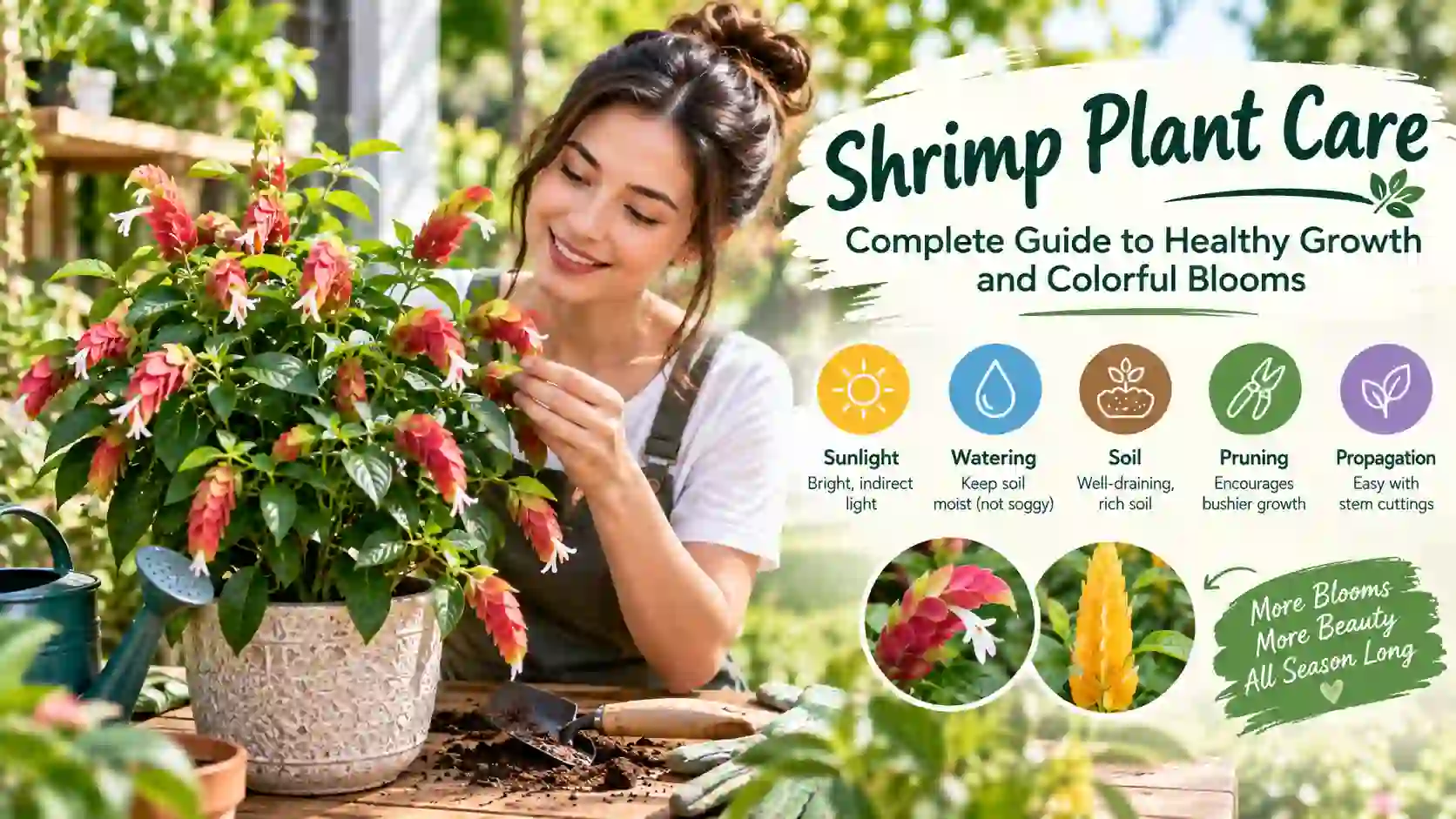
Shrimp plants grow best in bright, indirect light, warm temperatures, and moist but well-draining soil. Water when the top layer of soil begins to dry, and avoid letting the roots sit in water. Prune regularly to encourage bushier growth and more flowers. Most shrimp plants also benefit from moderate humidity and light feeding during active growth.
Introduction
Shrimp plant care is fairly simple once you understand what this tropical flowering plant needs. Its unusual flower spikes resemble shrimp, making it a colorful choice for patios, sheltered gardens, and bright indoor spaces.
However, “shrimp plant” can refer to more than one plant. The common pink shrimp plant is usually Justicia brandegeeana. The golden shrimp plant is a related but different species, often sold as Pachystachys lutea. Their care needs overlap, but their flower colors and growth habits differ.
Gardening Solutions
+1
This guide focuses mainly on Justicia brandegeeana. You’ll learn how to choose the right light, water correctly, encourage flowering, prune leggy stems, and solve common problems. You’ll also find advice for growing shrimp plants in pots, bringing them indoors for winter, and propagating new plants.
1. Know Your Shrimp Plant


6
The first step is identifying which plant you have. Plant labels sometimes use common names loosely, so checking the flowers can help.
|
Feature
|
Pink shrimp plant
|
Golden shrimp plant
|
| — | — | — |
|
Botanical name
|
Justicia brandegeeana
|
Pachystachys lutea
|
|
Main display
|
Pink, salmon, reddish, or bronze bracts
|
Bright yellow bracts
|
|
Flowers
|
Small white flowers emerge between the bracts
|
White flowers emerge from yellow bracts
|
|
Typical use
|
Warm-climate garden shrub or container plant
|
Tropical garden plant or container specimen
|
The colorful parts that look like petals are actually bracts, or modified leaves. The true flowers are smaller and emerge from between them. On Justicia brandegeeana, the bracts can remain attractive long after individual flowers fade.
Gardening Solutions
+1
Why identification matters: Care advice for one species may not perfectly match another. If your plant has golden-yellow, upright flower spikes, check whether it is Pachystachys lutea before relying on species-specific advice.
2. Shrimp Plant Care at a Glance

|
Care factor
|
What to provide
|
| — | — |
|
Light
|
Bright light; partial shade outdoors or bright indirect light indoors
|
|
Water
|
Keep soil moderately moist, but never waterlogged
|
|
Soil
|
Fertile, organic-rich, well-draining potting mix or garden soil
|
|
Temperature
|
Warm conditions; protect from frost and cold drafts
|
|
Humidity
|
Moderate to high humidity is helpful
|
|
Fertilizer
|
Feed lightly during active growth, following the product label
|
|
Pruning
|
Pinch tips and trim leggy stems to encourage branching
|
|
Propagation
|
Stem cuttings are a practical method
|
|
Main challenge
|
Balancing adequate light and moisture without scorching or waterlogging
|
Shrimp plants are adaptable, but they flower and branch more reliably when light, moisture, and pruning work together. UF/IFAS describes the common shrimp plant as suitable for full sun to part shade and notes that light pruning helps young plants form an attractive clump.
Gardening Solutions
+1
3. How Much Sunlight Does a Shrimp Plant Need?

Shrimp plants generally perform well in bright light with some protection from harsh afternoon sun. In a garden, partial shade is a useful starting point. Indoors, place the plant near a bright window where it receives plenty of daylight without intense, scorching sun through the glass.
University of North Florida
+1
Signs the light is suitable
- New growth appears compact rather than stretched.
- Stems develop leaves along their length.
- The plant produces flower spikes when mature and growing actively.
- Leaves retain a healthy green color without widespread scorch marks.
What happens in poor light?
Insufficient light can cause long, weak stems and fewer flower spikes. If your shrimp plant looks sparse, move it gradually to a brighter location rather than immediately placing it in intense direct sunlight.
Justicia brandegeeana
+1
Practical tip: When moving a plant from indoors to an outdoor patio, acclimate it over several days. A sudden change from filtered indoor light to strong sun can stress the foliage.
Image suggestion: A comparison showing a compact, well-lit shrimp plant beside a stretched, sparse plant growing in low light.
4. Watering: Keep the Soil Moist, Not Soggy
Shrimp plants appreciate regular moisture, especially during warm weather and active growth. However, constantly saturated soil can deprive roots of oxygen and encourage root problems. UF/IFAS notes that established plants tolerate some dry conditions, but prolonged drought can reduce flowering and cause leaf drop.
UF/IFAS Extension Nassau County
+1
How to water correctly
- Check the soil with your finger before watering.
- If the surface layer has begun to dry, water thoroughly.
- Let excess water drain freely from the pot.
- Empty any saucer that remains full of water.
- Check again more frequently during hot, dry, or windy weather.
Do not follow a rigid calendar without checking the soil. A plant in a small pot under strong light may dry much faster than one planted in a shaded garden bed.
Watering changes with the season
- Spring and summer: Check the soil often because warmth and active growth increase water use.
- Autumn: Reduce watering if growth slows and the soil takes longer to dry.
- Winter: Water less frequently in cool conditions, but do not allow the root ball to become bone-dry for extended periods.
Common mistake: Watering every day because the leaves droop. Wilting can result from dry soil, but it can also occur when waterlogged roots cannot function properly. Check the soil first.
5. Best Soil and Pot for Shrimp Plants
Shrimp plants grow well in fertile soil that holds some moisture while allowing excess water to escape. Rich organic soil is recommended for garden-grown plants, and the RHS lists moist but well-drained soil as suitable for Justicia brandegeeana.
Gardening Solutions
+1
For container growing
Choose a pot with drainage holes. Use a quality potting mix that does not collapse into a dense, soggy mass after watering.
A practical mix can include:
- General-purpose potting mix as the base.
- Compost or another suitable organic component for added richness.
- Perlite or fine bark to improve air space and drainage, if the mix stays wet for too long.
You do not need to create an elaborate soil recipe. The important qualities are good drainage, enough organic matter, and a mix that does not dry out immediately.
When should you repot?
Consider repotting when:
- Roots are emerging from the drainage holes.
- The root ball dries unusually quickly after watering.
- Growth has slowed despite suitable light and care.
- The plant has become unstable or crowded in its container.
Move it into a pot only modestly larger than the current one. An oversized pot can hold excess moisture for longer than the roots can use.
Image suggestion: A simple pot cross-section showing drainage holes, a loose potting mix, and a healthy root ball.
6. Temperature and Humidity
Shrimp plants are tropical or warm-climate plants, so they prefer warmth and protection from frost. In climates with cold winters, they may need to be grown in containers and moved into a sheltered indoor space. The RHS recommends growing Justicia brandegeeana under glass or in a sheltered, frost-free environment in the UK.
shrimp plant
+1
Temperature tips
- Keep the plant away from cold drafts and sudden temperature changes.
- Protect outdoor plants before frost threatens.
- Avoid placing indoor plants directly beside heating vents.
- In cool weather, check the soil before watering because it may remain wet longer.
Does it need high humidity?
Moderate to higher humidity can support healthy growth, particularly in dry indoor air. Good airflow is still important. Avoid keeping the foliage constantly wet or crowding the plant into a stagnant, poorly ventilated corner.
If your indoor air is very dry, grouping plants together or using a room humidifier may help. Misting is not a substitute for proper watering and does not fix unsuitable light or temperature.
7. Fertilizing for Healthy Growth and Flowers
Shrimp plants benefit from adequate nutrition during active growth. NParks recommends regular fertilization for Justicia brandegeeana, while general container-growing guidance supports feeding plants during the growing season.
Justicia brandegeeana
+1
A sensible feeding routine
- Choose a balanced fertilizer suitable for flowering ornamental plants.
- Follow the label rate rather than assuming more fertilizer means more flowers.
- Feed during active growth, adjusting to the product’s instructions.
- Reduce or stop feeding when growth slows in cool, low-light conditions.
- Avoid fertilizing a severely stressed or waterlogged plant until you address the underlying problem.
Too much fertilizer can lead to excessive leafy growth, salt buildup, or root stress. If the potting mix develops a crust or the leaf tips become damaged, review your feeding routine and water quality.
Expert tip: If a plant has lush foliage but few flowers, do not automatically increase fertilizer. First check whether it receives enough light and whether it has become leggy or crowded.
8. Pruning: How to Make a Shrimp Plant Bushier

Pruning helps control the plant’s open, sometimes sprawling shape. Pinching growing tips encourages branching, while selective trimming can refresh older stems. NParks specifically notes that removing growing points promotes branching and that hard pruning can stimulate new shoots on older plants.
Justicia brandegeeana
+1
How to prune step by step
- Use clean, sharp pruning shears.
- Remove dead, damaged, or weak stems first.
- Shorten overly long shoots to a healthy leaf joint.
- Pinch soft growing tips on young shoots to encourage side branches.
- Step back regularly to keep the plant’s shape balanced.
Avoid removing too much foliage at once from a weak or recently repotted plant. If a plant is very leggy, renew it gradually or prune more firmly when conditions favor active regrowth.
Should you remove faded flower spikes?
You can trim unattractive, spent spikes to tidy the plant. Light pruning also helps maintain a fuller shape. Avoid repeatedly cutting off all new growth before it has a chance to mature and produce flowers.
Image suggestion: A three-panel illustration showing a leggy stem, a pruning cut above a leaf joint, and the resulting branching growth.
9. How to Propagate Shrimp Plants
Stem cuttings are a practical way to produce new shrimp plants. The RHS lists softwood and semi-hardwood cuttings among the propagation methods for Justicia brandegeeana.
shrimp plant
+1
Propagation from stem cuttings

- Select a healthy, non-flowering stem with several leaves.
- Use clean scissors or pruning shears to take a cutting.
- Remove the leaves from the lower portion that will sit in the rooting medium.
- Insert the cutting into a small pot filled with a lightly moist, well-draining propagation mix.
- Place it in warm, bright, indirect light.
- Keep the medium lightly moist, not saturated.
- Once roots have developed and the cutting begins growing, gradually acclimate it to normal growing conditions.
Do not tug on the cutting every day to check for roots. That can disturb developing roots. Instead, watch for sustained new growth and gently check resistance after allowing time for rooting.
10. Growing Shrimp Plants in Pots and Indoors
Shrimp plants can be grown in containers, which is especially useful when winter temperatures are too cold for outdoor growth. UF/IFAS lists containers and above-ground planters among their landscape uses, while the RHS includes conservatory and houseplant growing conditions.
Solutions For Your Life
+1
Container-care checklist
- Use a pot with drainage holes.
- Provide bright light and rotate the pot occasionally if growth leans toward a window.
- Check soil moisture more often in warm weather.
- Feed during active growth according to the fertilizer label.
- Prune stems that become long and sparse.
- Inspect leaf undersides for pests, especially after bringing the plant indoors.
Moving the plant indoors for winter
Before bringing an outdoor plant inside:
- Inspect the leaves and stems for whiteflies, mites, and other pests.
- Remove dead leaves and debris from the pot.
- Place the plant in the brightest suitable indoor location.
- Keep it away from cold windows, drafts, and direct hot air from heaters.
- Reduce watering if growth slows.
A plant may drop some leaves after a major change in light or temperature. Check for pests, cold damage, and watering problems before assuming the plant is dying.
11. Common Shrimp Plant Problems and How to Fix Them
When a shrimp plant looks unhealthy, examine its growing conditions before reaching for fertilizer or pesticides. Several different problems can produce similar symptoms.
|
Symptom
|
Possible cause
|
What to do
|
| — | — | — |
|
Long, sparse stems
|
Insufficient light or lack of pruning
|
Move it to brighter light gradually and pinch or trim stems
|
|
Few or no flowers
|
Low light, stress, or unsuitable growing conditions
|
Review light, moisture, temperature, and recent pruning
|
|
Yellowing leaves
|
Overwatering, poor drainage, stress, or natural aging
|
Check the soil and roots; correct drainage and watering
|
|
Drooping leaves with dry soil
|
The plant may need water
|
Water thoroughly and allow excess water to drain
|
|
Drooping leaves with wet soil
|
Waterlogged roots or root damage may be involved
|
Let the mix drain and inspect the root system if decline continues
|
|
Brown or scorched patches
|
Strong sun, dry conditions, or other environmental stress
|
Review sun exposure and moisture; acclimate to brighter light slowly
|
|
Sticky leaves or tiny insects
|
Possible whiteflies, aphids, or other sap-feeding pests
|
Inspect leaf undersides and isolate the plant if pests are present
|
UF/IFAS describes shrimp plant as adaptable, while the University of Arkansas Extension notes that whiteflies and mealybugs can become serious pests, particularly indoors.
Gardening Solutions
+1
Whiteflies and mealybugs
Whiteflies may flutter up when disturbed. Mealybugs often look like small, white, cottony patches around stems or leaf joints.
- Isolate an infested plant from nearby houseplants.
- Inspect leaf undersides, stem joints, and new growth.
- Remove small infestations manually where practical.
- Use a product labeled for the pest and plant, following all label directions.
- Recheck the plant regularly because one treatment may not eliminate every life stage.
Root problems
If the plant wilts even though the soil is wet, check drainage and the condition of the roots. Healthy roots are generally firm; roots that are dark, mushy, or foul-smelling may be rotting. Remove badly damaged roots with clean tools and repot into fresh, well-draining mix if necessary.
Important: Do not diagnose every yellow leaf as a nutrient deficiency. Overwatering, root stress, light changes, and normal aging can also cause yellowing.
12. Seasonal Shrimp Plant Care
Shrimp plant care changes with temperature, light, and growth rate. Use these seasonal guidelines as a starting point, then adjust to your plant’s actual conditions.
|
Season
|
Main care priorities
|
| — | — |
|
Spring
|
Resume regular feeding as growth begins; prune lightly and repot if needed
|
|
Summer
|
Monitor moisture closely; provide suitable light and protect from severe afternoon heat
|
|
Autumn
|
Reduce feeding as growth slows; inspect outdoor plants before bringing them inside
|
|
Winter
|
Protect from frost and cold drafts; water less often when the mix dries slowly
|
In warm, frost-free climates, shrimp plants may remain evergreen and flower over a long period. In colder areas, frost can kill back the top growth, though established plants may return when conditions warm.
Gardening Solutions
+1
For gardeners in hot climates: Partial shade during the harshest afternoon hours can help prevent stress. Even a heat-tolerant plant needs adequate moisture and suitable drainage during prolonged hot weather.
13. Frequently Asked Questions
How often should I water a shrimp plant?
Water when the surface layer of soil begins to dry, then let excess water drain. Check more often in hot weather and less often during cool periods. Avoid keeping the roots constantly wet.
Does a shrimp plant need full sun?
Not necessarily. Justicia brandegeeana can grow in full sun or part shade, but partial shade is a useful choice where afternoon sunlight is intense. Indoors, provide bright light to help prevent weak, leggy growth.
Gardening Solutions
+1
Why is my shrimp plant not flowering?
Common reasons include insufficient light, stress from unsuitable watering, and poor growing conditions. Check the plant’s light first, then review moisture, temperature, and whether frequent pruning is removing developing shoots.
Can shrimp plants grow indoors?
Yes. They can be grown as container plants indoors when given sufficient light, warmth, and a well-draining growing medium. Protect them from cold drafts and inspect them for pests, especially after moving them indoors.
shrimp plant
+1
Is shrimp plant a perennial?
In warm climates, it is grown as a tropical perennial or shrub. Frost can kill back the top growth, and its ability to return depends on the species, growing conditions, and severity of the cold.
Gardening Solutions
+1
How do I make my shrimp plant bushier?
Pinch the tips of young shoots and selectively shorten long stems. This encourages branching and helps prevent an open, sparse shape. Use clean tools and avoid heavy pruning when the plant is already stressed.
Justicia brandegeeana
+1
Can I grow a shrimp plant from a cutting?
Yes. Stem cuttings are a recognized propagation method for Justicia brandegeeana. Use healthy stems, a clean cutting tool, a lightly moist rooting medium, and warm conditions with bright indirect light.
shrimp plant
+1
Is the golden shrimp plant the same as the pink shrimp plant?
No. The name “golden shrimp plant” commonly refers to a different but related species, Pachystachys lutea. The common pink shrimp plant is Justicia brandegeeana. Check the botanical name on the plant label when looking up detailed care instructions.
Gardening Solutions
+1
14. Related Gardening Topics to Explore
If you are building a garden-care library, these related articles can help readers with neighboring questions:
- Aloe Plant Care: Learn how to water and position a succulent that prefers different moisture conditions.
- Gardenia Plant Care: Explore care for a flowering plant with its own light, soil, and humidity preferences.
- Lantana Plant Care: Understand the growing conditions of another colorful flowering garden plant.
- Palm Plant Care: Learn about light, watering, and indoor placement for tropical foliage plants.
- How to Propagate Houseplants: Review general cutting, rooting, and transplanting techniques.
Suggested internal links: Add links only if these articles are available on your website and genuinely answer the reader’s next question.
Conclusion
Successful shrimp plant care comes down to a few consistent habits: provide suitable light, keep the soil moderately moist without waterlogging it, protect the plant from frost, and prune to encourage branching.
If your plant becomes leggy or stops flowering, check its light and growing conditions before adding more fertilizer. For container plants, drainage and seasonal adjustments are especially important.
With the right care, Justicia brandegeeana can develop attractive foliage and long-lasting, shrimp-shaped bracts that bring color to a garden, patio, or bright indoor space.