Tulips are loved for their elegant flowers, rich colors, and ability to brighten spring gardens. However, growing healthy tulips is not simply a matter of planting bulbs and waiting for flowers. Planting time, winter temperatures, drainage, and post-bloom care all influence the results.
With the right approach to tulip plant care, you can grow colorful tulips in garden beds, containers, raised beds, and suitable indoor arrangements. You can also avoid common problems such as bulbs rotting before they sprout, leaves appearing without flowers, and blooms fading too quickly.
One important detail often surprises beginners: tulips are perennial bulbs botanically, but many modern garden varieties flower best in their first season. In warm climates, they may need special chilling and may not reliably rebloom outdoors.
This guide explains how to choose bulbs, plant them correctly, manage water and sunlight, encourage healthy flowering, and troubleshoot common problems.
Quick Answer:
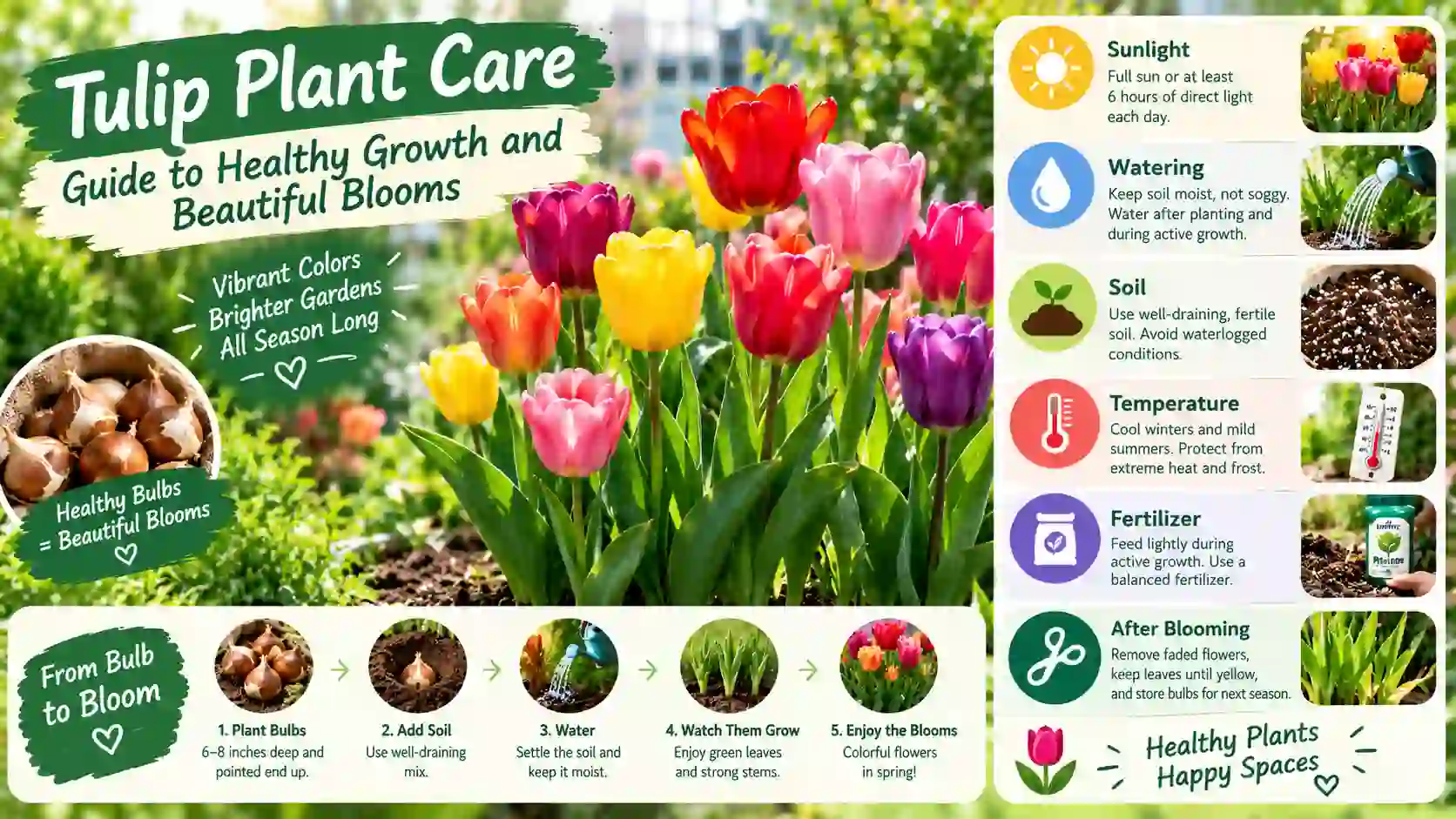
Tulip plant care starts with plenty of sunlight, well-draining soil, and careful watering. Plant tulip bulbs in autumn, usually 6–8 inches deep, with the pointed end facing upward. Choose a sunny location and water after planting. Keep the soil lightly moist during active growth, but never waterlogged. Most tulips need a period of winter chilling to flower well. After blooming, remove faded flowers but leave the green leaves until they turn yellow naturally. This helps the bulb store energy for future growth.
1. Understanding Tulips Before You Plant Them


8
Tulips (Tulipa species) grow from underground bulbs. Each bulb stores energy that supports root development, leaves, and a flower. After flowering, the leaves collect sunlight and replenish the bulb for a possible future bloom.
This growth cycle explains why tulips need different care at different times of the year.
- Before flowering: The bulb develops roots and sends up shoots.
- During flowering: The plant needs light, moisture, and protection from extreme heat.
- After flowering: The leaves need time to recharge the bulb.
- During dormancy: The bulb rests until the next suitable growing season.
Tulips usually perform best where winters are cool and summers are relatively dry. Some varieties return for several years, but many modern hybrid tulips provide their strongest display in the first year.
Image suggestion: A labeled tulip life-cycle infographic showing bulb, roots, shoots, flower, and summer dormancy.
2. Choosing Healthy Tulip Bulbs
Good flowering starts with good bulbs. Poor-quality bulbs may fail to sprout, produce weak leaves, or develop flowers that are smaller than expected.
Choose bulbs that are:
- Firm and plump, with no soft or mushy areas.
- Free from visible mold, deep cuts, or rotting patches.
- Appropriate for your local climate and intended planting season.
- Large and mature for their variety, as larger bulbs generally have better flowering potential.
Avoid bulbs that feel unusually light, look badly shriveled, or smell rotten. A loose outer skin is not necessarily a problem, but the bulb itself should remain firm.
Which tulip varieties should you grow?
| Tulip type | Best feature | Useful growing note |
|---|---|---|
| Darwin hybrid | Large, colorful flowers | Often a good choice for garden beds |
| Triumph | Strong stems and many colors | Suitable for borders and containers |
| Single early | Early spring color | Useful for the beginning of the tulip season |
| Double tulip | Full, peony-like flowers | Heavy blooms may need shelter from strong wind |
| Species tulip | Smaller, natural-looking flowers | Some types are better suited to naturalizing |
Choose varieties based on bloom time, flower height, color, and whether you want a one-season display or a longer-term planting.
3. When to Plant Tulip Bulbs
For most temperate climates, tulip bulbs are planted in autumn. This gives them time to develop roots before winter and receive the cold period many varieties need to flower properly.
The correct planting time depends on your local climate, not just the month printed on a gardening calendar.
| Climate | General approach |
|---|---|
| Cold-winter regions | Plant in autumn once the soil has cooled |
| Mild-winter regions | Choose a cool planting period and use suitable pre-chilled bulbs if needed |
| Hot-winter regions | Use bulbs specifically prepared for warm-climate growing; flowering may still be less reliable |
| Indoor containers | Follow the bulb supplier’s chilling and planting instructions |
Can you grow tulips in a warm climate?
Yes, but flowering can be less predictable. Tulips naturally need a period of cold conditions to develop normally. In areas with mild winters, gardeners often use pre-chilled bulbs and grow tulips as a seasonal display rather than expecting them to return every year.
If your winters are warm, buy bulbs from a reputable supplier that states they are suitable for your region. Follow the supplier’s chilling instructions carefully. Do not assume that planting ordinary bulbs in warm soil will produce the same results as a cool-climate garden.
Practical tip: If you’re gardening in a hot-summer, mild-winter region, plan for a seasonal display first. Treat repeat flowering as a bonus rather than a guarantee.
Image suggestion: A seasonal planting calendar comparing autumn planting in cool climates with pre-chilled bulbs for warm climates.
4. How to Plant Tulip Bulbs Step by Step


Planting bulbs correctly helps prevent rot and gives roots enough room to establish.
Step 1: Choose the right location
Select a site with good drainage and plenty of sunlight. A location that receives around six hours of direct sun is a reliable choice for many garden tulips.
Avoid low spots where rainwater collects. If your soil remains soggy for days after rain, use a raised bed or container instead.
Step 2: Prepare the soil
Loosen the soil and remove large stones and weeds. If the ground is heavy clay, improve the overall soil structure with suitable organic matter or plant in a raised bed with better drainage.
Do not fill the planting hole with rich compost alone. Bulbs need a stable growing medium that drains well rather than a small pocket that stays wet.
Step 3: Plant at the correct depth
A common guideline is to plant large tulip bulbs about 6–8 inches deep, measured from the bulb’s base to the soil surface. Follow the variety’s instructions because smaller species tulips may need shallower planting.
Place each bulb with its pointed end facing upward and the flatter root plate facing downward. If you cannot identify the top confidently, planting the bulb on its side is usually better than damaging it while trying to position it.
Step 4: Space the bulbs
Space bulbs according to their size and the supplier’s directions. For a natural-looking display, plant them in small groups rather than in a perfectly straight row.
Closer spacing can create a fuller seasonal display, but bulbs should not be packed so tightly that the soil becomes difficult to manage or drainage suffers.
Step 5: Water after planting
Water the planting area once to settle the soil around the bulbs. After that, avoid keeping the bed constantly wet.
In rainy climates, natural rainfall may provide enough moisture. In dry weather, check the soil before watering again.
Step 6: Label the planting
Record the variety and planting date. This simple step helps you identify which tulips flower early or late and which varieties perform well in your garden.
5. Best Soil for Tulip Plant Care
Tulips need soil that holds enough moisture for root growth but allows excess water to escape. Poor drainage is one of the most important problems to prevent because bulbs can rot in saturated soil.
A suitable growing medium should be:
- Well-draining: Water should not remain pooled around the bulbs.
- Moderately fertile: Healthy soil supports strong leaves and flowers without excessive feeding.
- Loosened: Roots need room to develop.
- Close to neutral or slightly alkaline: Many garden tulips tolerate a range of soils, but very acidic soil may need attention depending on local conditions.
RHS+1
What if your soil is heavy clay?
Do not simply dig a small hole in clay and fill it with loose potting mix. That can create a pocket that collects water.
Instead, improve the wider planting area, use a raised bed, or grow tulips in a container with drainage holes. The aim is to prevent the bulbs from sitting in wet soil during dormancy.
Image suggestion: A soil comparison showing well-draining, crumbly soil beside compacted, waterlogged clay.
6. How Much Sunlight Do Tulips Need?
Most garden tulips grow best in full sun or a location with several hours of direct sunlight. Adequate light supports sturdy stems, healthy leaves, and the energy storage needed after flowering.
However, light requirements also depend on the season. Tulips grown in warm climates may benefit from a location that receives morning sun and some protection from intense afternoon heat once they are growing or flowering.
Signs of insufficient light include:
- Long, weak stems that lean toward a window.
- Pale or floppy leaves.
- Flowers that are smaller or less vigorous than expected.
If growing tulips indoors, place the pot near a bright window in a cool room. A warm room with low light can shorten the display and weaken the plant.
7. Watering Tulips Correctly
Tulips need moisture during root development and active growth, but they do not tolerate persistently waterlogged soil.
How often should you water tulips?
There is no universal watering schedule. Weather, soil type, container size, and plant growth all affect how quickly the soil dries.
Use these guidelines:
- After planting: Water once to settle the soil around the bulbs.
- Before shoots appear: Water only if the soil becomes dry and rainfall is insufficient.
- During active growth: Keep the soil lightly moist during prolonged dry weather.
- After flowering: Continue appropriate watering while the leaves remain green, then reduce it as the foliage naturally dies back.
- During dormancy: Keep the soil relatively dry; do not water dormant bulbs on a routine schedule.
Garden tulips often need little additional water when rainfall is adequate. Container-grown tulips dry out faster, so check them more frequently.
How to check soil moisture
Push a finger into the soil near the planting area. If the soil is still damp, wait before watering. If it is dry and the plants are actively growing, water thoroughly enough to moisten the root zone, then let excess water drain.
Common mistake: Watering every day because the soil surface looks dry. The surface may dry while deeper soil remains wet, especially in large pots or heavy soil.
Image suggestion: A watering infographic showing the difference between lightly moist soil and waterlogged soil around a tulip bulb.
8. Temperature and Chilling Requirements
Temperature is one of the biggest factors separating successful tulip growing from disappointing results.
Most common garden tulips need a prolonged cool period to develop and flower normally. In climates with cold winters, natural seasonal temperatures often provide this. In warmer climates, gardeners may need to purchase pre-chilled bulbs.
How long do tulip bulbs need to be chilled?
The exact requirement varies by variety and bulb preparation. Many common tulips need roughly 12–16 weeks of cold treatment, but you should follow the bulb supplier’s specific instructions.
Gardening Solutions
+1
If chilling bulbs yourself:
- Check the variety’s recommended chilling period.
- Store bulbs in a breathable paper bag in a suitable refrigerator compartment.
- Keep them away from ripening fruit, especially apples, which release ethylene gas that can damage developing flower buds.
- Avoid storing bulbs in a sealed, damp plastic bag.
- Plant them promptly when the chilling period is complete.
Do not chill bulbs beside fruit or in a freezer unless the supplier specifically instructs you to do so. Freezing can damage bulbs.
What if tulips sprout too early?
Early shoots can appear when temperatures are unusually warm. Avoid digging up healthy bulbs simply because shoots emerge earlier than expected. Keep the soil well-drained and protect young growth from severe weather where necessary.
In warm climates, excessive heat may cause flowers to fade quickly. Choosing an appropriate planting window and keeping containers out of the hottest afternoon sun can help extend the display.
9. Fertilizing Tulips for Strong Growth
Tulips need nutrients to grow, but extra fertilizer cannot make an unsuitable bulb flower properly. Chilling, bulb quality, light, and drainage are often more important than heavy feeding.
When should you fertilize tulips?
For bulbs planted in reasonably fertile soil, a light application of a suitable bulb fertilizer at planting may be enough. Follow the product label rather than guessing the amount.
During active growth, a balanced or bulb-specific fertilizer may help when soil fertility is low. Stop feeding when the leaves naturally begin to yellow and die back.
RHS
+1
Avoid:
- Applying concentrated fertilizer directly against a bulb.
- Using excessive nitrogen, which can encourage leafy growth without solving flowering problems.
- Fertilizing dormant bulbs in dry soil.
- Repeatedly feeding plants that are struggling because their roots are waterlogged.
Expert tip: If your tulips produce leaves but no flowers, check whether the bulbs received enough chilling and whether they were strong enough to flower. Fertilizer alone will not correct either problem.
10. Tulip Plant Care After Flowering


Post-bloom care matters if you want bulbs to remain healthy for another season. After the flowers fade, the leaves continue collecting sunlight and sending stored energy back to the bulb.
What should you do after tulips bloom?
1. Remove faded flowers. Cut off the spent flower head to reduce seed production. This directs more of the plant’s resources toward the bulb.
2. Keep the leaves. Do not cut down healthy green foliage immediately after flowering. Allow it to yellow and wither naturally.
3. Continue checking moisture. Water during dry spells while the foliage is still green, but avoid keeping the soil soggy.
4. Reduce watering as the plant dies back. Once the foliage has completely yellowed and dried, the bulb enters dormancy.
5. Decide whether to leave or lift the bulbs. In suitable climates and well-drained soil, some varieties can remain in the ground. In areas with hot, wet summers, lifting bulbs or treating tulips as seasonal plants may be more practical.
These steps help preserve bulb energy and can improve the chance of future flowering.
Should you cut tulip leaves after flowering?
No—not while they are still green. Cutting them too early removes the plant’s main source of energy for replenishing the bulb.
Wait until the leaves turn yellow or brown and detach easily. If the fading foliage looks untidy, plant later-growing perennials nearby so they can gradually hide it.
Image suggestion: A three-stage illustration showing a flowering tulip, a green post-bloom tulip, and naturally yellowing foliage.
11. How to Grow Tulips in Pots


Growing tulips in containers is useful for balconies, patios, small gardens, and climates where you need to move bulbs to a sheltered location.
Choose the right container
Select a pot with drainage holes. A deeper, wider container gives roots room and makes it easier to maintain more even moisture.
Use a quality potting mix that drains freely. If the mix stays wet for long periods, incorporate an appropriate drainage amendment or choose a better-draining mix rather than adding water more often.
Planting tulips in a container
- Add enough potting mix to cover the base of the pot.
- Position the bulbs with their pointed ends facing upward.
- Space them according to the variety and desired display.
- Cover them with the remaining mix at the recommended depth.
- Water thoroughly and allow excess water to drain.
- Provide the required cool period and move the pot to a bright growing location when shoots emerge.
For a full seasonal display, bulbs can often be placed closer together in containers than in permanent garden beds, provided they do not become overcrowded and the pot drains well.
Can tulips grow indoors year-round?
Tulips are not typical year-round indoor houseplants. They are seasonal bulbs that need suitable temperature conditions, and many varieties require chilling before flowering.
You can enjoy a flowering pot indoors, especially when using bulbs prepared for forcing, but a warm indoor environment may shorten the flowering period. Keep the pot in a bright, relatively cool location and water carefully.
12. Growing Tulips in Warm Climates
Tulips are adapted to a seasonal cycle that includes cool conditions. In regions with mild winters and hot summers, they can be more challenging to grow than in traditional tulip-growing climates.
The best approach is to manage expectations and focus on the factors you can control.
- Buy prepared bulbs: Choose bulbs that have received the required chilling treatment or are recommended for your region.
- Use containers when helpful: Pots make it easier to control drainage and move plants away from excessive heat.
- Avoid hot, wet soil: Poor drainage combined with warmth increases the risk of bulb rot.
- Plan for seasonal flowering: Many tulips grown in warm regions are treated as annuals rather than reliable returning perennials.
- Protect flowering plants from heat: A cooler, bright location can help flowers last longer.
Pre-chilling can improve the chances of flowering, but it does not make every tulip variety suitable for every climate.
13. Common Tulip Growing Problems and How to Fix Them
Tulip problems are easier to solve when you look at the whole growing environment rather than treating every symptom with fertilizer or water.
| Problem | Likely cause | What to do |
|---|---|---|
| Leaves grow, but no flowers appear | Insufficient chilling, weak bulbs, early foliage removal, or poor light | Check the bulb’s chilling history, sunlight, and post-bloom care |
| Bulbs rot before sprouting | Waterlogged soil or damaged bulbs | Improve drainage and discard rotten bulbs |
| Stems are weak or floppy | Low light, warm conditions, or heavy blooms | Provide brighter light and shelter from strong wind |
| Flowers fade quickly | Warm weather, direct heat, or natural aging | Grow during a cooler period and protect from intense heat |
| Leaves turn yellow too early | Water stress, root damage, disease, or natural seasonal decline | Check soil moisture and roots; compare with the normal post-bloom cycle |
| Bulbs fail to return the next year | Climate mismatch, declining bulb vigor, poor drainage, or early leaf removal | Choose suitable varieties and let foliage die back naturally |
Why are my tulips not flowering?
Start with the bulb’s history. If it was planted in spring without the required cold period, it may produce leaves without flowers or fail to grow well. Bulbs that have become weak over several seasons may also produce foliage without strong blooms.
Check these factors in order:
- Did the bulbs receive enough chilling?
- Were they firm and healthy when planted?
- Is the planting site bright enough?
- Does the soil drain well?
- Were the leaves allowed to die back naturally after the previous bloom?
This checklist is more useful than automatically increasing fertilizer.
Why are my tulip bulbs rotting?
Rot often develops when bulbs sit in saturated soil, especially if drainage is poor. Remove badly rotten bulbs and improve the drainage before planting again. Do not reuse visibly diseased bulbs.
14. Common Tulip Plant Care Mistakes
Avoiding a few frequent mistakes can make a major difference in flowering success.
Planting too early in warm soil: Bulbs may begin growing before the appropriate season. Use local planting guidance and follow the supplier’s recommendations.
Planting in soggy ground: Tulip bulbs need oxygen around their roots. Use well-drained beds or containers with open drainage holes.
Expecting every tulip to return for years: Some varieties persist better than others. Many modern bedding tulips provide their best display in the first season.
Cutting green leaves too soon: This reduces the bulb’s opportunity to store energy.
Using fertilizer to solve every problem: Fertilizer cannot replace adequate chilling, light, or healthy bulbs.
Ignoring the local climate: A planting schedule that works in a cold-winter country may not work in a hot-summer region. Match the variety and planting method to your conditions.
15. Pests and Diseases That Affect Tulips
Tulips can be affected by pests and diseases, particularly when bulbs are damaged or growing conditions remain damp.
| Problem | What you may notice | Prevention or treatment |
|---|---|---|
| Aphids | Small insects clustered on stems or leaves | Rinse them off or use an appropriate labeled treatment if needed |
| Slugs and snails | Ragged leaves or damaged shoots | Remove hiding places and protect emerging growth |
| Rodents and squirrels | Missing or dug-up bulbs | Use suitable bulb baskets or protective mesh |
| Gray mold (Botrytis) | Brown spots, damaged leaves, or moldy growth | Remove affected material and improve airflow |
| Bulb rot | Soft bulbs, poor emergence, or unpleasant odor | Improve drainage and discard rotten bulbs |
Avoid overwatering and unnecessary pesticide use. If disease repeatedly affects the same planting area, remove affected plants and review the soil conditions before replanting.
Image suggestion: A tulip troubleshooting infographic identifying healthy growth, aphid damage, gray mold, and bulb rot.
16. How to Encourage Tulips to Bloom Again
Some tulips can return for several years, but repeat flowering depends on the variety, climate, and how well the bulb replenishes its energy.
To improve your chances:
- Choose varieties known for reliable perennial performance.
- Plant in a sunny location with well-drained soil.
- Remove spent flowers before seedheads develop.
- Keep the foliage healthy until it dies back naturally.
- Avoid disturbing bulbs while they are actively growing.
- Replace bulbs that repeatedly produce weak foliage without flowers.
If you live in a region with very hot summers or mild winters, growing tulips as seasonal flowers may be the most reliable option. Some gardeners lift bulbs after the foliage dies back, store them under suitable conditions, and replant them in the next appropriate season. However, this does not guarantee another strong bloom.
For many gardeners, planting fresh, healthy bulbs each year is the simplest way to maintain a consistently colorful display.
17. Frequently Asked Questions About Tulip Plant Care
How often should I water tulips?
Water after planting, then check soil moisture regularly. During active growth, water when the soil begins to dry and rainfall is insufficient. Avoid soggy soil, especially before shoots emerge and during dormancy.
Do tulips need full sun?
Most garden tulips grow best with around six hours of direct sunlight daily. In warmer climates, some afternoon protection can help flowers last longer.
Can tulips grow indoors?
Yes, especially when grown in pots with bulbs prepared for indoor forcing. Provide the required chilling period, bright light, cool temperatures, and well-draining potting mix.
Why do my tulips have leaves but no flowers?
Common causes include insufficient chilling, weak or depleted bulbs, inadequate sunlight, and removing foliage too early after the previous bloom. Check these conditions before applying more fertilizer.
Can tulips grow in warm climates?
They can, but they may not flower reliably without the required cold treatment. Pre-chilled bulbs and careful seasonal timing can help, although repeat flowering is often less dependable.
Should I remove tulip flowers after they fade?
Yes. Remove the faded flower head to reduce seed production. Keep the green leaves until they naturally yellow and wither.
Do tulips come back every year?
Some varieties return for several years under suitable conditions. Others, particularly many modern hybrid bedding tulips, may flower best in their first year. Climate and post-bloom care also influence their performance.
What is the best soil for tulips?
Use fertile, well-draining soil. Avoid planting bulbs in places where water collects or in containers without drainage holes.
Can I plant tulip bulbs in spring?
Spring planting often produces disappointing results because the bulbs may not have developed roots or received the necessary cold period. In most cases, plant dry bulbs in autumn according to local recommendations. If spring has already arrived, consider buying a flowering potted tulip instead.
How long do tulip flowers last?
The flowering period depends on variety, weather, and growing conditions. Cool temperatures generally help flowers last longer, while hot weather can shorten the display.
18. Image Suggestions for Your Tulip Care Article
Use original images to make the guide easier to understand and more engaging.

Featured image: Tulip Plant Care
Show healthy red, pink, yellow, and purple tulips growing in a spring garden, with the title “Tulip Plant Care: Healthy Growth and Beautiful Blooms.”

H2 image: How to Plant Tulip Bulbs
Label planting depth, bulb orientation, spacing, and the importance of well-draining soil.

H2 image: Growing Tulips in Pots
Show a container with healthy tulips and clear visual cues for drainage and sunlight.

H2 image: Tulip Care After Flowering
Compare blooming tulips, green post-bloom foliage, and naturally yellowing leaves to show when pruning is appropriate.

H2 image: Common Tulip Problems
Compare firm, healthy bulbs with damaged bulbs, and identify warning signs of rot.
Related Articles to Link Internally
If your website covers plant care and gardening, these topics would naturally complement this guide:
- How to Plant Flower Bulbs for Spring
- Best Flowers to Grow in Pots
- How to Improve Soil Drainage
- How to Care for Daffodils
- How to Grow Hyacinths
- Common Reasons Plants Fail to Bloom
- How to Care for Spring Flowers After Blooming
Add internal links where they help readers solve a related problem. For example, link the soil section to a detailed drainage guide and the container section to a flower-pot gardening guide.
Conclusion
Successful tulip plant care depends on matching the bulbs to your climate, planting them at the right time, providing good drainage, and allowing the foliage to finish its natural growth cycle.
Start with firm, healthy bulbs and plant them in a sunny location where excess water can drain away. Water according to soil conditions rather than following a rigid schedule. After flowering, remove the faded flower heads but leave green leaves in place until they die back naturally.
Most importantly, remember that tulips need suitable seasonal temperatures. If you garden in a warm climate, pre-chilled bulbs and realistic expectations can make the difference between a disappointing planting and a beautiful seasonal display.
With these practices, you can enjoy healthier tulips, stronger flowers, and a more reliable spring garden.