Crossandra is a tropical flowering plant prized for its glossy green leaves and vivid, fan-shaped flowers. Often called the firecracker flower, Crossandra infundibuliformis can brighten patios, sheltered garden beds, balconies, and indoor spaces.
Although crossandra can flower for long periods in warm conditions, it may stop blooming or develop damaged leaves when its growing conditions are unsuitable. Too little light can reduce flowers, dry soil can cause leaf damage, and poor drainage can leave roots struggling.
The good news is that crossandra becomes easier to manage when you understand its main needs: warmth, filtered sunlight, steady moisture, and regular removal of faded blooms. This guide explains how to grow crossandra indoors or outdoors, encourage more flowers, propagate new plants, and solve common problems.
Quick Answer:
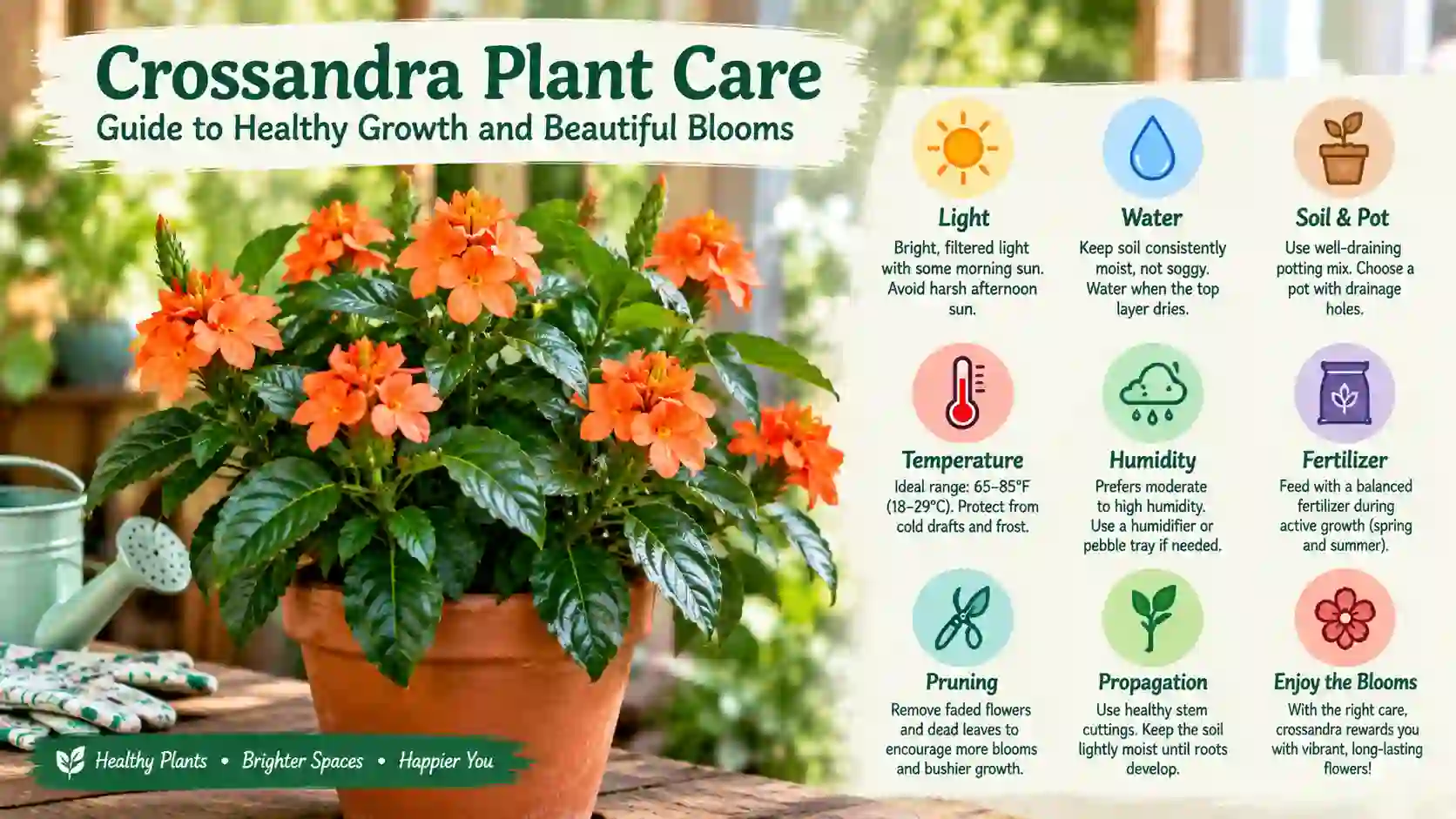
Crossandra plant care is about providing bright, filtered light, warm temperatures, moderate to high humidity, and consistently moist but well-drained soil. Water when the soil surface begins to dry, then let excess water drain away. Feed with a balanced fertilizer during active growth and remove faded flowers to encourage more blooms. Protect Crossandra from cold drafts, harsh afternoon sun, and waterlogged soil to keep its glossy leaves healthy and its orange, coral, or salmon flowers coming back.
North Carolina Extension Gardener Plant Toolbox
+1
1. Understand Your Crossandra Plant

Crossandra belongs to the Acanthaceae family and is native to southern India and Sri Lanka. It grows as a compact, upright, evergreen tropical plant in suitable climates. Depending on the variety and growing conditions, it can reach around 1–3 feet tall.
North Carolina Extension Gardener Plant Toolbox
+1
Its most recognizable features include:
- Flowers: Orange, coral, salmon, apricot, yellow, or reddish shades, depending on the variety.
- Leaves: Glossy, deep-green leaves with gently wavy edges.
- Growth habit: Upright, bushy growth that can become leggy without enough light or pruning.
- Flowering: Potentially prolonged flowering in warm, bright conditions.
- Seed pods: Mature pods can split suddenly, scattering seeds and giving the plant its firecracker nickname.
North Carolina Extension Gardener Plant Toolbox+1
Crossandra is a tropical perennial in warm, frost-free regions. In colder climates, gardeners often grow it in containers or treat it as a seasonal outdoor plant.
Practical tip: When buying a crossandra, look for firm stems, healthy green leaves, and fresh flower spikes. Avoid plants with widespread yellowing, sticky foliage, or clusters of tiny insects.
Image suggestion: Add a labeled botanical image showing crossandra flowers, glossy leaves, upright stems, and seed pods.
2. Choose the Right Light for More Flowers
Light has a major influence on crossandra’s flowering. The plant needs enough brightness to produce flower spikes, but strong afternoon sun can scorch its leaves, especially in hot climates.
Best lighting conditions
- Indoors: Place it near a bright east-facing window or a bright window with filtered light.
- Outdoors: Choose partial shade or a location with gentle morning sunlight.
- During hot summers: Protect the plant from intense midday and afternoon sun.
- In winter: Give indoor plants the brightest suitable position available without exposing them to damaging heat.
Crossandra can tolerate some direct sun when conditions are suitable, but harsh exposure can cause leaf fading, browning, or scorch. Very low light, meanwhile, can produce healthy-looking foliage with few flowers.
North Carolina Extension Gardener Plant Toolbox
+2
How to tell if the light is wrong
| Plant symptom | Possible cause | What to do |
|---|---|---|
| Long, weak stems | Insufficient light | Move it gradually to a brighter position |
| Few or no flowers | Low light or another growing issue | Improve light and review feeding and watering |
| Pale or scorched patches | Too much intense direct sun | Provide filtered light or afternoon shade |
| Leaves leaning toward a window | Uneven light | Rotate the pot periodically |
Expert tip: If your crossandra is growing lots of leaves but producing few flowers, do not immediately add fertilizer. First check whether it receives enough bright light.
Image suggestion: Create a sunlight infographic showing bright indirect light, gentle morning sun, and protection from harsh afternoon rays.
3. Water Crossandra Without Waterlogging the Roots
Crossandra prefers evenly moist soil and does not respond well to prolonged drought. However, moisture-loving does not mean waterlogged: roots still need oxygen, and constantly saturated soil can encourage root problems.
Gardening Solutions
+1
How to water correctly
- Feel the top layer of soil with your finger.
- If the surface has begun to dry, check a little deeper before watering.
- Water slowly and evenly around the root zone.
- Continue until excess water drains from the pot’s holes.
- Empty the saucer so the plant does not sit in standing water.
- Check the soil more frequently during hot, dry weather and less often during cooler periods.
Do not rely on a fixed weekly schedule. A small pot in a sunny, warm spot may dry much faster than a larger pot in partial shade.
How often should you water crossandra?
There is no single schedule that works for every plant. Watering frequency depends on temperature, pot size, soil composition, airflow, and whether the plant grows indoors or outdoors.
| Growing conditions | Watering approach |
|---|---|
| Hot weather | Check the soil frequently; it may need water more often |
| Cool weather | Check before watering and reduce frequency as growth slows |
| Indoor pot | Check the soil rather than following a calendar |
| Outdoor garden bed | Monitor the root zone, especially during dry spells |
| Rainy weather | Check soil moisture and ensure water drains freely |
Signs of watering problems
- Wilting with dry soil: The plant may need water.
- Yellow leaves and persistently wet soil: Check drainage and inspect for possible root stress.
- Brown, crispy leaf edges: Dry soil, low humidity, heat, or salt buildup may be involved.
- Sudden decline in wet soil: Consider root damage rather than adding more water.
Important: A wilted plant does not always need watering. If its soil is already wet, investigate drainage and root health first.
Image suggestion: A three-step watering infographic showing soil check, thorough watering, and complete drainage.
4. Use Rich, Well-Draining Soil
Crossandra grows best in fertile soil that retains some moisture while allowing excess water to escape. A mix that dries too quickly can stress the plant, while heavy, compacted soil may remain wet around the roots for too long.
North Carolina Extension Gardener Plant Toolbox
+2
Recommended potting mix
For container-grown crossandra, use a quality indoor potting mix with added perlite or fine pumice if drainage needs improvement. A mix containing organic matter helps retain moisture without becoming dense.
A practical starting mix is:
- 2 parts quality potting mix
- 1 part perlite or pumice
- A small amount of mature compost, if the potting mix lacks organic matter
This is a flexible starting point rather than a strict formula. Adjust it if the mix stays wet for too long or dries unusually quickly.
Which pot is best?
Choose a pot with drainage holes. A pot only slightly larger than the root ball is usually easier to manage than an oversized container filled with soil that remains wet for a long time.
Terracotta can help excess moisture evaporate, but it also dries faster. In hot, dry weather, a glazed pot may help retain moisture, provided drainage is good.
Common mistake: Adding a thick layer of gravel at the bottom of a pot does not improve drainage in the way many gardeners expect. Use drainage holes and a suitable mix throughout the container instead.
Image suggestion: A cutaway pot diagram showing crossandra roots, organic potting mix, perlite, and open drainage holes.
5. Maintain Warm Temperatures and Suitable Humidity
As a tropical plant, crossandra prefers warmth and may suffer when temperatures drop. Cold conditions can cause leaf loss, slow growth, and reduced flowering. North Carolina State Extension notes that temperatures below about 55°F (13°C) can cause leaf drop.
North Carolina Extension Gardener Plant Toolbox
+1
Temperature guidance
- Keep indoor plants in a comfortably warm room.
- Protect outdoor plants when nights become cool.
- Avoid cold air from open winter windows or air-conditioning vents.
- Bring container plants indoors before cold weather threatens them.
A practical target is a warm environment around 65–85°F (18–29°C), while avoiding sudden temperature changes. This is a general growing range, not a guarantee of flowering.
How to increase humidity
Crossandra benefits from humid air, particularly indoors where heating or air-conditioning can dry the environment.
Try these methods:
- Group tropical plants together without crowding them.
- Use a room humidifier if indoor air is consistently dry.
- Place the pot on a pebble tray with water below the pot’s base.
- Keep the plant away from hot radiators and strong dry airflow.
A pebble tray should increase local humidity modestly; it will not transform an extremely dry room into a tropical environment. Do not let the pot sit directly in the tray water.
Avoid frequent misting as your only humidity strategy. Wet leaves that dry slowly can encourage foliage problems, and misting generally provides only a brief increase in humidity.
Image suggestion: A humidity-care infographic featuring a crossandra pot, humidifier, pebble tray, and temperature indicator.
6. Fertilize Crossandra for Healthy Growth and Flowers
Crossandra uses nutrients to produce foliage and flower spikes. Container plants may need regular feeding because nutrients are gradually used by the plant or washed out during watering.
A balanced liquid fertilizer can work well during active growth. Follow the product label, and avoid applying a stronger solution than recommended.
A simple feeding routine
- Spring and summer: Feed regularly during active growth according to the fertilizer label. A monthly balanced feed is a reasonable starting point.
- Cooler months: Reduce or pause feeding if growth slows.
- Recently repotted plants: Check whether the new potting mix already contains fertilizer before adding more.
- Plants showing stress: Correct watering, light, and root problems before feeding.
The University of Florida’s gardening guidance recommends balanced fertilizer monthly during spring and summer, with less frequent feeding during fall and winter.
Gardening Solutions
Can fertilizer make crossandra bloom more?
It can help when nutrient availability is limiting growth, but fertilizer cannot compensate for poor lighting or damaged roots.
Excess fertilizer may lead to salt buildup, leaf-edge browning, or vigorous foliage with disappointing flowering. If a plant is healthy but bloom production is low, assess light and temperature before increasing the feeding rate.
Expert tip: Occasionally flush container soil with clean water, allowing excess to drain freely, if you suspect fertilizer salts have accumulated. Do not do this if the pot has poor drainage or the soil is already waterlogged.
7. Prune and Deadhead to Encourage More Blooms
Pruning helps crossandra maintain a compact shape and encourages branching. Removing faded flower clusters also keeps the plant tidy and prevents energy from being directed toward mature seed pods.
How to deadhead crossandra
- Wait until a flower cluster has faded.
- Use clean, sharp pruning scissors.
- Cut the flower stalk back to a healthy point above a leaf pair or side shoot.
- Remove dead, damaged, or crowded stems as needed.
- Check the plant regularly during its flowering period.
For a young plant, pinching the growing tips can encourage a bushier shape. Avoid removing too much healthy growth at once, particularly when the plant is weak or recovering from stress.
Why remove seed pods?
Crossandra’s seed capsules can split explosively when mature, scattering seeds. If you want to prevent unwanted seedlings, trim flower stalks before the pods mature. If you want to collect seeds, allow selected pods to mature and handle them carefully.
North Carolina Extension Gardener Plant Toolbox
+2
Image suggestion: A step-by-step pruning graphic showing a faded flower spike, a clean cut, and a compact, branching plant.
8. Grow Crossandra Indoors or Outdoors?
Crossandra can thrive in either setting when its light, warmth, moisture, and drainage needs are met. Your local climate should determine where it grows best.
| Feature | Indoors | Outdoors |
|---|---|---|
| Light | Bright filtered light near a suitable window | Partial shade or gentle morning sun |
| Watering | Check potting mix regularly | Monitor soil, rainfall, and heat |
| Humidity | May need help in dry rooms | Often benefits from naturally humid air |
| Temperature | Easier to protect from cold | Needs protection from cool weather |
| Flowers | Possible with enough light and warmth | Often excellent in a suitable tropical climate |
| Main challenge | Low light and dry indoor air | Harsh sun, heavy rain, and temperature changes |
Growing crossandra indoors
Place it near a bright window, but protect it from intense sun through hot glass. Turn the pot occasionally to encourage balanced growth, and keep it away from cold drafts.
If it produces leaves but few flowers, gradually improve its light exposure and check whether it needs feeding. Avoid moving it suddenly from a dim room into strong direct sunlight.
Growing crossandra outdoors
Choose a warm, sheltered spot with bright light and protection from harsh afternoon sun. Crossandra can be grown in garden beds or containers in suitable climates, but heavy rain can damage its delicate flowers.
Gardening Solutions
+1
In areas with hot summers, afternoon shade may help prevent leaf scorch. In places with cool winters, containers make it easier to move the plant to shelter.
Crossandra care in Pakistan
Crossandra is well suited to many warm parts of Pakistan, including sheltered patios and partially shaded garden beds. However, intense summer sun can still stress plants, especially in containers that heat up quickly.
For better results:
- Provide bright morning light and shade during the hottest afternoon hours.
- Check pots more often during heat waves.
- Keep the soil evenly moist, not continuously saturated.
- Protect plants from cold winter nights, especially in colder inland or northern locations.
- Shelter flowers from heavy rain when possible.
The best routine depends on your city, exposure, pot size, and local weather. Do not assume that a plant’s tolerance for heat means it can tolerate drying out.
Image suggestion: A split image showing a healthy crossandra in a bright indoor location and another growing in a shaded tropical patio.
9. How to Propagate Crossandra from Stem Cuttings
Stem cuttings are a practical way to grow new crossandra plants. The best time is during warm, active growth, when the parent plant can recover and the cutting can develop roots.
North Carolina Extension Gardener Plant Toolbox
+1
Step-by-step propagation

- Choose a healthy stem. Select a non-flowering tip with several healthy leaves and no visible pests.
- Make a clean cut. Use sterilized scissors to take a cutting approximately 3–5 inches long.
- Prepare the cutting. Remove leaves from the lower part of the stem so they will not sit in the rooting medium.
- Plant in a suitable medium. Insert the bare stem into a small pot containing a moist, airy seed-starting or propagation mix.
- Provide warmth and humidity. Keep the medium lightly moist and place the cutting in bright indirect light.
- Monitor rooting. Avoid pulling the cutting repeatedly to check for roots. Look for signs of new growth and gentle resistance when the cutting is carefully tested.
- Pot up when established. Once a useful root system has formed, move the new plant into a well-draining potting mix.
Rooting hormone is optional, but it may help. A warm environment can improve success, while a heat mat is only necessary if conditions are too cool.
Important: Do not keep the propagation mix soaking wet. High humidity helps reduce moisture loss from the leaves, but the cutting still needs oxygen around its developing roots.
Image suggestion: A four-panel propagation infographic showing cutting selection, lower-leaf removal, planting, and rooted new growth.
10. Common Crossandra Problems and How to Fix Them
When crossandra looks unhealthy, start by checking the growing conditions instead of treating the leaves alone. The same symptom can have several causes, so examine the soil, light, temperature, and roots together.
| Problem | Possible causes | What to do |
|---|---|---|
| Yellow leaves | Waterlogged soil, watering stress, nutrient issues, or natural aging | Check soil moisture and drainage before changing fertilizer |
| Brown, crispy leaf edges | Dry soil, low humidity, strong sun, or fertilizer salts | Check watering, reduce harsh sun, and review feeding |
| Wilting leaves | Dry root zone, damaged roots, or heat stress | Check the soil first; water only if needed |
| Few or no flowers | Insufficient light, cold conditions, or unsuitable feeding | Improve brightness, maintain warmth, and review fertilizer use |
| Leggy or weak growth | Insufficient light or a lack of pruning | Move to brighter filtered light and pinch growing tips |
| Dropping leaves | Cold exposure, drought, or root stress | Check recent temperature changes and root-zone moisture |
| Brown flower clusters | Aging blooms, heavy rain, or physical damage | Remove faded flowers and shelter the plant from damaging rain |
| Fine webbing or speckled leaves | Possible spider mites | Inspect leaf undersides and treat the pest if confirmed |
Crossandra is not usually affected by severe pest problems, but mealybugs, aphids, whiteflies, and mites can occur.
North Carolina Extension Gardener Plant Toolbox
+1
Why is my crossandra not flowering?
Work through these checks in order:
- Light: Is the plant getting bright light for much of the day?
- Temperature: Has it been exposed to cold air or a chilly night?
- Water: Does the soil swing between bone dry and soaking wet?
- Fertilizer: Is the plant underfed, or receiving excessive fertilizer?
- Pruning: Have faded flowers been removed, and is the plant growing too leggy?
Avoid changing all five conditions at once. Correct the most obvious issue first, then give the plant time to respond. New flower spikes may take time to develop.
How to recognize possible root rot
Root problems become more likely when the soil stays wet for long periods and the plant continues to decline. Warning signs include persistent wilting despite moist soil, yellowing leaves, and soft or darkened roots.
If root rot is suspected:
- Remove the plant from its pot carefully.
- Inspect the roots and trim away roots that are clearly mushy or decayed with clean scissors.
- Repot into fresh, well-draining mix and a clean container with drainage holes.
- Water carefully while the plant recovers, avoiding both drought and saturation.
A plant with extensive root damage may not recover, so prevention through suitable soil and drainage is the best approach.
11. Common Crossandra Care Mistakes to Avoid
Even an otherwise healthy crossandra can struggle when a few basic needs are overlooked.
Mistake 1: Treating it like a drought-tolerant plant. Crossandra prefers steady moisture and may develop damaged leaves if it repeatedly dries out completely. Check the soil frequently in warm weather.
Mistake 2: Keeping the soil constantly soaked. Regular watering is not the same as waterlogging. Use a free-draining mix and a pot with drainage holes.
Mistake 3: Giving it intense afternoon sun. Strong heat and direct sun can scorch foliage. Provide filtered light or afternoon shade when conditions are harsh.
Mistake 4: Keeping it in a dark corner. A plant may survive in low light but produce few flowers. Move it to a brighter position gradually.
Mistake 5: Feeding too heavily. More fertilizer does not automatically mean more blooms. Excess nutrients can damage roots and foliage.
Mistake 6: Ignoring cold nights. Crossandra is tropical and can lose leaves when temperatures drop. Move container plants to shelter when needed.
Mistake 7: Leaving faded flowers on indefinitely. Removing spent flower stalks helps keep the plant tidy and reduces unwanted seed formation.
Mistake 8: Repotting into a much larger container. Excess soil can retain moisture longer than the roots can use. Choose a pot that fits the root ball comfortably.
12. A Simple Seasonal Crossandra Care Routine
Crossandra’s needs change with temperature, light, and growth. Use this routine as a starting point, then adapt it to your plant’s actual condition.

Spring
- Resume regular feeding as growth increases.
- Trim damaged or weak growth.
- Take stem cuttings if you want new plants.
- Check whether the plant needs fresh potting mix or a slightly larger pot.

Summer
- Check soil moisture more frequently during hot weather.
- Protect leaves from harsh afternoon sun.
- Remove faded flower spikes.
- Inspect foliage for pests and watch for heat stress.

Autumn
- Watch for cooler nights and move pots to shelter if needed.
- Reduce feeding if growth slows.
- Continue checking moisture rather than watering on a fixed schedule.

Winter
- Keep the plant warm and away from cold drafts.
- Provide the brightest suitable filtered light.
- Reduce watering frequency as conditions cool, but do not let the root ball dry out completely.
- Feed less often if the plant is barely growing.
In tropical climates, crossandra may continue growing and flowering through much of the year. In cooler locations, growth often slows as light and temperature decline.
Gardening Solutions
+1
13. Frequently Asked Questions About Crossandra Plant Care
Is crossandra easy to grow?
Yes. Crossandra is manageable for beginners who can provide warmth, bright filtered light, regular moisture, and good drainage. The biggest challenge is balancing moisture without allowing the roots to remain waterlogged.
Does crossandra need full sun or shade?
Crossandra generally performs well in bright filtered light or partial shade. Gentle morning sun can be beneficial, but intense afternoon sunlight may scorch its leaves, particularly in hot weather.
North Carolina Extension Gardener Plant Toolbox
+1
How often should I water a crossandra plant?
Water when the soil surface begins to dry, checking the moisture a little deeper before watering. Hot weather may require more frequent checks, while cooler conditions usually reduce water use. Avoid both prolonged dryness and waterlogged soil.
Why are my crossandra leaves turning yellow?
Yellow leaves can result from overwatering, poor drainage, underwatering, nutrient problems, or normal aging. Check the soil first. Yellowing combined with persistently wet soil suggests you should investigate root health before adding fertilizer.
How do I make crossandra bloom continuously?
Provide sufficient bright light, warm temperatures, consistent soil moisture, and balanced feeding during active growth. Remove faded flower clusters regularly. Even with excellent care, flowering varies with the plant’s variety and growing conditions.
Can crossandra grow indoors?
Yes. Grow it near a bright window with filtered light, keep it warm, and maintain suitable humidity. If it grows well but rarely flowers indoors, insufficient light may be the main limitation.
Can crossandra survive winter?
It can remain evergreen in warm, frost-free climates. In colder regions, protect it indoors or in a sheltered, warm location. Cold exposure can cause leaf loss, so do not wait for frost before protecting the plant.
North Carolina Extension Gardener Plant Toolbox
+1
Can I grow crossandra from seeds?
Yes. Crossandra can be propagated by seed or stem cuttings. Its seed pods may split suddenly when mature, scattering seeds. For a more controlled approach, collect mature seeds carefully or propagate from healthy cuttings.
North Carolina Extension Gardener Plant Toolbox
+1
Should I mist my crossandra plant?
Misting is not essential. It provides only a temporary increase in humidity. If your indoor air is very dry, a humidifier or grouping plants together may provide more consistent conditions.
Does crossandra attract pollinators?
Yes. Its colorful flowers can attract pollinators, including butterflies. Outdoor plants can add color to sheltered, partially shaded garden areas.
North Carolina Extension Gardener Plant Toolbox
+1
Is crossandra safe for pets and children?
Do not assume the plant is safe to eat. Keep it out of reach of young children and pets, and seek professional medical or veterinary advice if ingestion occurs and you are concerned. Avoid relying on unverified online toxicity claims.
Conclusion:
Successful crossandra plant care comes down to a few essentials: bright filtered light, warm conditions, consistently moist but well-drained soil, suitable humidity, and regular removal of faded flowers.
If your plant has lush leaves but few blooms, review its light exposure before increasing fertilizer. If the leaves yellow while the soil stays wet, check drainage and root health. Small, targeted adjustments are usually more useful than changing the entire care routine.
With the right conditions, crossandra can reward you with glossy foliage and vibrant flowers for an extended period. Check your plant regularly, adjust watering to the weather, and protect it from harsh sun and cold temperatures.
Featured Image and Article Image Suggestions

Show a healthy crossandra in a terracotta pot, with vivid orange flowers and glossy green leaves. Add a clean title panel reading “Crossandra Plant Care: Complete Guide to Healthy Growth.”

Light and placement
Illustrate bright filtered light, gentle morning sun, and protection from harsh afternoon rays.

Watering and soil
Show a gardener checking soil moisture, watering evenly, and allowing excess water to drain.

Propagation
Use a step-by-step image showing a healthy stem cutting, planting medium, and new rooted growth.

Troubleshooting