Euphorbia is a diverse group of plants admired for its unusual shapes, attractive foliage, colorful flowers, and relatively low maintenance requirements.
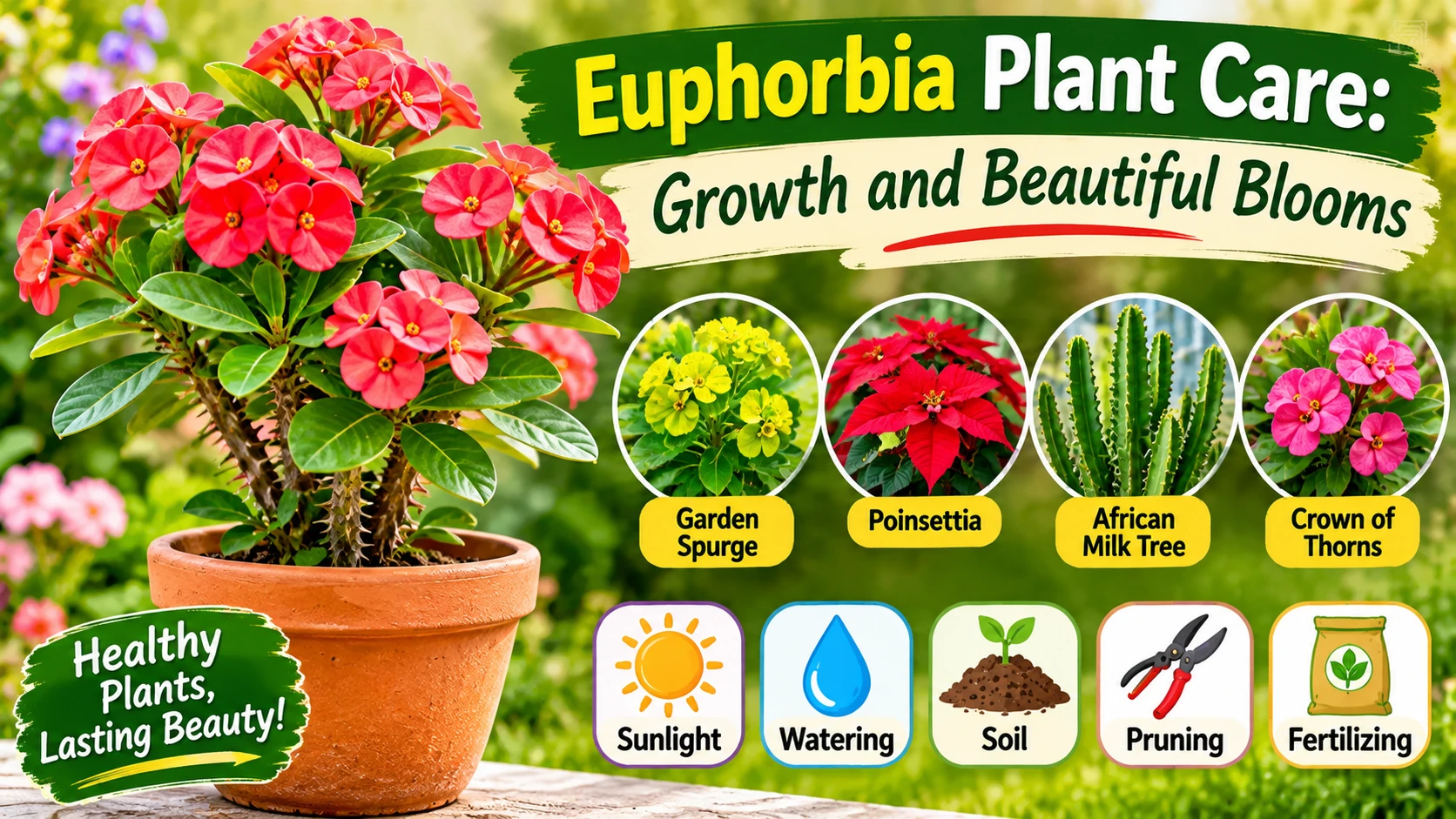
Some varieties grow as compact flowering shrubs, while others develop tall, cactus-like stems or form attractive garden borders. Popular examples include Crown of Thorns, African Milk Tree, Pencil Cactus, and Poinsettia.
However, caring for every Euphorbia in the same way can cause problems. Some varieties prefer dry, sunny conditions, while others grow better in moderately moist garden soil.
Overwatering, insufficient sunlight, unsuitable potting mixes, and incorrect pruning are common reasons these plants struggle.
This guide explains how to select the right location, manage sunlight and watering, choose suitable soil, encourage flowering, propagate new plants, and solve common growing problems.
It also covers an important safety consideration: many Euphorbias release a milky latex sap that can irritate skin and eyes.
Quick Answer:
Euphorbia depends on the species, but most popular ornamental varieties need bright light, suitable watering, and well-draining soil. Many succulent types prefer 6 or more hours of sunlight and should dry between waterings. Garden varieties may need more moisture. Avoid overwatering, prune with protective gloves, and keep the plant’s irritating milky sap away from skin and eyes.
Understanding Euphorbia and Its Different Varieties
Euphorbia belongs to the botanical family Euphorbiaceae. It includes thousands of species with different growth habits, sizes, and environmental requirements.
Some are drought-tolerant succulents, while others are herbaceous perennials, shrubs, or tropical ornamental plants.
One characteristic shared by many Euphorbias is their milky latex sap, which appears when stems or leaves are damaged.
Popular Euphorbia Varieties
1. Crown of Thorns (Euphorbia milii)
A flowering succulent shrub with thorny stems and colorful red, pink, or yellow bracts. It is popular for containers and sunny patios.
2. African Milk Tree (Euphorbia trigona)
A tall architectural succulent with upright stems and small leaves. It grows well in bright locations and free-draining soil.
3. Pencil Cactus (Euphorbia tirucalli)
Recognized by its thin, pencil-like green branches. It prefers warmth, strong light, and careful watering.
4. Poinsettia (Euphorbia pulcherrima)
A decorative plant known for its colorful red, pink, or cream bracts. Unlike many succulent Euphorbias, it needs more consistently moist soil.
5. Mediterranean Spurge (Euphorbia characias)
An attractive outdoor shrub with upright stems and clusters of greenish-yellow flowers. It prefers a sunny position and well-drained soil.
Basic Euphorbia Growing Requirements
| Growing Factor | General Guidance |
|---|---|
| Sunlight | Bright light; many types prefer full sun |
| Watering | Depends on species and growing conditions |
| Soil | Well-draining for most ornamental types |
| Temperature | Warm conditions for tropical varieties |
| Humidity | Usually low to moderate for succulent types |
| Fertilizer | Light feeding during active growth |
| Propagation | Stem cuttings, division, or seeds |
| Pruning | Depends on growth habit and species |
Expert insight: Never assume that a Poinsettia, Crown of Thorns, and Pencil Cactus need identical watering schedules. Identifying the species is the first step toward successful care.
How Much Sunlight Does a Euphorbia Plant Need?
Most popular succulent Euphorbias grow best in bright light. Some varieties need several hours of direct sunlight to maintain compact growth and produce flowers.
However, sunlight requirements vary between species.
Ideal Sunlight Conditions
- Crown of Thorns: Around 6 or more hours of direct sunlight encourages flowering.
- African Milk Tree: Bright light with several hours of direct sun after gradual acclimation.
- Pencil Cactus: Strong sunlight and a bright outdoor position.
- Poinsettia: Bright, indirect light indoors or a suitable bright outdoor position.
- Garden Spurge: Usually full sun, although requirements vary by species.
What Happens When Euphorbia Gets Too Little Light?
Insufficient sunlight can cause:
- Weak and stretched stems.
- Reduced flowering.
- Pale or less vibrant foliage.
- Slow growth.
- Leaning toward windows or brighter areas.
How to Provide Better Lighting
- Choose a bright location with suitable sunlight.
- Introduce indoor plants to stronger outdoor light gradually.
- Rotate container plants occasionally for balanced growth.
- Avoid sudden exposure to intense afternoon sunlight.
- Observe leaf color and growth to identify light stress.
Expert tip: If your Crown of Thorns produces healthy leaves but very few flowers, check its sunlight before adding fertilizer. Light is a major factor in flower production. NYBG Research Guides+2
How Often Should You Water Euphorbia?
Many succulent Euphorbias store water in their stems and leaves. They can tolerate periods of dryness but may develop root rot if their roots remain wet.
However, leafy varieties such as Poinsettia need a different approach.
Watering Requirements by Variety
| Euphorbia Variety | Watering Approach |
|---|---|
| Crown of Thorns | Allow the soil to dry between waterings |
| African Milk Tree | Water when the growing medium has dried substantially |
| Pencil Cactus | Water sparingly after soil dries |
| Poinsettia | Water when the surface begins to dry; avoid complete prolonged drying |
| Garden Spurge | Water during establishment and prolonged dry periods |
Step-by-Step Watering Method for Succulent Euphorbias
- Check the soil moisture before watering.
- Make sure the upper portion of the growing medium has dried.
- Water slowly around the root zone.
- Allow excess water to drain through the holes.
- Empty the saucer after watering.
- Wait until the soil reaches the appropriate dryness again.
Signs of Overwatering
- Yellow or soft leaves.
- Mushy stems.
- Blackened stem bases.
- Unpleasant soil odors.
- Root rot.
Signs of Underwatering
- Wrinkled or shriveled stems.
- Dry, falling leaves.
- Slow growth.
- Dry growing medium.
Important: Some leaf loss is natural in certain Euphorbia species. For example, Crown of Thorns naturally sheds older leaves. Examine the stems and growing conditions before assuming that every fallen leaf indicates a watering problem.
What Is the Best Soil for Euphorbia?
Most popular succulent Euphorbias need soil that allows excess water to escape quickly.
Heavy, compacted soil can hold too much moisture around the roots. This reduces oxygen availability and increases the risk of root damage.
Ideal Soil Characteristics
A suitable growing medium should provide:
- Good drainage.
- Enough air spaces around the roots.
- A stable structure.
- Moderate nutrient availability.
- Appropriate moisture retention for the species.
DIY Soil Mix for Succulent Euphorbias
| Ingredient | Amount | Purpose |
|---|---|---|
| Cactus potting mix | 40% | Provides the main growing medium |
| Pumice or perlite | 30% | Improves airflow and drainage |
| Coarse horticultural grit | 20% | Reduces water retention |
| Composted organic material | 10% | Adds limited nutrients |
Mix everything thoroughly before planting.
This recipe is intended for succulent varieties such as Crown of Thorns and African Milk Tree. Poinsettias and many garden Euphorbias need different soil mixes.
Can Euphorbia Grow in Regular Potting Soil?
Some varieties can grow in regular potting soil, but dense mixes may retain too much moisture for succulent types.
If you use standard potting soil, improve its structure with pumice, perlite, or horticultural grit.
Expert tip: Good drainage is more important than using an expensive potting mix. A simple, appropriately prepared growing medium can support healthy root development.
How to Choose the Right Pot for Euphorbia
A suitable container supports healthy roots and prevents excess moisture from accumulating around the plant.
Terracotta pots are particularly useful for many succulent Euphorbias because their porous sides allow moisture to evaporate.
Best Container Options
| Pot Type | Benefits | Considerations |
|---|---|---|
| Terracotta | Allows moisture to evaporate | Dries out quickly |
| Ceramic | Attractive and stable | Requires drainage holes |
| Plastic | Lightweight and retains moisture | Needs careful watering |
| Concrete | Heavy and stable | Can be difficult to move |
Container Planting Steps
- Choose a pot with drainage holes.
- Select a container slightly larger than the root ball.
- Add a suitable growing medium.
- Carefully remove the plant from its nursery pot.
- Position the root ball at its original depth.
- Fill around the roots without burying the stem base.
- Water according to the species’ requirements.
Avoid choosing an excessively large pot. A large volume of wet soil around a small root system can increase the risk of root rot.
Safety reminder: Wear thick protective gloves when handling thorny Euphorbias. Avoid breaking stems because the milky sap can be irritating.
What Temperature and Humidity Do Euphorbia Plants Need?
Temperature and humidity requirements vary across Euphorbia species. Most popular tropical succulent varieties prefer warm conditions and dislike cold, wet environments.
Ideal Temperature Conditions
- Maintain warm temperatures during active growth.
- Protect tropical varieties from cold drafts.
- Avoid sudden temperature changes.
- Keep frost-sensitive varieties away from freezing conditions.
- Provide ventilation during hot, humid weather.
Crown of Thorns, for example, prefers warm conditions. Prolonged exposure to temperatures below approximately 10°C can cause leaf loss and stress. NYBG Research Guides+1
Does Euphorbia Like High Humidity?
Many succulent Euphorbias prefer low to moderate humidity. They generally do not need misting.
High humidity combined with wet soil and poor airflow can encourage fungal problems.
How to Maintain Suitable Humidity
- Keep plants in well-ventilated locations.
- Avoid frequent misting.
- Space plants to prevent overcrowding.
- Avoid leaving water on the foliage.
- Reduce unnecessary watering during humid weather.
Expert tip: If you live in a humid region, focus on soil drainage and airflow rather than trying to increase humidity around succulent Euphorbias.
Does Euphorbia Need Fertilizer?
Euphorbia generally does not need heavy feeding. Many varieties grow naturally in relatively lean soil and can become weak or excessively leafy when given too much fertilizer.
However, container plants may benefit from occasional feeding because nutrients gradually become depleted.
Best Fertilizer for Euphorbia
For succulent types, consider:
- A balanced liquid fertilizer diluted according to its label.
- A low-nitrogen fertilizer suitable for flowering succulents.
- A small amount of mature compost where appropriate.
For Poinsettia and other leafy varieties, use a fertilizer formulated for flowering or foliage houseplants.
When Should You Fertilize?
| Season | Fertilizing Recommendation |
|---|---|
| Spring | Begin light feeding during active growth |
| Summer | Feed occasionally if the plant is growing actively |
| Autumn | Reduce feeding as growth slows |
| Winter | Usually stop feeding during dormancy |
Signs of Excessive Fertilizer
- Unusually soft growth.
- Weak or elongated stems.
- Brown leaf tips.
- Salt buildup on the soil surface.
- Reduced flowering in some varieties.
Expert tip: Always water according to the plant’s actual needs before applying liquid fertilizer. Never use a concentrated fertilizer directly on dry, stressed roots.
How to Prune Euphorbia Safely
Pruning helps maintain the plant’s shape, remove damaged growth, control its size, and encourage branching in suitable varieties.
However, Euphorbia pruning requires extra care because damaged stems can release irritating milky sap.
Why Should You Prune Euphorbia?
- Remove dead or damaged branches.
- Control excessive growth.
- Improve the plant’s appearance.
- Encourage branching in suitable species.
- Remove diseased sections.
Step-by-Step Pruning Method
- Wear protective gloves and eye protection.
- Use sharp, clean pruning shears.
- Identify dead, damaged, or unwanted stems.
- Make clean cuts without crushing the stems.
- Avoid touching the milky sap.
- Keep children and pets away from the pruning area.
- Clean your tools carefully after finishing.
Important Pruning Differences
| Variety | Pruning Guidance |
|---|---|
| Crown of Thorns | Trim unwanted stems and remove damaged growth |
| African Milk Tree | Remove damaged branches and control height carefully |
| Pencil Cactus | Cut unwanted branches with protective equipment |
| Poinsettia | Prune after the colorful bracts fade, following its seasonal growth cycle |
| Garden Spurge | Remove spent flowering stems or old growth according to species |
For shrubby garden Euphorbias, pruning time matters. Some species flower on stems produced the previous year, so cutting them at the wrong time can remove future flowers. RHS Grower Guide+1
Important: Euphorbia Sap Safety
Many Euphorbias produce white latex sap that can irritate skin and cause significant eye injury.
- Wear gloves and protective eyewear.
- Never touch your face while pruning.
- Avoid pruning in windy conditions.
- Keep cuttings away from children and pets.
- Wash exposed skin immediately with soap and water.
- If sap enters the eyes, rinse immediately with plenty of clean water and seek urgent medical advice.
Do not handle sap with bare hands, even when the plant appears healthy. RHS+2
How to Encourage Euphorbia to Produce More Flowers
Many Euphorbia varieties are grown for their attractive flowers or colorful flower-like bracts.
Crown of Thorns is especially popular because it can produce colorful blooms over an extended period when conditions are suitable.
However, flowering depends on the species, plant maturity, sunlight, and general health.
Best Ways to Encourage Flowering
- Provide sufficient bright light.
- Use well-draining soil.
- Avoid excessive watering.
- Feed lightly during active growth.
- Maintain suitable temperatures.
- Remove damaged growth.
- Avoid excessive nitrogen fertilizer.
Why Is My Euphorbia Not Flowering?
| Possible Cause | Recommended Solution |
|---|---|
| Insufficient sunlight | Move to a brighter location |
| Excessive nitrogen | Reduce unnecessary fertilizer |
| Overwatering | Improve soil drainage |
| Cold temperatures | Provide warmer conditions |
| Young plant | Allow more time to mature |
| Incorrect pruning | Follow the variety’s flowering cycle |
Expert observation: A plant producing plenty of foliage but few flowers may be receiving too little light or too much fertilizer. Correcting these conditions is often more useful than adding extra nutrients.
How to Propagate Euphorbia From Cuttings
Stem cuttings are a common way to propagate many succulent Euphorbias.
This method allows gardeners to produce new plants from healthy parent plants without waiting for seeds to germinate.
However, propagation must be handled carefully because cut stems release latex sap.
Step-by-Step Propagation Method
Step 1: Choose a healthy stem
Select a healthy, actively growing stem without signs of disease or rot.
Step 2: Wear protective equipment
Put on gloves and protective eyewear before making any cuts.
Step 3: Take the cutting
Use a sharp, sterilized blade to remove an appropriate section of stem.
Step 4: Allow the cut end to dry
For succulent varieties, place the cutting in a shaded, ventilated location until the cut surface forms a dry callus. The time required depends on the cutting’s thickness and conditions.
Step 5: Prepare the growing medium
Use a free-draining cactus or succulent mix.
Step 6: Plant the cutting
Insert the callused end into the growing medium and provide support if necessary.
Step 7: Water carefully
Keep the medium only lightly moist while roots develop. Avoid heavy watering because an unrooted cutting can rot easily.
Step 8: Monitor new growth
Once roots develop and new growth appears, gradually follow the normal care routine for that species.
Can You Grow Euphorbia From Seeds?
Yes. Some species can be propagated from seeds.
However, seed propagation may be slower and less predictable than cuttings. Seedlings may also differ from their parent plants.
Which Propagation Method Is Better?
| Method | Advantages | Disadvantages |
|---|---|---|
| Stem cuttings | Usually faster for suitable succulent species | Requires careful sap handling |
| Seeds | Useful for producing multiple plants | Germination and growth may take longer |
| Division | Suitable for certain clump-forming species | Not appropriate for every Euphorbia |
Safety tip: Never allow Euphorbia sap to contact your skin or eyes during propagation. Keep freshly cut stems away from children and animals.
How to Repot a Euphorbia Plant
Repotting gives Euphorbia fresh growing medium and additional root space when necessary.
Most succulent varieties do not need frequent repotting. Moving them into oversized containers can actually increase moisture-related problems.
When Should You Repot Euphorbia?
Look for these signs:
- Roots emerging through drainage holes.
- Roots tightly circling the root ball.
- Soil drying unusually quickly.
- Poor drainage from compacted growing medium.
- A plant becoming unstable in its container.
Step-by-Step Repotting
- Choose a container slightly larger than the existing root ball.
- Prepare a suitable growing medium.
- Wear gloves and eye protection.
- Carefully remove the plant from its container.
- Inspect the roots for damage or rot.
- Remove dead roots with clean tools if necessary.
- Place the plant at its original depth.
- Fill around the roots with fresh growing medium.
- Allow any damaged roots or cuts to dry appropriately before resuming watering.
For succulent Euphorbias, avoid immediately soaking freshly disturbed or damaged roots.
Expert tip: Spring is generally a convenient repotting period because many varieties begin active growth as conditions become warmer.
Common Problems and How to Fix Them
Euphorbia problems often develop because of incorrect watering, poor drainage, insufficient light, or unsuitable temperatures.
Identifying the cause early helps prevent more serious damage.
Problem 1: Euphorbia Leaves Turning Yellow
Yellow leaves may develop because of overwatering, insufficient light, nutrient imbalance, or natural leaf aging.
How to fix it:
- Check the soil moisture.
- Inspect drainage holes.
- Remove severely damaged leaves.
- Provide suitable lighting.
- Avoid applying fertilizer without identifying a deficiency.
Remember that some Euphorbia varieties naturally shed older leaves.
Problem 2: Euphorbia Stems Turning Brown
Brown stems can indicate natural aging, sun damage, or stem rot.
How to fix it:
- Check whether the affected tissue is dry or soft.
- Inspect the stem base.
- Reduce watering if the soil remains wet.
- Remove rotten sections using clean tools.
- Improve airflow and drainage.
Soft, dark, spreading damage is more concerning than dry, corky stem tissue.
Problem 3: Euphorbia Drooping or Wilting
Wilting can result from underwatering, root rot, extreme heat, or damaged roots.
How to fix it:
- Check soil moisture.
- Inspect the roots if the plant continues declining.
- Water only if the root zone is genuinely dry.
- Provide appropriate light and temperature.
- Avoid repeatedly adding water to a plant with wet soil.
Problem 4: Euphorbia Not Growing
Common causes include:
- Insufficient sunlight.
- Cold temperatures.
- Root damage.
- Poor soil drainage.
- Natural seasonal dormancy.
Move the plant to a suitable location and check its roots and growing medium.
Problem 5: Euphorbia Losing Leaves
Leaf loss can be natural in some species, particularly Crown of Thorns and Pencil Cactus.
However, sudden excessive leaf loss may indicate:
- Water stress.
- Cold exposure.
- Insufficient light.
- Root problems.
- Sudden environmental changes.
Check the stems and roots before deciding what treatment is needed.
Problem 6: Euphorbia Not Producing Flowers
A lack of flowers can result from insufficient sunlight, unsuitable temperatures, excessive nitrogen, or incorrect pruning.
Provide appropriate light, reduce excessive feeding, and allow the plant to establish before expecting abundant flowering.
Common Pests and Diseases That Affect Euphorbia
Although many Euphorbias are relatively resistant to serious pest problems, indoor and outdoor plants can still attract insects.
Common Euphorbia Pests
| Pest | Symptoms | Recommended Treatment |
|---|---|---|
| Mealybugs | White cotton-like clusters | Remove visible insects and treat appropriately |
| Spider mites | Fine webbing and speckled leaves | Rinse suitable plants and use a labeled treatment |
| Scale insects | Small hard bumps on stems | Remove carefully and monitor |
| Aphids | Small insects on new growth | Wash away with a gentle stream of water |
| Whiteflies | Small white insects around leaves | Use appropriate insect monitoring and treatment |
Common Diseases
Root rot: Usually associated with prolonged wet soil and poor drainage.
Stem rot: Can develop when damaged tissue remains wet or infected.
Fungal leaf problems: May occur when foliage stays wet and airflow is poor.
How to Prevent Pests and Diseases
- Avoid excessive watering.
- Inspect new plants before bringing them indoors.
- Maintain appropriate spacing.
- Remove dead and diseased material.
- Use clean gardening tools.
- Avoid unnecessary leaf wetting.
Expert tip: Isolate a pest-infested plant from healthy houseplants while treating it. This helps reduce the chance of insects spreading.
Indoor and Outdoor Care
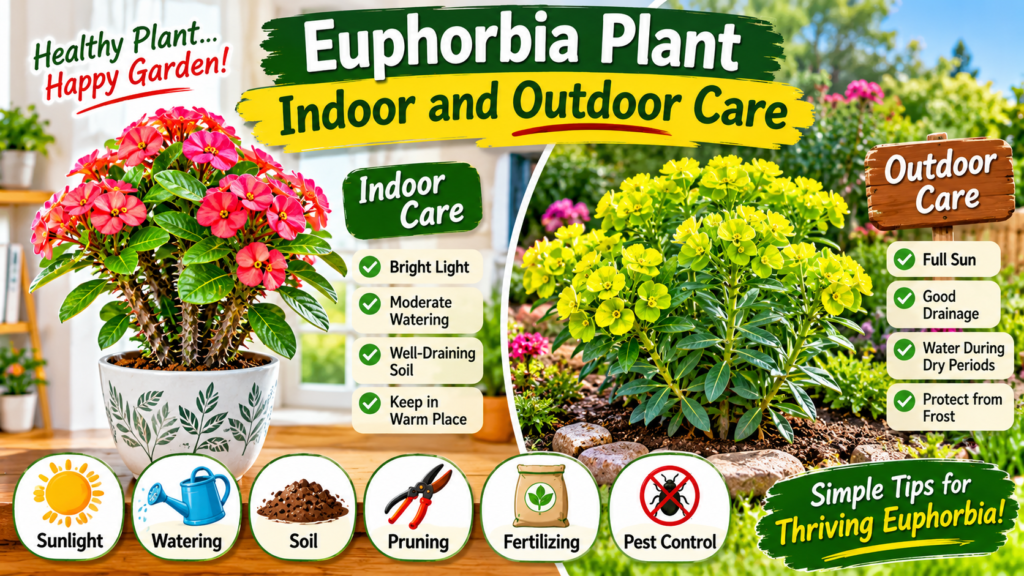
Euphorbia can grow indoors or outdoors, depending on the species and climate.
The best location provides the right combination of light, temperature, airflow, and drainage.
Growing Euphorbia Indoors
Indoor growing is suitable for many compact succulent varieties.
Follow these recommendations:
- Place the plant near a bright window.
- Provide sufficient direct or indirect sunlight according to the species.
- Use a container with drainage holes.
- Avoid overwatering.
- Keep the plant away from cold drafts.
- Monitor for mealybugs and spider mites.
Important: Some Euphorbias grow very large or have sharp spines. Choose a location where the plant cannot easily injure people or pets.
Growing Euphorbia Outdoors
Outdoor growing often provides better natural light and airflow.
For suitable varieties:
- Select a sunny or appropriately shaded location.
- Improve soil drainage before planting.
- Acclimate indoor plants gradually to stronger outdoor sunlight.
- Protect frost-sensitive varieties from cold.
- Avoid waterlogged garden beds.
- Monitor the plant during extreme weather.
In warm regions, many succulent Euphorbias can perform well outdoors in containers or suitable garden beds.
However, intense summer sunlight can scorch plants that were previously grown indoors or in shade. Gradual acclimation is essential.
Seasonal Plant Care Guide
Seasonal changes affect how much water, light, and fertilizer Euphorbia needs.
The exact routine depends on whether your variety is a tropical succulent, leafy ornamental, or hardy garden perennial.
| Season | Recommended Care |
|---|---|
| Spring | Resume active growth care, inspect roots, and repot if needed |
| Summer | Provide suitable sunlight and monitor watering |
| Autumn | Reduce feeding as growth slows |
| Winter | Protect tropical types from cold and avoid excess moisture |
Spring Care
Spring is an excellent time to inspect the plant.
- Remove dead or damaged growth.
- Repot when necessary.
- Begin light feeding during active growth.
- Gradually increase watering as growth resumes.
Summer Care
Summer is an active growing period for many tropical Euphorbias.
- Provide adequate sunlight.
- Monitor soil moisture.
- Maintain airflow.
- Check regularly for pests.
- Avoid excessive fertilizer.
Autumn Care
As temperatures change, growth may slow.
- Reduce unnecessary watering.
- Stop or reduce feeding.
- Remove damaged branches.
- Prepare frost-sensitive plants for indoor protection.
Winter Care
Many tropical succulent Euphorbias grow more slowly during cooler months.
- Reduce watering according to soil dryness.
- Avoid cold drafts.
- Protect plants from frost.
- Do not fertilize dormant plants.
- Maintain suitable light levels.
How to Grow Euphorbia in Hot Climates
Euphorbia can be a good choice for warm climates because several popular species tolerate heat and dry conditions.
However, intense summer temperatures, excessive rainfall, and high humidity can still create challenges.
Practical Tips for Hot Regions
- Choose varieties suited to warm weather.
- Use containers with drainage holes.
- Provide morning sunlight and gradually acclimate plants to stronger exposure.
- Protect sensitive plants during extreme afternoon heat.
- Water according to soil moisture rather than a fixed schedule.
- Improve airflow around container plants.
- Avoid leaving pots in standing water.
For gardeners in Pakistan, Crown of Thorns and suitable African Milk Tree varieties are worth considering for warm, sunny locations.
However, during very hot weather, watch for sunburn, excessive pot heating, and rapid moisture loss.
Expert tip: A plant growing in a small black plastic pot can experience much hotter root conditions than the same plant growing in a larger, appropriately placed container.
Is Euphorbia Poisonous? Important Safety Information
This is one of the most important things to understand before growing Euphorbia.
Many species contain milky latex sap that can irritate the skin and eyes. Some varieties also have sharp spines or thorns.
How Can Euphorbia Sap Affect People?
- Skin contact: May cause redness, irritation, or dermatitis.
- Eye contact: Can cause severe inflammation and potentially serious eye injury.
- Ingestion: May cause irritation and other symptoms.
- Physical contact: Thorny varieties can cause painful puncture injuries.
How to Handle Euphorbia Safely
- Wear protective gloves.
- Use eye protection when cutting stems.
- Avoid touching your face during gardening.
- Wash your hands and tools after handling.
- Keep cuttings away from children and pets.
- Place thorny plants away from walkways.
If it enters your eyes, rinse immediately with clean running water and seek urgent medical attention.
If someone swallows plant material, contact a medical professional or poison information service for advice.
The sap toxicity differs between species. Do not assume a variety is harmless because another Euphorbia has relatively low toxicity. crown of thorns+3
Common Euphorbia Care Mistakes to Avoid
Even though many Euphorbia varieties are low-maintenance, incorrect care can affect their appearance and growth.
Here are common mistakes to avoid.
| Mistake | Why It Causes Problems | Better Approach |
|---|---|---|
| Overwatering | Increases the risk of root rot | Allow suitable varieties to dry between watering |
| Poor drainage | Keeps roots wet for too long | Use an appropriate free-draining mix |
| Insufficient sunlight | Reduces healthy growth and flowering | Provide suitable bright light |
| Excessive fertilizer | Encourages weak, excessive growth | Feed lightly when necessary |
| Using oversized pots | Holds excess moisture around small roots | Choose appropriately sized containers |
| Incorrect pruning | Removes healthy growth or future flower stems | Follow species-specific pruning guidance |
| Ignoring pests | Allows infestations to spread | Inspect leaves and stems regularly |
| Handling sap without protection | Can cause skin and eye irritation | Wear gloves and protective eyewear |
Plant Care Checklist
Use this simple checklist to maintain healthy growth throughout the year.
- Identify the Euphorbia variety.
- Choose a suitable sunny or bright location.
- Use soil appropriate for the species.
- Select a pot with drainage holes.
- Check soil moisture before watering.
- Avoid excessive fertilizer.
- Maintain good airflow.
- Inspect leaves and stems for pests.
- Prune carefully using protective equipment.
- Protect tropical varieties from cold weather.
- Keep irritating sap away from skin and eyes.
- Adjust care according to seasonal growth.
A quick weekly inspection can help you notice changes before they become serious problems.
Frequently Asked Questions
1. Is Euphorbia easy to grow?
Yes. Many Euphorbia varieties are relatively easy to grow when provided with suitable sunlight, soil, and watering. Succulent types are especially manageable for beginners.
2. How much sunlight does Euphorbia need?
Many succulent Euphorbias prefer approximately 6 hours or more of direct sunlight. Other varieties, including Poinsettia, may prefer bright indirect light or partial shade.
3. How often should I water Euphorbia?
Watering frequency depends on the species, temperature, container, and soil. Many succulent varieties should dry between waterings, while Poinsettias need more consistent moisture.
4. Does Euphorbia need direct sunlight?
Many varieties benefit from direct sunlight. However, some species prefer partial shade or bright indirect light. Check the requirements of your particular plant.
5. What is the best soil for Euphorbia?
Most succulent varieties prefer gritty, well-draining soil containing cactus mix, pumice, perlite, or horticultural grit. Other species may need more moisture-retentive soil.
6. Why are my Euphorbia leaves turning yellow?
Yellow leaves can result from overwatering, poor drainage, insufficient light, or natural aging. Check the soil and roots before applying fertilizer.
7. Why is my Euphorbia losing leaves?
Leaf loss can occur because of seasonal changes, insufficient light, cold temperatures, underwatering, or root damage. Some species naturally shed older leaves.
8. How do I make Euphorbia bloom?
Provide appropriate sunlight, well-draining soil, suitable temperatures, and light feeding. Avoid excessive nitrogen and unnecessary watering.
9. Can Euphorbia grow indoors?
Yes. Many compact varieties grow successfully indoors near bright windows. Good drainage and sufficient light are essential.
10. Can Euphorbia grow outdoors?
Yes. Many species grow well outdoors in suitable climates. Choose a location based on the variety’s sunlight, temperature, and moisture requirements.
11. How do I propagate Euphorbia?
Many succulent Euphorbias can be propagated from stem cuttings. Wear protective equipment, allow cut ends to callus where appropriate, and plant them in suitable growing medium.
12. When should I prune Euphorbia?
Pruning time depends on the species. Many succulent varieties can be pruned during active growth, while garden varieties should be pruned according to their flowering cycle.
13. Is Euphorbia toxic to pets?
Some Euphorbia varieties can irritate pets or cause illness if ingested. Keep plants and cuttings away from dogs, cats, and other animals.
14. Is the white sap from Euphorbia dangerous?
The milky latex sap can irritate skin and cause serious eye injury. Always wear gloves and protective eyewear when pruning or propagating Euphorbia.
15. Does Euphorbia need fertilizer?
Most varieties need only light feeding during active growth. Excessive fertilizer can produce weak growth and reduce flowering in some species.
16. Can Euphorbia survive hot weather?
Many succulent varieties tolerate warm conditions and sunlight. However, extreme heat can damage plants, especially those growing in small containers or recently moved into direct sunlight.
17. How often should I repot Euphorbia?
Repot when the plant becomes root-bound, the soil deteriorates, or drainage becomes poor. Many varieties do not need frequent repotting.
18. Why is my Euphorbia stem turning soft?
Soft stems can indicate overwatering or stem rot. Check the base of the plant, inspect the roots, and remove infected tissue using clean tools and protective equipment.
Conclusion:
Euphorbia can be a beautiful and rewarding addition to indoor spaces, patios, and outdoor gardens. Its unusual shapes, attractive foliage, and colorful flowers make it popular among beginner and experienced gardeners. Provide suitable sunlight, choose well-draining soil for succulent types, adjust watering according to the species, and avoid excessive fertilizer.
Regular inspections, appropriate pruning, and seasonal adjustments also help maintain healthy growth.
Remember that Euphorbia’s milky sap can irritate skin and eyes, so always use protective equipment when handling or pruning the plant.
With the right growing conditions and a little attention, your Euphorbia can remain healthy, attractive, and rewarding to grow for many years.