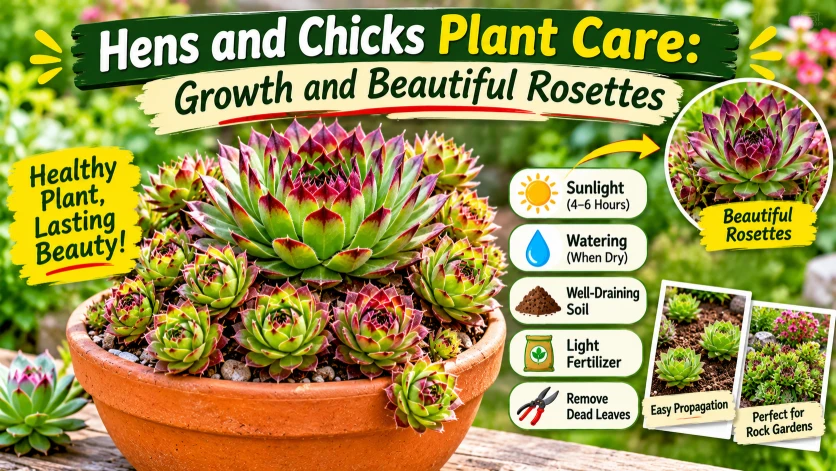
Hens and chicks are among the easiest succulents to grow, but they still need the right conditions. Their thick leaves store water, allowing them to survive dry periods that damage many other plants.
The plant gets its charming name from its growth habit. The large central rosette is the “hen,” while the smaller offsets surrounding it are the “chicks.”
Although hens and chicks are known for their toughness, poor drainage and excessive watering can cause serious problems. Too little sunlight can also make their compact rosettes stretch and lose their shape.
This guide explains how to grow hens and chicks indoors and outdoors, choose the right soil, manage watering, encourage offsets, and solve common problems.
Quick Answer:
Hens and chicks (Sempervivum) grow best in full sun, gritty, well-draining soil, and containers with drainage holes. Water deeply, then let the soil dry before watering again. These hardy succulents tolerate cold weather and need little fertilizer. Remove dead leaves, separate offsets when crowded, and protect plants from soggy soil. With enough light and excellent drainage, they form attractive clusters of colorful rosettes.
What Is the Hens and Chicks Plant?
Hens and chicks is the common name for several rosette-forming succulents in the genus Sempervivum. They belong to the Crassulaceae family and are native mainly to mountainous parts of Europe and nearby regions of Asia.
Their leaves grow in tight, layered circles. Depending on the variety, the rosettes may be green, red, purple, bronze, or covered with fine white hairs.
The plant spreads through horizontal runners called stolons. Small offsets develop at the ends of these runners and gradually form a dense cluster.
One important detail: Some sellers use “hens and chicks” for other succulents, including certain Echeveria varieties. Check the botanical name on the plant label. This guide focuses on Sempervivum, which is generally more cold-hardy and suited to outdoor rock gardens.
Popular Hens and Chicks Varieties
Common Houseleek (Sempervivum tectorum)
A classic variety with green leaves and reddish tips. It spreads readily and works well in rock gardens and containers.
Cobweb Houseleek (Sempervivum arachnoideum)
Its fine white hairs form web-like patterns across the rosette. Avoid confusing this natural feature with spider mites.
Limestone Houseleek (Sempervivum calcareum)
Often forms neat blue-green rosettes with dark reddish or purple leaf tips.
Colorful Hybrid Hens and Chicks
Named hybrids offer shades of burgundy, bronze, green, and purple. Their colors often become stronger with suitable sunlight and seasonal temperature changes.
Variety images are visual examples; exact colors vary with cultivar and growing conditions.
How Much Sunlight Do Hens and Chicks Need?
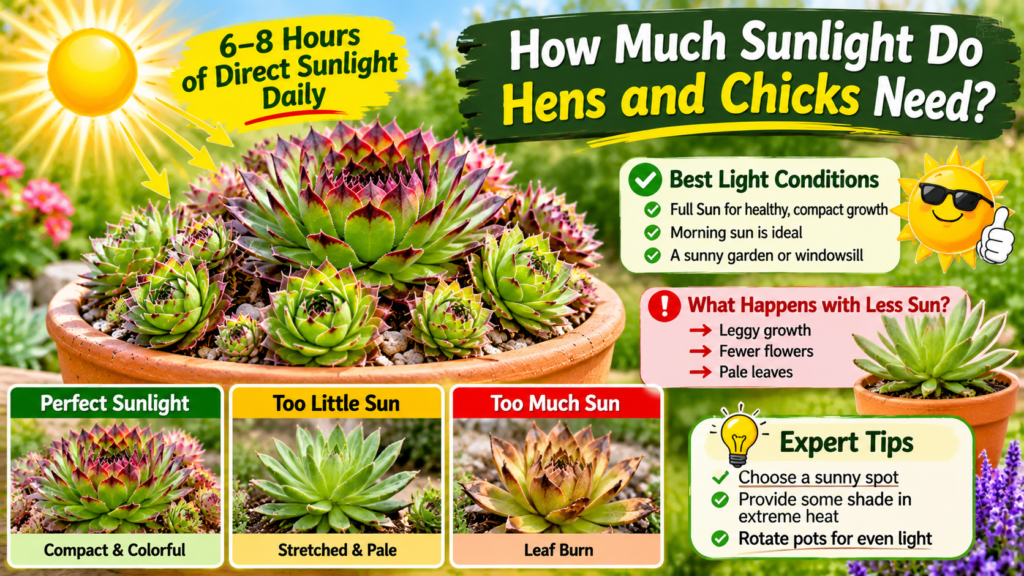
Hens and chicks grow best in a bright, open location with several hours of direct sunlight. Around 4–6 hours of direct sun is a useful starting point, although the ideal amount depends on climate and variety.
Sunlight helps the rosettes stay compact and encourages attractive leaf colors. Plants grown in deep shade often become loose, stretched, and less colorful.
Best Light Conditions
- Outdoor gardens: Choose a sunny rock garden, raised bed, or open patio.
- Very hot climates: Give plants morning sun and light afternoon shade during intense summer heat.
- Indoor growing: Place them beside a bright, sunny window where they receive several hours of direct light.
- Newly purchased plants: Introduce stronger sunlight gradually to prevent leaf scorch.
If your plant is leaning toward a window or developing long gaps between leaves, it may need more light.
Practical tip: Rotate indoor pots occasionally so every side receives similar light. This helps maintain a balanced rosette.
How to Water Hens and Chicks Correctly
These succulents store moisture in their fleshy leaves, so they do not need frequent watering.
However, drought tolerance does not mean they should remain completely dry throughout active growth.
A Simple Watering Method
- Check the soil with your finger. Feel several centimeters below the surface.
- If the soil is dry, water the growing medium thoroughly.
- Allow excess water to escape through the drainage holes.
- Wait until the soil dries again before watering.
Avoid pouring water directly into the center of the rosette. Water trapped between tightly packed leaves can encourage rot, particularly when airflow is poor.
How Often Should You Water?
| Growing conditions | Watering approach |
|---|---|
| Warm growing season | Water when the soil has dried |
| Cool or cloudy weather | Water less frequently |
| Rainy conditions | Usually pause watering outdoors |
| Winter dormancy | Keep watering minimal |
| Small indoor pots | Check soil more frequently, but avoid a fixed schedule |
The correct interval depends on pot size, soil, temperature, airflow, and rainfall. Always check the soil rather than following a strict weekly schedule.
Common mistake: Giving a small splash of water every day. Frequent light watering can keep the root zone damp without encouraging healthy root development.
What Is the Best Soil for Hens and Chicks?
Hens and chicks need loose, gritty soil that drains quickly. Their roots cannot tolerate sitting in saturated compost for long periods.
A heavy garden soil or moisture-retaining potting mix can hold too much water around the roots. This increases the risk of root and crown rot.
Recommended Soil Mix
For container growing, try this starting mixture:
| Ingredient | Amount | Purpose |
|---|---|---|
| Cactus or succulent potting mix | 2 parts | Provides the growing base |
| Pumice or perlite | 1 part | Improves airflow and drainage |
| Coarse horticultural grit | 1 part | Keeps the mixture open |
Adjust the mixture if your existing potting mix already contains plenty of grit. The finished soil should release water quickly instead of remaining soggy.
Can Hens and Chicks Grow in Ordinary Garden Soil?
They can grow in naturally sandy or gravelly garden soil. Heavy clay soil is a poor choice unless you improve drainage or use a raised planting area.
For an outdoor rock garden, plant them in a raised, sloping, or gravelly position. Avoid low spots where rainwater collects.
Best Pots and Containers for Hens and Chicks
The right container makes watering much easier. Choose a pot with at least one open drainage hole.
Terracotta is a useful option because its porous sides allow moisture to evaporate. Shallow bowls, troughs, and stone planters also suit the plant’s compact root system.
What to Look for in a Container
- Drainage holes: Essential for releasing excess water.
- Shallow shape: Useful for displaying the spreading rosettes.
- Breathable material: Unglazed terracotta can help the soil dry more evenly.
- Suitable size: Choose a container that gives the roots room without leaving a large volume of wet soil around them.
Avoid placing a drainage-less decorative pot directly around the growing pot unless you empty collected water after watering.
Ideal Temperature and Humidity
Most Sempervivum varieties are adapted to mountain environments. Many tolerate cold winters and seasonal temperature changes better than common tropical succulents.
They generally prefer good airflow and relatively low humidity. Prolonged dampness is more concerning than ordinary cold for many varieties.
Temperature and Humidity Tips
- Provide good air circulation around crowded rosettes.
- Avoid keeping plants in closed, humid terrariums.
- Protect containers from prolonged winter rainfall.
- In very hot summers, reduce harsh afternoon exposure.
- Do not leave pots sitting in water after rain.
For hot climates: In places with intense summer heat, a sheltered position with morning sun, afternoon shade, and excellent drainage can be more successful than an exposed, heat-reflecting patio. If summers remain extremely hot and humid, select a cooler, well-ventilated growing location.
How to Fertilize Hens and Chicks
Hens and chicks do not need heavy feeding. They naturally grow in relatively lean, well-drained conditions.
Too much fertilizer can encourage soft, excessive growth. This may make rosettes less compact and reduce the attractive shape that makes the plant popular.
Fertilizing Recommendations
- Use a diluted, balanced fertilizer only when plants show active growth and need it.
- Apply less than the label’s full strength if the product is intended for general houseplants.
- Avoid frequent feeding.
- Do not fertilize dry, stressed, or recently damaged plants.
- Skip feeding if the potting mix already contains slow-release fertilizer.
In most gardens, established plants grow well without regular fertilizer. Good light and drainage matter much more.
How to Propagate Hens and Chicks from Offsets
Propagation is one of the easiest and most rewarding parts of growing hens and chicks. A healthy plant naturally produces smaller rosettes around its main rosette.
These baby plants are called offsets or chicks. Once they are large enough to handle, you can separate them and grow new plants.
Step-by-Step Propagation
Step 1: Choose a healthy offset
Select a firm, well-developed chick. An offset with visible roots is usually easier to establish.
Step 2: Separate the chick
Gently loosen the offset from its runner. Use clean scissors if the connecting stem is difficult to detach.
Step 3: Prepare the new pot
Fill a small container with gritty, well-draining succulent soil. Make a shallow space for the roots.
Step 4: Plant and establish
Set the roots into the soil and keep the rosette above the surface. Place it in bright light while it establishes.
Step 5: Resume normal care
Once the offset is rooted and growing, gradually provide the appropriate sunlight and watering routine.
Keep the soil lightly moist only if the offset has few or no roots, and never leave it waterlogged. Established offsets need the same dry-between-waterings routine as mature plants.
Expert tip: Do not remove every chick from the mother plant. Keeping some offsets attached helps the display fill out naturally.
Why Do Hens and Chicks Flower?
Mature hens and chicks sometimes produce a tall flower stalk from the center of a rosette. Small star-shaped flowers may appear in shades of pink, red, yellow, or white, depending on the variety.
Flowering is a natural part of the plant’s life cycle. It does not automatically mean the plant is unhealthy.
Does the Mother Plant Die After Flowering?
Yes. A Sempervivum rosette is monocarpic, which means it flowers once and then dies.
This can surprise beginners who see a healthy rosette suddenly produce a tall stalk. The central rosette gradually declines after flowering, but the surrounding chicks usually continue growing.
What Should You Do After Flowering?
- Allow the flowers to finish if you want to enjoy them or collect seed.
- Once the flowered rosette has died back, remove it carefully.
- Check the surrounding offsets for healthy roots.
- Fill the empty space with an established chick if needed.
You do not need to remove a healthy rosette simply because it has started flowering.
How to Prune and Maintain Hens and Chicks
Hens and chicks need very little pruning. Most maintenance involves removing dead leaves, clearing debris, and managing crowded offsets.
Simple Maintenance Tasks
- Remove brown, dry leaves from the base of rosettes.
- Cut away dead flower stalks after flowering.
- Remove rosettes that have completely died.
- Separate offsets if the container becomes overcrowded.
- Clear fallen leaves that trap moisture around the plant.
Use clean scissors or small pruning tools. Avoid damaging the growing center of a healthy rosette.
If several rosettes are packed tightly together, improve airflow by removing some offsets rather than cutting healthy leaves.
Common Hens and Chicks Problems and How to Fix Them
Even hardy succulents can develop problems when light, water, and drainage are unsuitable. The important thing is to identify the cause before changing several care conditions at once.
Why Are Hens and Chicks Turning Brown?
Brown leaves can have several causes. Older lower leaves naturally dry as the rosette grows, but widespread browning may indicate stress.
Possible causes:
- Natural aging of lower leaves.
- Excessive sunlight after sudden exposure.
- Root or crown rot from wet soil.
- Physical damage or extreme heat.
How to fix it: Remove only dead leaves. Check the soil and roots if browning spreads. Move a sunburned plant into gentler light and reintroduce stronger sunlight gradually.
Why Are Hens and Chicks Turning Yellow?
Yellow leaves often indicate excess moisture, especially when the leaves become soft or translucent.
How to fix it:
- Stop watering until the soil dries.
- Check that the pot has open drainage holes.
- Remove rotting leaves.
- Inspect the roots and repot if the soil remains wet or smells unpleasant.
If only a few older leaves turn yellow near the base, the plant may simply be replacing old foliage.
Why Are the Leaves Soft or Mushy?
Soft, mushy leaves often point to overwatering or rot. Healthy leaves should generally feel firm and fleshy.
How to fix it: Remove affected tissue, check the crown and roots, and replace soggy soil with a fresh gritty mix. If the central growing point has rotted, a healthy offset may be the best way to save the plant.
Why Are Hens and Chicks Losing Their Color?
Some varieties become greener in lower light or during certain seasons. Others develop stronger red and purple tones with suitable sunlight and cooler seasonal conditions.
How to fix it: Provide enough light, but do not expose the plant suddenly to harsh heat just to intensify its color.
Common Problems at a Glance
| Symptom | Likely cause | What to do |
|---|---|---|
| Brown lower leaves | Natural aging | Remove dry leaves |
| Yellow, soft leaves | Excess moisture | Reduce watering and check roots |
| Long, stretched rosette | Insufficient light | Increase light gradually |
| Mushy central growth | Crown rot | Remove rot and save healthy offsets |
| Faded leaf color | Low light or seasonal change | Improve light if needed |
| Slow growth | Poor light, unsuitable season, or root stress | Check growing conditions |
Pests and Diseases That Affect Hens and Chicks
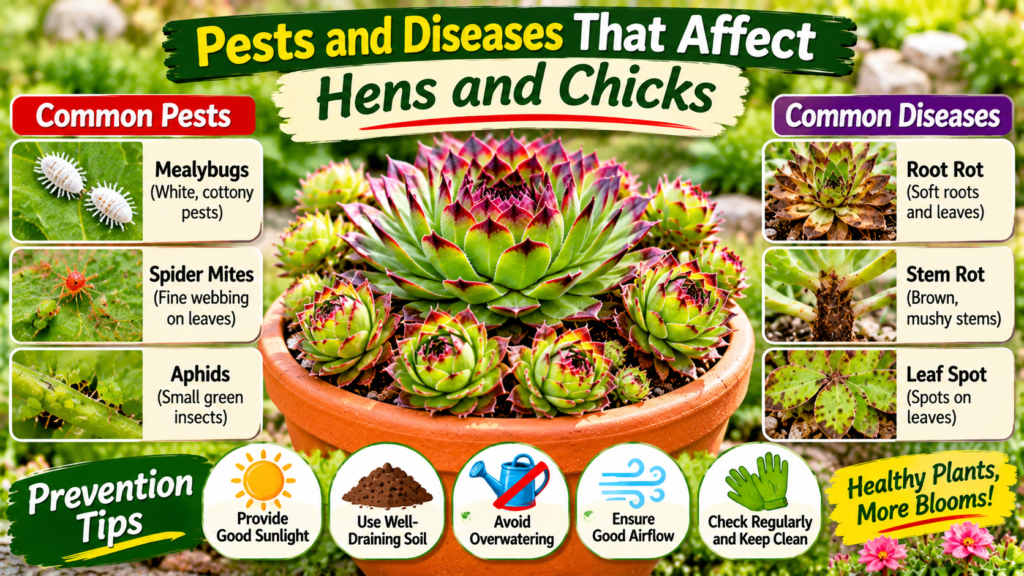
Hens and chicks are relatively trouble-free when grown in suitable conditions. However, pests and fungal problems can appear, particularly when plants are crowded or kept too damp.
Common Pests
- Mealybugs: Small insects that look like white cottony patches. Inspect leaf joints and the base of rosettes.
- Aphids: Soft-bodied insects that may gather around new growth or flower stalks.
- Vine weevils: Their larvae can damage roots, while adult beetles may leave notched leaf edges.
How to Control Pests
- Inspect the plant and surrounding soil.
- Remove visible insects where practical.
- Isolate affected container plants.
- Use an appropriate insecticidal soap or other labeled treatment when necessary.
- Repeat inspection because pests may return.
Test any spray on a small area first, follow the product label, and avoid applying treatments during intense heat.
Preventing Fungal Problems
Good drainage is the strongest prevention. Avoid wetting the center of rosettes, remove dead leaves, and provide enough space for air to move between plants.
Growing Hens and Chicks Indoors vs. Outdoors
Hens and chicks can grow in containers indoors, but they generally perform best outdoors where they receive stronger natural light and good airflow.
| Growing location | Advantages | Main challenge |
|---|---|---|
| Outdoor rock garden | Natural sunlight and room to spread | Excessive rain or summer heat |
| Outdoor container | Easy to move and arrange | Soil can dry quickly |
| Sunny indoor windowsill | Convenient and protected | Often insufficient light |
| Greenhouse | More control over rainfall | Poor ventilation and excess heat |
Indoor Care Tips
- Choose the brightest available window.
- Use a pot with drainage holes.
- Avoid humid bathrooms and closed terrariums.
- Rotate the pot to maintain balanced growth.
- Check soil moisture before watering.
If the plant becomes stretched indoors, consider moving it outside gradually. A sunny outdoor location is often better for long-term growth.
Outdoor Care Tips
- Plant in a raised bed, rock garden, or shallow container.
- Use gritty soil that drains quickly.
- Avoid areas where rainwater collects.
- Leave space between clusters for airflow.
- Provide afternoon shade during extreme summer heat.
The Royal Horticultural Society recommends open, sunny positions and well-drained growing conditions for Sempervivum. RHS+1
Seasonal Plant Care
Although these plants are hardy, their watering and maintenance needs change with the weather.
| Season | Care recommendations |
|---|---|
| Spring | Remove dead leaves, separate offsets, and check drainage |
| Summer | Provide suitable sunlight and water when soil dries |
| Autumn | Clear fallen leaves and reduce watering as growth slows |
| Winter | Keep plants from sitting in cold, waterlogged soil |
Spring
Spring is a good time to divide crowded plants and repot offsets. Remove old leaves and check whether roots have filled the container.
Summer
Watch for excessive heat, especially in small containers. Water when the soil has dried, and provide some afternoon protection during extreme temperatures.
Autumn
Remove debris that collects between rosettes. Reduce watering as temperatures fall and growth slows.
Winter
Many Sempervivum varieties tolerate freezing temperatures. However, cold, wet soil can be more damaging than cold air.
Move containers to a sheltered position if winter rainfall is excessive. Do not bring every hardy variety into a warm room simply because winter has arrived.
Common Hens and Chicks Growing Mistakes
Even though hens and chicks are low-maintenance plants, a few mistakes can prevent them from growing well.
1. Watering too frequently
Succulent leaves store moisture. Watering before the soil dries can suffocate roots and encourage rot.
2. Using heavy potting soil
Dense soil holds water around the roots. Use a gritty succulent mix instead.
3. Growing in deep shade
Insufficient sunlight causes stretched, loose rosettes. Choose a brighter location.
4. Using containers without drainage
A decorative bowl without drainage can trap water at the bottom. Always use a container that allows excess water to escape.
5. Applying too much fertilizer
Heavy feeding can produce weak, overly lush growth. These plants generally need little additional nutrition.
6. Ignoring the mother rosette after flowering
The flowered rosette naturally dies. Remove it when it has finished declining, but keep the healthy surrounding chicks.
7. Keeping plants crowded and damp
Dead leaves and poor airflow can encourage fungal problems. Remove debris and separate offsets when necessary.
Expert Tips for Fuller, Healthier Hens and Chicks
A few small adjustments can make a noticeable difference to the appearance of your plants.
- Choose the right location first: Sunlight and drainage are more important than frequent feeding.
- Use a gritty top dressing: A thin layer of decorative gravel helps keep the leaves away from damp soil and creates a clean display.
- Group varieties thoughtfully: Combine contrasting green, red, purple, and cobweb varieties for an attractive arrangement.
- Avoid oversized containers: Excess soil can remain wet for too long.
- Watch the center of the rosette: A soft or discolored center deserves attention because crown rot can spread quickly.
- Save healthy offsets: If the mother rosette flowers and dies, its offspring can continue the display.
- Adapt care to your climate: In hot regions, protect plants from extreme afternoon heat and prolonged humidity.
The North Carolina State Extension Plant Toolbox also highlights the importance of sunlight, well-drained growing media, and the offsets that make Sempervivum easy to propagate. North Carolina Extension Gardener Plant Toolbox+1
Frequently Asked Questions:
Are hens and chicks easy to grow?
Yes. They are generally easy to grow when given enough sunlight, gritty soil, and good drainage. They need less frequent watering than many common garden plants.
Do hens and chicks need full sun?
They prefer a sunny position. Several hours of direct sunlight help maintain compact rosettes and attractive colors. In very hot climates, some afternoon shade can prevent heat stress.
How often should I water hens and chicks?
Water when the soil has dried. The interval depends on weather, soil, pot size, and airflow. Always check the soil before watering.
Can hens and chicks grow indoors?
Yes, but they need strong natural light. A bright, sunny windowsill is usually better than a dim indoor location.
Do hens and chicks come back every year?
Most Sempervivum varieties are perennial and return year after year. Individual rosettes die after flowering, but their offsets usually continue growing.
Can hens and chicks survive winter?
Many varieties are very cold-hardy. Protect them from prolonged winter wet, especially when growing in containers.
Do hens and chicks spread?
Yes. They produce small offsets on runners that gradually form dense clusters. You can leave them attached or separate them for propagation.
Should I remove dead leaves from hens and chicks?
Yes. Remove dry or decaying lower leaves carefully. This keeps the plant tidy and reduces places where moisture and pests can collect.
Do hens and chicks flower?
Yes. Mature rosettes can produce tall flower stalks with small star-shaped flowers. The individual rosette dies after flowering, but healthy offsets usually survive.
Can I grow hens and chicks in a shallow bowl?
Yes. Shallow bowls are attractive containers because the plant has a relatively compact root system. However, the bowl must have drainage holes and gritty soil.
Are hens and chicks suitable for hot climates?
They can be challenging in extremely hot and humid climates because many varieties prefer cooler growing conditions. Choose a well-ventilated location with morning sun, afternoon shade, and excellent drainage.
Conclusion:
Hens and chicks are beautiful, low-maintenance succulents that reward simple, consistent care. Give them plenty of suitable sunlight, gritty soil, and a container or garden position that drains quickly.
Avoid frequent watering, excessive fertilizer, and poorly ventilated growing spaces. Remove dead leaves, protect plants from prolonged wet conditions, and allow healthy offsets to develop.
Remember that the mother rosette naturally dies after flowering. Its surrounding chicks carry on growing, keeping the cluster alive and attractive.
With the right growing conditions, your hens and chicks can create a colorful display in rock gardens, shallow planters, and sunny outdoor spaces.