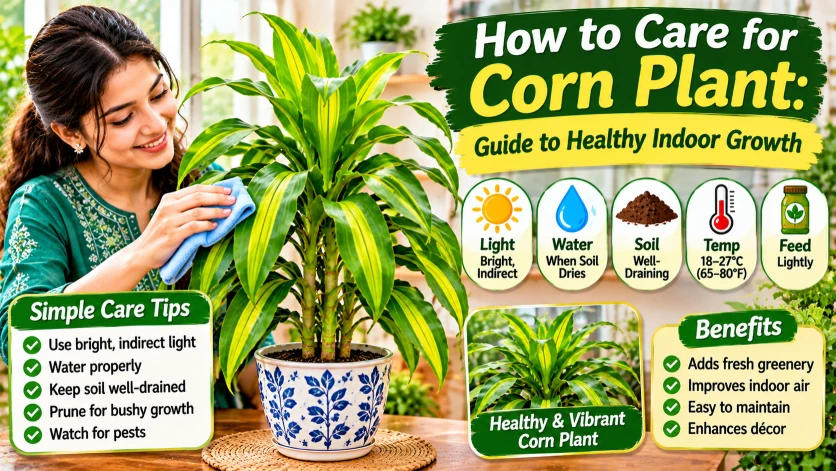
The corn plant is a popular indoor tree known for its upright woody stems and long, arching leaves. Its tropical appearance adds height and greenery to living rooms, offices, and bright indoor spaces.
Despite its tree-like appearance, this plant is relatively easy to maintain. It tolerates some lower-light conditions and does not need frequent watering. However, poor drainage, excessive moisture, and unsuitable water quality can cause problems over time.
Learning how to care for corn plant properly helps prevent yellow leaves, brown tips, weak growth, and root rot. This guide explains the growing conditions it needs, how to maintain its shape, and how to solve common problems.
Quick Answer:
To care for a corn plant (Dracaena fragrans), place it in bright, indirect light and use a loose, well-draining potting mix. Water thoroughly when the upper 1–2 inches of soil feel dry, then empty the saucer. Keep it warm, protect it from cold drafts, and feed lightly during active growth. Avoid overwatering, harsh direct sunlight, and excess fertilizer, which can damage its roots and leaves.
Understand the Corn Plant Before Growing It
The corn plant, scientifically known as Dracaena fragrans, is a tropical evergreen native to Africa. It grows from thick, woody canes and produces long, glossy leaves in clusters near the top.
Its common name comes from the resemblance of its leaves to those of a corn crop. However, it is not a true corn plant and does not belong to the grass family.
Popular corn plant varieties
| Variety | Appearance | Growing appeal |
|---|---|---|
| ‘Massangeana’ | Green leaves with a broad yellow center stripe | Classic indoor tree |
| ‘Lindenii’ | Green leaves with yellow margins | Bright, decorative foliage |
| ‘Janet Craig’ | Dark green, glossy leaves | Elegant indoor greenery |
| ‘Compacta’ | Shorter, dense clusters of dark leaves | Smaller indoor spaces |
Different varieties may have slightly different light and growth preferences. The basic care principles remain similar.
Practical tip: Check the plant label before buying. Some stores use “corn plant” for other Dracaena species, so identifying the botanical name helps you follow the right care advice.
Choose the Right Light for Healthy Leaves
Light affects the plant’s growth rate, leaf color, and overall shape. Corn plants tolerate lower light better than many tropical houseplants, but they usually grow more strongly in bright, indirect light.
Best indoor light conditions
- Bright, indirect light: Usually the best choice for steady growth.
- Medium light: Suitable, although growth may be slower.
- Low light: The plant may survive, but growth can become weak or stretched.
- Harsh direct sunlight: Can scorch or fade exposed leaves, especially near hot windows.
An east-facing window is often a good location. Near a south- or west-facing window, use a sheer curtain to soften strong sunlight.
Signs your corn plant needs a different location
| Leaf or growth symptom | Possible light issue | What to do |
|---|---|---|
| Pale or bleached patches | Too much direct sun | Move it away from the window |
| Slow, weak growth | Insufficient light | Choose a brighter location |
| Uneven growth | Light reaches only one side | Rotate the pot periodically |
| Less noticeable variegation | Light may be too low | Gradually increase indirect light |
Avoid moving a plant from a dim corner into strong sunlight suddenly. Increase its light exposure gradually to reduce leaf stress.
Image suggestion: A corn plant near an east-facing window, showing bright indirect light and a curtain filtering sunlight.
How to Water a Corn Plant Correctly
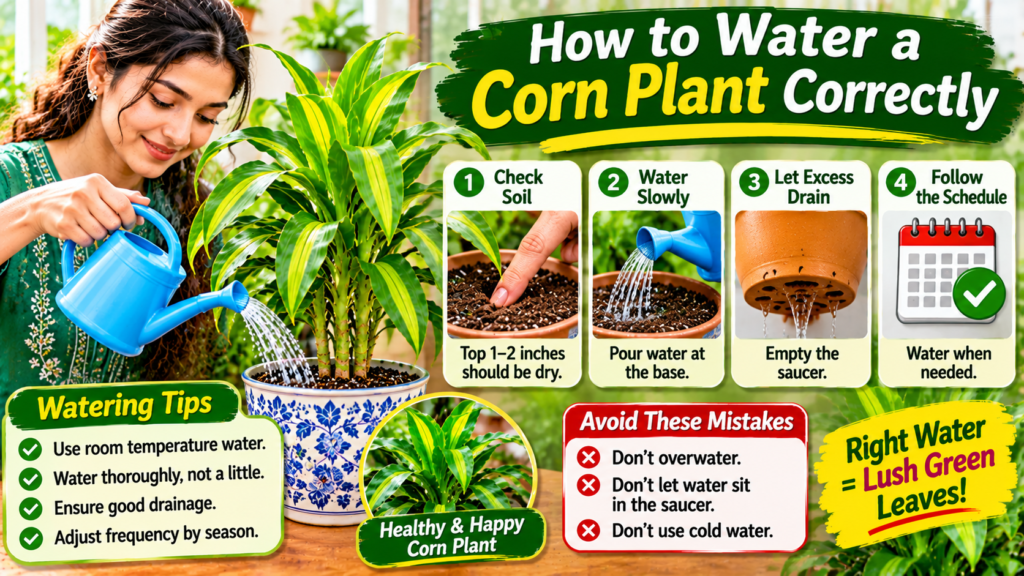
Watering is one of the most important parts of corn plant care. These plants can tolerate short periods of dryness, but constantly wet soil can suffocate roots and encourage root rot.
The goal is to water thoroughly and allow excess moisture to drain.
When should you water?
Check the upper 1–2 inches of potting mix with your finger.
- If the soil feels damp, wait before watering.
- If the upper layer feels dry, check slightly deeper.
- If the upper 1–2 inches are dry, water thoroughly.
A fixed watering schedule is unreliable. A plant near a bright window may dry faster than one in a cool, dim room.
Step-by-step watering method
- Check the soil before adding water.
- Pour water slowly over the soil surface.
- Continue until excess water flows through the drainage holes.
- Allow the pot to drain completely.
- Empty the saucer or decorative outer pot.
Do not leave the roots sitting in collected water.
Why are corn plant leaves turning yellow after watering?
Yellowing leaves, especially when the soil stays wet, may indicate overwatering. Roots deprived of oxygen cannot function properly, and prolonged wet conditions can lead to root rot.
However, one or two older lower leaves turning yellow occasionally can be normal. Check the pattern and soil condition before changing your routine.
Expert tip: In winter or during periods of slow growth, the soil usually takes longer to dry. Check it less frequently and water only when needed.
Use Well-Draining Soil and the Right Pot
Corn plants need soil that holds some moisture without remaining waterlogged. Dense garden soil can compact inside a container and prevent roots from receiving enough oxygen.
A practical potting mix
You can make a suitable indoor mix using:
- 2 parts quality indoor potting mix
- 1 part perlite or pumice
- 1 part fine orchid bark or another coarse aeration material
Mix the ingredients evenly. The finished medium should hold some moisture while allowing excess water to escape.
A commercial houseplant mix amended with perlite can also work.
Choosing a suitable container
Select a pot with drainage holes. A container that is much larger than the root ball can hold excess moisture for too long.
When repotting, choose a pot only slightly wider than the existing root system.
Common mistake: Adding stones to the bottom of a pot does not replace drainage holes or improve a poorly draining soil mix. Use an appropriate container and a well-aerated growing medium instead.
Maintain Warm Temperatures and Comfortable Humidity
As a tropical plant, corn plant prefers comfortable indoor temperatures. Cold drafts and sudden temperature changes can stress its foliage.
Suitable temperature conditions
A practical indoor range is approximately 18–27°C (65–80°F).
Protect your plant from:
- Cold air from frequently opened doors.
- Direct airflow from air conditioners.
- Heating vents that dry the leaves.
- Sudden temperature changes.
- Cold outdoor conditions.
Corn plants appreciate moderate humidity, but ordinary indoor humidity is often adequate.
How to improve humidity
If indoor air is particularly dry, consider:
- Grouping several houseplants together.
- Using a clean humidifier.
- Keeping the plant away from strong heating airflow.
Misting is not a reliable way to raise room humidity for long periods. Avoid keeping leaves constantly wet, especially in poorly ventilated spaces.
Fertilize Your Corn Plant Without Overfeeding
Corn plants are not heavy feeders. They can grow well with moderate feeding during their active growing season.
Use a balanced liquid houseplant fertilizer at the label’s recommended diluted rate. Feed during spring and summer when the plant is actively producing new growth.
Fertilizing guidelines
| Season | Feeding approach |
|---|---|
| Spring | Begin light feeding as growth resumes |
| Summer | Feed occasionally if growth is active |
| Autumn | Reduce feeding as growth slows |
| Winter | Usually pause or greatly reduce feeding |
Always apply fertilizer to appropriately moist soil rather than to a completely dry root ball.
Too much fertilizer can cause salt buildup and brown leaf tips. If you notice a white crust on the soil or pot surface, review your fertilizer use and watering practices.
Expert tip: More fertilizer does not mean faster or healthier growth. A corn plant receiving suitable light and water often needs less feeding than beginners expect.
Prune and Shape Your Corn Plant
Corn plants can grow tall over time. Pruning helps manage their height, remove damaged growth, and encourage new shoots from the remaining cane.
How to prune correctly
- Choose a healthy cane that has become too tall.
- Use clean, sharp pruning shears.
- Cut the cane at the height you want.
- Keep the plant in bright, indirect light.
- Continue normal care while new growth develops.
New shoots may emerge below the cut as dormant buds begin growing. The timing and number of shoots vary with plant health and growing conditions.
Remove damaged leaves
Older lower leaves naturally turn yellow and die as the plant grows. Remove fully yellow or damaged leaves using clean scissors.
If only the tips are brown, trim the dry portion carefully without cutting into healthy green tissue.
Important: Avoid removing too many healthy leaves at once. Excessive pruning can stress a slow-growing plant.
How to Propagate a Corn Plant
You can propagate a corn plant using stem cuttings or sections of its woody cane. Propagation is useful when you prune an overgrown plant and want to grow another one.
Propagation from stem cuttings
- Select a healthy growing tip.
- Cut a section using clean pruning shears.
- Remove leaves from the lower part of the cutting.
- Place the cutting in a suitable moist rooting medium.
- Keep it warm in bright, indirect light.
- Maintain gentle moisture without waterlogging the medium.
You can also use a water-rooting method, changing the water regularly and transferring the cutting to potting mix after roots develop.
Propagation from cane sections
Mature, leafless cane sections can also produce new growth when rooted under suitable conditions. Keep track of the original top and bottom orientation when planting sections vertically.
Root development can take several weeks or longer, depending on warmth, light, and cutting condition.
Image suggestion: A step-by-step propagation infographic showing a healthy cane, a fresh cutting, rooting in water, and a newly potted corn plant.
Repotting a Corn Plant When It Outgrows Its Container
Corn plants grow relatively slowly, so they do not need frequent repotting. Repot when roots become crowded, the soil deteriorates, or water runs through the container unusually quickly.
Signs your plant needs repotting
- Roots are emerging through drainage holes.
- The root ball has become tightly packed.
- The plant dries out unusually quickly.
- Growth has slowed despite suitable care.
- The pot has become unstable or too small.
How to repot safely
- Select a container slightly larger than the root ball.
- Make sure it has drainage holes.
- Remove the plant gently from its old container.
- Inspect the roots and remove any clearly rotten sections.
- Add fresh, well-draining potting mix.
- Position the plant at its previous soil level.
- Water lightly or thoroughly according to the moisture of the mix, then allow excess water to drain.
Do not bury the woody cane deeper than it was growing before.
Common Corn Plant Problems and How to Fix Them
Even a low-maintenance corn plant can develop problems. The best solution depends on the symptom and its underlying cause.
Corn plant leaves turning yellow
Yellow leaves can result from several issues.
Possible causes:
- Overwatering.
- Poor drainage.
- Root damage.
- Natural aging of lower leaves.
What to do: Check the soil moisture and drainage first. If the soil remains wet for a long time, inspect the roots for rot and improve the growing medium.
If only an occasional lower leaf yellows while the rest of the plant looks healthy, it may simply be natural aging.
Brown tips on corn plant leaves
Brown tips are common on Dracaena plants. They may develop because of:
- Fluoride or mineral salts in water.
- Excess fertilizer.
- Irregular watering.
- Very dry indoor conditions.
- Root stress.
What to do:
- Consider using rainwater or appropriately filtered water.
- Reduce unnecessary fertilizer.
- Maintain consistent watering based on soil moisture.
- Check that the pot drains freely.
- Trim dry tips if desired.
Dracaena can be sensitive to fluoride. Simply leaving tap water in an open container overnight does not reliably remove fluoride.
Corn plant leaves drooping
Drooping foliage may indicate a watering or root problem.
Check whether the soil is extremely dry or persistently wet. Water thoroughly if the root ball is dry. If the soil is soggy, pause watering and investigate drainage and root health.
Corn plant leaves curling
Curling can occur when the plant experiences water stress, excessive heat, or environmental changes.
Check the soil, move the plant away from hot direct sunlight, and avoid placing it near air-conditioning vents.
Corn plant not growing
Slow growth is normal to some extent. However, very limited growth may be associated with:
- Insufficient light.
- Cold conditions.
- Poor root health.
- Lack of nutrients during active growth.
- A plant adjusting after repotting.
Provide suitable indirect light, stable temperatures, and careful watering before increasing fertilizer.
Troubleshooting table
| Problem | Likely cause | Recommended action |
|---|---|---|
| Yellow lower leaves | Natural aging or excess moisture | Check soil and drainage |
| Brown leaf tips | Water quality, salts, or dry conditions | Review water and fertilizer |
| Drooping leaves | Water stress or root damage | Check soil moisture |
| Pale patches | Too much direct sunlight | Move to filtered light |
| Slow growth | Low light or seasonal slowdown | Improve light and review care |
| Soft cane or rotten roots | Prolonged wet soil | Remove rot and correct drainage |
Common Pests and Diseases
Corn plants are generally resilient, but indoor conditions can sometimes encourage pests.
Common pests
- Spider mites: Tiny pests that may cause stippling, pale leaves, and fine webbing.
- Mealybugs: White, cotton-like insects found around leaf bases and joints.
- Scale insects: Small, hard or soft bumps attached to stems and leaves.
- Thrips: Slender insects that can cause silvery or damaged leaf patches.
How to control pests
- Isolate the affected plant.
- Inspect leaf undersides and stem joints.
- Remove visible pests with a damp cloth or gentle rinse.
- Prune heavily damaged leaves if necessary.
- Use an appropriate labeled insecticidal soap when needed.
- Recheck the plant regularly for returning pests.
Avoid spraying a treatment in direct sunlight or applying it without following the product label.
Root rot
Root rot is often associated with prolonged wet soil and poor drainage.
Affected roots may appear brown, soft, and unpleasant-smelling. Remove rotten roots with clean tools, replace soggy soil, and use a container with drainage holes.
Seasonal Corn Plant Care
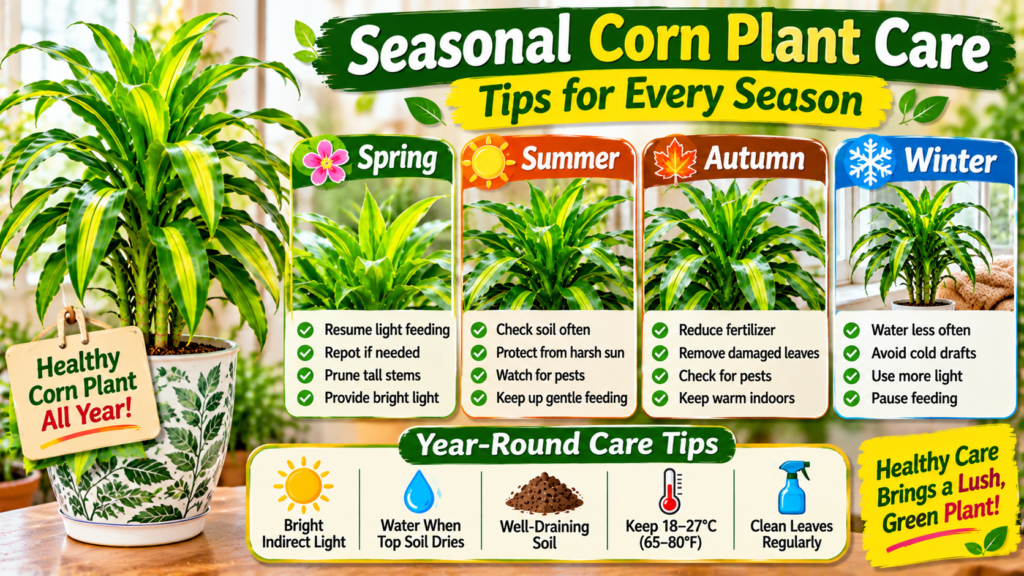
Corn plants do not have the same growth rate throughout the year. Light levels, indoor temperatures, and watering needs change with the seasons.
Spring
Spring is a good time to:
- Resume light feeding as new growth appears.
- Repot if the roots are crowded.
- Prune overly tall or damaged canes.
- Move the plant gradually into brighter indirect light if needed.
Summer
During warm months, the plant may use water more quickly.
- Check the soil regularly.
- Protect leaves from intense afternoon sun.
- Keep the plant away from hot window glass.
- Watch for pests, especially in warm, dry rooms.
Autumn
As growth slows, reduce fertilizer and check the soil before watering. Avoid making unnecessary changes to the plant’s location.
Winter
Indoor growth may become slower because of shorter days and cooler temperatures.
- Water less often when the soil dries slowly.
- Keep the plant away from cold windows and drafts.
- Avoid placing it beside heaters.
- Pause routine feeding if growth has stopped.
Important: Adjust care according to the plant’s actual growing conditions, not the calendar alone. A warm, bright room may support growth even during winter.
Can You Grow a Corn Plant Outdoors?
Yes. Corn plants can grow outdoors in suitable warm climates, provided they receive protection from harsh sunlight and cold temperatures.
In warm regions, a sheltered patio or shaded garden position may work well. Avoid exposing an indoor plant suddenly to intense outdoor sun.
Outdoor growing tips
- Choose a bright, sheltered position.
- Provide shade from strong midday and afternoon sunlight.
- Use a container with drainage holes.
- Protect the plant from heavy rain that keeps the soil saturated.
- Bring it indoors or provide protection when temperatures become too cold.
In climates with hot summers, filtered light and protection from intense afternoon heat are especially important.
Is the Corn Plant Safe for Pets?
Corn plant is not considered pet-safe. The Royal Horticultural Society lists Dracaena fragrans as harmful to pets if eaten. Keep the plant where cats, dogs, and other curious animals cannot chew its leaves. corn plant+1
If a pet chews the plant, contact a veterinarian for advice, particularly if symptoms develop. Do not assume a plant is safe simply because it is commonly grown indoors.
Common Corn Plant Care Mistakes to Avoid
Small care mistakes can gradually affect the plant’s appearance and root health.
| Mistake | Why it causes trouble | Better approach |
|---|---|---|
| Watering on a fixed schedule | Soil dries at different rates | Check soil before watering |
| Using a pot without drainage | Excess water collects around roots | Choose a pot with drainage holes |
| Placing it in harsh sunlight | Leaves may scorch | Use bright, indirect light |
| Overfeeding | Fertilizer salts can accumulate | Feed lightly during active growth |
| Ignoring brown tips | Water quality or root problems may continue | Review water, fertilizer, and drainage |
| Repotting too frequently | Unnecessary root disturbance | Repot when the plant needs more space |
| Leaving it beside an AC vent | Cold or dry airflow can stress leaves | Choose a more stable location |
Expert Tips for a Fuller, Healthier Corn Plant
A healthy corn plant does not need complicated care. Consistency is more useful than frequent adjustments.
Try these practical habits:
- Rotate the pot: Turn it occasionally so light reaches different sides and growth stays balanced.
- Clean the leaves: Wipe dust away with a soft, damp cloth so the foliage stays attractive.
- Check the cane: A firm, healthy cane is a good sign. Soft or collapsing sections need attention.
- Use suitable water: If brown tips persist, consider whether tap-water fluoride or mineral salts are contributing.
- Avoid unnecessary feeding: Slow growth does not automatically mean the plant needs more fertilizer.
- Inspect new growth: Check leaf undersides and growing points for pests.
- Keep the plant stable: Avoid repeatedly moving it between very different light and temperature conditions.
A useful routine is to inspect the leaves and soil once a week. This helps you notice changes before they become serious.
Frequently Asked Questions About Corn Plant Care
How often should I water a corn plant?
Water when the top 1–2 inches of potting mix feel dry. The interval depends on light, temperature, pot size, and soil composition. Always allow excess water to drain.
Does a corn plant need direct sunlight?
No. Bright, indirect light is generally best. It tolerates some lower light, but strong direct sunlight can scorch its leaves.
Why are the tips of my corn plant turning brown?
Brown tips can result from fluoride, mineral salts, excessive fertilizer, irregular watering, or dry conditions. Check water quality and drainage before changing several care habits at once.
Can a corn plant grow in low light?
Yes, it can tolerate lower-light indoor spaces. However, growth will usually be slower, and the plant may become less vigorous. A brighter indirect-light location is better for long-term growth.
How tall can a corn plant grow indoors?
A corn plant can become several feet tall indoors, depending on its variety, age, and growing conditions. Pruning the cane can help manage its height.
Should I cut brown leaves off my corn plant?
Remove fully yellow or badly damaged leaves with clean scissors. If only the tips are brown, trim the dry edges while leaving healthy green tissue intact.
Can I grow a corn plant from a cutting?
Yes. Corn plants can be propagated using tip cuttings and cane sections. Rooting requires suitable warmth, moisture, and indirect light. Ask IFAS+1
Why is my corn plant leaning?
It may be receiving light mainly from one direction, or its cane may be unstable. Rotate the pot periodically and check that the plant is securely supported in its container.
Does a corn plant flower indoors?
Mature plants can occasionally produce clusters of fragrant flowers, although indoor flowering is not guaranteed. The plant is usually grown for its foliage and upright shape. corn plant+1
Is corn plant toxic to cats and dogs?
Yes. Dracaena fragrans is listed as harmful to pets if eaten. Keep it out of reach of animals that chew houseplants. corn plant
Conclusion
Learning how to care for corn plant is mainly about providing the right balance of light, water, warmth, and drainage. Give it bright indirect light, let the upper soil dry before watering, and avoid leaving its roots in standing water.
Pay attention to brown leaf tips, yellowing leaves, and changes in the cane. These signs can help you identify problems before they become severe. With consistent care and occasional pruning, your corn plant can remain an attractive indoor feature for many years.