
Lilies are popular garden plants because their elegant flowers bring color, fragrance, and height to flower beds and containers. However, beautiful blooms depend on more than regular watering. Poor drainage, insufficient light, damaged foliage, and planting bulbs too deeply or too shallowly can all affect growth.
If your lily has yellow leaves, drooping stems, or flowers that never open, the problem may be related to its growing conditions. Adjusting care to the plant’s variety and growth stage can make a significant difference.
This guide explains how to care for lilies indoors and outdoors, including watering, sunlight, soil, fertilizing, pruning, seasonal maintenance, and common problems. It also explains an important distinction: true lilies and plants commonly called lilies do not always need the same care.
Quick Answer:
To learn how to take care of a lily plant, give it the right amount of sunlight, well-draining soil, consistent moisture, and suitable temperatures. Most true lilies (Lilium species) grow best with around six hours of sunlight, though some varieties prefer partial shade. Water when the soil begins to dry, avoid waterlogged roots, and apply a balanced fertilizer during active growth if needed. Remove faded flowers, but keep healthy leaves until they naturally die back.
1. First, identify which type of lily you have
The word lily describes several unrelated plants. Identifying yours helps you avoid giving it the wrong care.

True lilies (Lilium)
These grow from scaly bulbs and produce upright stems with prominent flowers. Asiatic, Oriental, and trumpet lilies belong to this group. They generally need outdoor-style seasonal care and a dormant period.

Peace lily (Spathiphyllum)
This is a popular indoor foliage plant with glossy leaves and white, hood-shaped flowers. It grows from a root system rather than a true lily bulb and prefers bright, indirect light.

Daylilies (Hemerocallis)
These garden perennials have grass-like leaves and flowers that usually last just one day. Their care overlaps with true lilies, but their roots and growth habits differ.
The main guide below focuses on true lilies (Lilium), especially those grown from bulbs in gardens or pots. If yours is a peace lily, follow the separate indoor-care advice in the relevant section.
2. Give your lily the right amount of sunlight
Most true lilies grow and flower best in full sun or light partial shade. Aim for approximately six hours of sunlight daily, adjusting for the variety and local climate.
Sunlight helps the plant build energy for flowering and replenish its bulb for the following season. Too much shade can produce weak stems and fewer flowers.
Where should you place a lily?
- Garden beds: Choose a bright location with some protection from strong winds.
- Pots: Place containers where the leaves receive good light but the potting mix does not overheat.
- Hot climates: Morning sun and afternoon shade can help reduce heat stress.
- Indoor displays: A flowering lily can brighten a room temporarily, but most true lilies need suitable outdoor growing conditions to thrive long term.
A useful principle is to give the foliage adequate sunlight while keeping the root zone cool. Low-growing companion plants or a light organic mulch can help shade the soil without covering the lily’s stem.
Common mistake: Moving a lily into deep shade because its flowers wilt in hot weather. First check soil moisture and heat exposure; reducing harsh afternoon sun may be enough.
Image suggestion: A 16:9 infographic showing a healthy lily in morning sunlight, with sunlight, root-zone shade, and wind protection icons.
3. Choose soil that drains well but retains moisture
Lilies need soil that holds enough moisture for active growth without staying saturated. Waterlogged soil deprives roots of oxygen and can cause bulbs to rot.
A good growing medium should be fertile, loose, and well-draining. Many true lilies prefer neutral to slightly acidic soil, although the ideal pH varies by type. Oriental lilies often prefer acidic conditions, while some Asiatic hybrids tolerate or prefer more alkaline soil.
RHS Growing Guide
+1
Best soil for lily plants
| Soil feature | What to look for | Why it matters |
|---|---|---|
| Drainage | Water flows through without pooling | Helps prevent bulb rot |
| Organic matter | Mature compost or leaf mold | Improves soil structure and moisture retention |
| Texture | Loose, crumbly soil | Allows roots to develop |
| Soil pH | Suitable for your lily variety | Supports nutrient availability |
For container-grown lilies, use quality potting compost with good drainage. Add horticultural grit if the mix retains too much water, and make sure the pot has unobstructed drainage holes.
For heavy clay soil, improve the entire planting area or use a raised bed. Adding a little grit to an individual planting hole is not enough to fix poorly drained surrounding soil.
RHS Lily Group
+1
Expert tip: If the soil remains wet long after watering or rain, solve the drainage problem before adding fertilizer. Feeding a bulb that is struggling with waterlogged roots will not fix the underlying issue.
4. Water your lily correctly
The goal is to keep the soil evenly moist during active growth, not constantly wet. Lilies need more water as stems and leaves develop, particularly when flower buds are forming. Established garden lilies may need little additional watering in rainy weather, while container plants usually require closer monitoring.
RHS Growing Guide
+1
How often should you water a lily?
There is no reliable fixed schedule for every lily. Temperature, rainfall, pot size, soil texture, and plant growth all affect how quickly the soil dries.
Use this simple approach:
- Check the soil a few centimeters below the surface.
- If it feels dry and the plant is actively growing, water thoroughly.
- Allow excess water to drain from the pot.
- Check again before watering rather than automatically repeating the same schedule.
In hot weather, containers may dry quickly and need more frequent checks. During cool or rainy periods, they may need much less water.
| Growth stage | Watering approach |
|---|---|
| Newly planted bulbs | Keep the soil lightly moist, never saturated |
| Active leafy growth | Water when the soil begins to dry |
| Bud formation and flowering | Avoid letting the root zone dry out completely |
| After flowering | Continue watering while leaves remain green |
| Dormancy | Reduce watering, especially in containers, and avoid soggy soil |
Signs of watering problems
- Yellow leaves with wet soil: Check for poor drainage or bulb damage.
- Drooping leaves with dry soil: Water thoroughly and monitor recovery.
- Soft, collapsing stems near the soil: Inspect for rot and other damage.
- Brown leaf edges during heat: Check soil moisture, temperature, and wind exposure before assuming the plant needs fertilizer.
Do not pour water directly into the crown or repeatedly soak the foliage. Watering the soil around the plant is usually more practical and helps keep the leaves drier.
Image suggestion: A watering infographic showing a lily being watered at soil level, a well-drained pot, and a simple comparison of dry, moist, and waterlogged soil.
5. Plant lily bulbs at the correct depth
Planting depth matters because bulbs need stable soil conditions and enough room to develop roots. However, not every lily bulb should be planted at exactly the same depth.
For many common true lilies, a useful starting point is to plant the bulb at a depth around two to three times its height. Basal-rooting lilies generally need less depth than stem-rooting types. Check the variety’s instructions when available.
RHS Growing Guide
+1
Step-by-step bulb planting
- Choose healthy bulbs. Select firm bulbs without mold, soft spots, or severe shriveling.
- Prepare the soil. Loosen the planting area and improve drainage across the bed if needed.
- Position the bulb. Place the pointed end upward and the basal plate, where roots emerge, downward.
- Cover with soil. Use the depth recommended for the lily type.
- Space the bulbs. Follow the variety’s mature size and planting guidance so plants have room for airflow.
- Water lightly. Settle the soil without leaving the planting area waterlogged.
- Mark the location. A label helps prevent accidental damage when shoots have died back.
Lilies are commonly planted in autumn or spring, depending on climate, bulb availability, and variety. Plant bulbs promptly after purchase because they can dry out during storage.
RHS Growing Guide
+1
A frequently overlooked tip: Place supports for tall varieties before or during planting. Pushing stakes into established soil later can damage bulbs or roots.
6. Fertilize for strong stems and healthy flowers
Fertilizer can support flowering, but more is not always better. Lilies need a suitable supply of nutrients during active growth; excessive fertilizer, especially nitrogen, can encourage soft leafy growth rather than balanced development.
How to feed lilies
- Garden lilies: If the soil is fertile and plants grow well, heavy feeding may be unnecessary. A light application of a suitable bulb or balanced fertilizer in spring may help when nutrients are lacking.
- Potted lilies: Nutrients wash out of containers more quickly. During active growth, use a flowering-plant fertilizer according to its label.
- After flowering: Continue caring for the leaves and avoid abruptly drying out the plant while it is still green.
- During dormancy: Do not fertilize a dormant bulb.
The Royal Horticultural Society recommends regular high-potassium liquid feeding for lilies grown in containers during the growing season. Follow the product’s dilution instructions and avoid combining several fertilizers without a clear reason.
RHS Growing Guide
+1
Signs you may be overdoing fertilizer
Excess fertilizer can cause leaf-tip burn, salt buildup in pots, or weak growth. If a plant looks unhealthy after feeding, stop fertilizing and check the soil, drainage, and watering routine before adding anything else.
Image suggestion: A close-up infographic of a healthy lily with strong green leaves and flower buds, alongside a simple fertilizer-measuring guide.
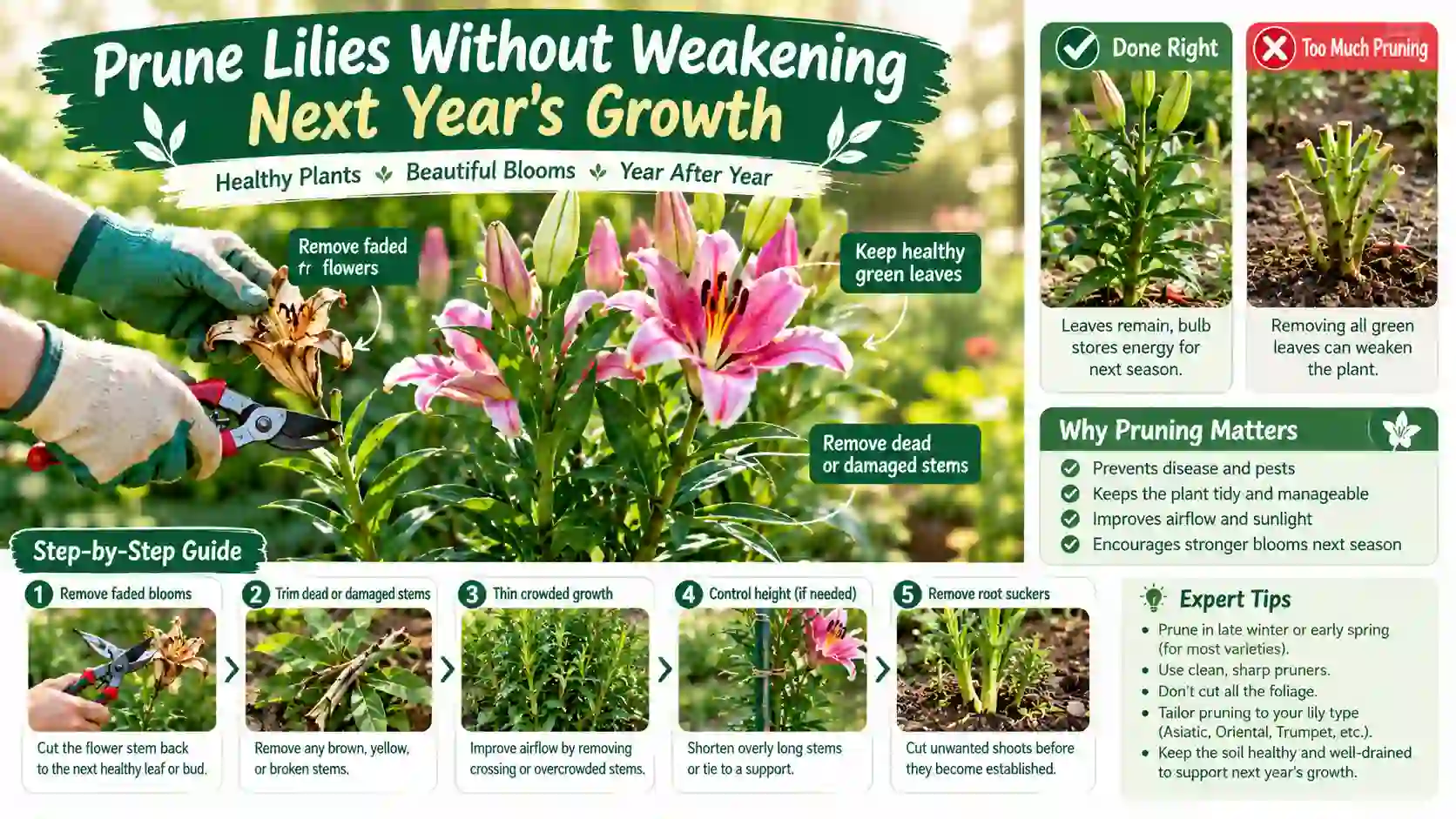
7. Prune lilies without weakening next year’s growth
Pruning lilies is mainly about removing spent flowers and damaged growth while preserving healthy foliage.
After flowering, the leaves continue photosynthesis. This process helps the bulb store energy for future growth. Cutting down all the green leaves too early can reduce flowering in the next season.
What to remove and when
- Faded flowers: Remove the flower heads after they finish blooming. This prevents seed formation when seed is not needed.
- Healthy green leaves: Leave them attached.
- Yellowing leaves: Wait until the foliage naturally dies back.
- Dead stems: Once the plant has died back for the season, cut the dead stem close to soil level.
Use clean, sharp pruners to avoid tearing stems. If you want to collect seeds, leave selected flower heads in place until seed pods mature.
Lilies generally do not need aggressive shaping. Tall varieties may need staking, especially in exposed gardens or windy locations.
RHS Growing Guide
+1
Common mistake: Cutting the whole plant to the ground immediately after flowering because it looks untidy. If the foliage is still green, leave it until it naturally yellows.
8. Grow lilies successfully in pots
Container growing is useful when garden soil drains poorly, outdoor space is limited, or you want to move a plant away from extreme heat or wind.
Choose a container with drainage holes and enough depth for the bulb and its roots. Taller varieties also need a heavy, stable pot so they do not tip over.
RHS Growing Guide
+1
Container care checklist
- Use fresh, well-draining potting compost.
- Select a pot large enough for the variety and the number of bulbs.
- Keep the mix moist during active growth, but empty any standing water from the saucer.
- Check moisture more frequently during hot, dry weather.
- Feed during active growth if needed, following the fertilizer label.
- Move the pot to a sheltered location if strong winds threaten tall stems.
Avoid choosing an oversized pot filled with moisture-retentive compost if you tend to water frequently. Excess unused compost can remain wet for too long, especially when the plant is small.
After the foliage dies back, review the variety’s winter needs. Some lilies can remain outdoors in pots, while less hardy types or containers exposed to very wet conditions may need shelter.
Can you grow lilies indoors?
True lilies can be displayed indoors while flowering, but they generally need strong light and suitable seasonal conditions to grow well over the long term. A cool, bright spot away from heating vents is preferable to a dark corner.
If you want a low-maintenance indoor plant, check whether yours is actually a peace lily. Its care requirements are quite different.
9. Adjust lily care to your climate and the season
Lily care changes throughout the year. A plant that needs regular watering during flowering may need much less once its foliage dies back.
| Season or stage | What to do |
|---|---|
| Autumn planting | Plant suitable bulbs promptly and prepare well-drained soil |
| Spring growth | Watch for emerging shoots, protect them from accidental damage, and check moisture |
| Budding and flowering | Maintain steady moisture, support tall stems, and protect flowers from severe heat |
| After flowering | Remove faded flowers but keep healthy foliage |
| Natural dieback | Remove dead foliage and reduce watering |
| Winter dormancy | Keep bulbs from sitting in water; protect less-hardy container varieties as needed |
What if you live in a hot climate?
In regions with very hot summers, lilies may struggle when the soil and pots become excessively warm. Choose varieties suited to your local conditions and provide bright morning light with some protection from intense afternoon heat when necessary.
Container lilies offer flexibility: you can move them to a more sheltered spot during extreme weather. Keep the root zone cool with a light mulch, but do not pile mulch directly against the stem or leave the soil permanently wet.
If the foliage naturally yellows after flowering or during seasonal dormancy, do not assume the bulb is dead. Check the variety’s normal growth cycle and inspect the bulb only if you suspect rot or other damage.
10. Understand lily dormancy and regrowth
Many true lilies are perennial bulb plants. After flowering, the above-ground growth gradually dies back while the bulb remains alive beneath the soil.
This is a normal part of the life cycle. The bulb stores energy for future shoots and flowers, so keeping the leaves healthy for as long as possible is important.
How to care for a lily after flowering
- Remove faded flowers if you do not want seeds.
- Keep watering while the leaves remain green and active.
- Avoid cutting healthy foliage prematurely.
- Stop routine feeding when active growth ends.
- Remove dead foliage after it has naturally died back.
- Keep dormant bulbs in suitable conditions for their variety, avoiding waterlogged soil.
Do not dig up every lily bulb annually without a reason. Many garden lilies can remain in the ground for years if the climate, drainage, and growing conditions suit them.
RHS Growing Guide
+1
11. Troubleshoot common lily plant problems
When a lily looks unhealthy, start with the growing conditions. Yellow leaves or drooping stems can result from several different causes, so changing the fertilizer or watering schedule without checking the soil may make the problem worse.
| Problem | Possible cause | What to do |
|---|---|---|
| Yellow leaves during active growth | Overwatering, poor drainage, nutrient issues, or natural aging | Check the soil and drainage; distinguish older dying leaves from widespread yellowing |
| Drooping stems | Dry soil, heat stress, damaged roots, or wind | Check moisture, shelter the plant, and support tall stems |
| Few or no flowers | Too little light, a young or weak bulb, early foliage removal, or unsuitable conditions | Improve light, preserve foliage, and check variety-specific requirements |
| Brown leaf edges | Heat, drying soil, wind, or fertilizer salts | Review watering, reduce stress, and avoid excess feeding |
| Bulb feels soft or smells unpleasant | Bulb rot, often associated with excessive moisture | Improve drainage and remove severely rotten bulbs |
| Small holes or ragged leaves | Slugs, snails, beetles, or other chewing pests | Inspect leaves and shoots, then use suitable control methods |
| White or powdery patches | Possible fungal disease | Improve airflow, avoid wetting foliage unnecessarily, and remove badly affected material |
| Stems leaning or breaking | Tall growth, heavy flowers, or strong wind | Install a stake and place the plant in a more sheltered position |
How to tell whether a lily bulb is still alive
A healthy dormant bulb is usually firm and has no foul smell. A bulb that is mushy, badly discolored, or breaking down may have rotted. Do not repeatedly dig up a healthy bulb just to check it; disturbance can damage roots and delay establishment.
If a plant declines rapidly, inspect the base of the stem and surrounding soil. A persistently wet planting site deserves attention before you try additional fertilizer or watering.
Image suggestion: A four-panel lily troubleshooting infographic showing healthy leaves, yellowing leaves, a drooping plant, and a bulb affected by rot.
12. Watch for pests and keep lilies safe around pets
Lily shoots can attract slugs and snails, while some regions have specialist lily beetles that damage foliage and flower buds. Inspect the undersides of leaves and the growing tips regularly. Early action is usually easier than dealing with severe damage later.
Use pest-control products only according to their labels, and choose methods suitable for your garden and any children or pets who use the space.
Important pet safety warning: True lilies (Lilium) are extremely toxic to cats. Even small exposures, including pollen or vase water, can cause life-threatening kidney injury. Keep true lilies out of homes and places accessible to cats, and contact a veterinarian or animal poison service immediately if exposure is suspected. Do not wait for symptoms.
Peace lilies are a different plant and do not cause the same characteristic kidney failure as true lilies, but they can still irritate a pet’s mouth if chewed. Correct identification matters.
RHS Plant Guide
+2
13. How to care for a peace lily instead
If your plant has broad, glossy leaves and white hood-shaped flowers, it may be a peace lily (Spathiphyllum) rather than a true lily.
Peace lilies are commonly grown indoors and need different conditions:
- Light: Bright, indirect light is ideal. Deep shade may reduce flowering.
- Water: Water when the upper layer of potting mix begins to dry. Avoid keeping the roots saturated.
- Soil: Use a well-draining indoor potting mix.
- Temperature: Keep it in a comfortable indoor environment, away from cold drafts and heating vents.
- Humidity: Average indoor humidity is often workable, though very dry air can affect leaf appearance.
- Fertilizer: Feed lightly during active growth according to the product label.
Peace lilies can droop when thirsty, but repeated severe wilting stresses the plant. Check the soil before watering, since drooping can also occur when roots are damaged by excessive moisture.
RHS
Image suggestion: A side-by-side comparison of a true lily growing from a bulb outdoors and a peace lily in an indoor pot.
14. Common mistakes to avoid when caring for lilies
A few seemingly helpful habits can prevent lilies from flowering well or cause them to decline.
- Watering on a fixed schedule: Check soil moisture and weather instead of watering automatically.
- Using a pot without drainage holes: Excess water can accumulate around the bulb.
- Planting in deep shade: Insufficient light can reduce flowering.
- Cutting green foliage after flowering: The bulb loses an important source of stored energy.
- Overfeeding: Excess fertilizer may damage roots or encourage unbalanced growth.
- Ignoring variety differences: Planting depth, soil preference, and winter hardiness vary among lilies.
- Leaving tall stems unsupported: Wind and heavy flowers can cause stems to lean or break.
- Assuming every plant called a lily is the same: Peace lilies, daylilies, and true lilies have different growth habits and care needs.
The most reliable approach is to identify the plant, provide good drainage, adjust watering to its growth stage, and let healthy foliage complete its natural cycle.
Frequently asked questions about lily plant care
How often should I water a lily plant?
Water when the soil begins to dry slightly, while keeping it evenly moist during active growth. Container lilies often need more frequent checks than lilies planted in the ground. Avoid waterlogged soil.
Do lilies need full sun or shade?
Most true lilies grow well in full sun or light partial shade. Aim for several hours of direct sunlight daily, while protecting the roots from excessive heat where necessary.
Why are my lily plant’s leaves turning yellow?
Possible causes include overwatering, poor drainage, nutrient problems, heat stress, or natural seasonal dieback. Check whether the soil is wet and whether the yellowing affects a few older leaves or the entire plant.
Should I cut back lilies after flowering?
Remove faded flowers if you do not want seeds, but leave healthy green leaves and stems. Cut the dead growth back after it naturally dies down.
Can lilies grow in pots?
Yes. Choose a sufficiently deep container with drainage holes and use a well-draining potting mix. Monitor moisture more closely in hot weather, and support tall varieties if needed.
Why is my lily not flowering?
Insufficient sunlight, a weak or immature bulb, poor drainage, unsuitable planting depth, or cutting foliage too early can all affect flowering. Check the plant’s growing conditions before adding more fertilizer.
Can lily plants survive winter?
Many true lilies are hardy perennials and can remain in the ground during winter. Hardiness varies by species and climate, and potted bulbs may need extra protection from prolonged wetness or severe cold.
How long do lily flowers last?
Flower longevity depends on the variety, weather, and growing conditions. Individual flowers often last several days, while a plant with multiple buds can continue flowering over a longer period.
Do lilies come back every year?
Many true lilies return from their bulbs each year when grown in suitable conditions. They need good drainage, appropriate seasonal care, and healthy foliage after flowering to replenish their bulbs.
Are lily plants safe for cats?
No. True lilies (Lilium) are extremely dangerous to cats, including exposure to pollen and vase water. Keep them away from cats and seek immediate veterinary advice if exposure is suspected.
Conclusion
Learning how to take care of a lily plant starts with understanding which lily you have. For true lilies, the essentials are adequate sunlight, fertile and well-drained soil, consistent moisture during active growth, sensible feeding, and careful pruning after flowering.
Pay particular attention to drainage and healthy foliage. Avoid overwatering, leave green leaves intact after blooms fade, and adapt care to your climate and the plant’s seasonal cycle. These simple habits help lilies produce stronger growth and more reliable flowers in future seasons.