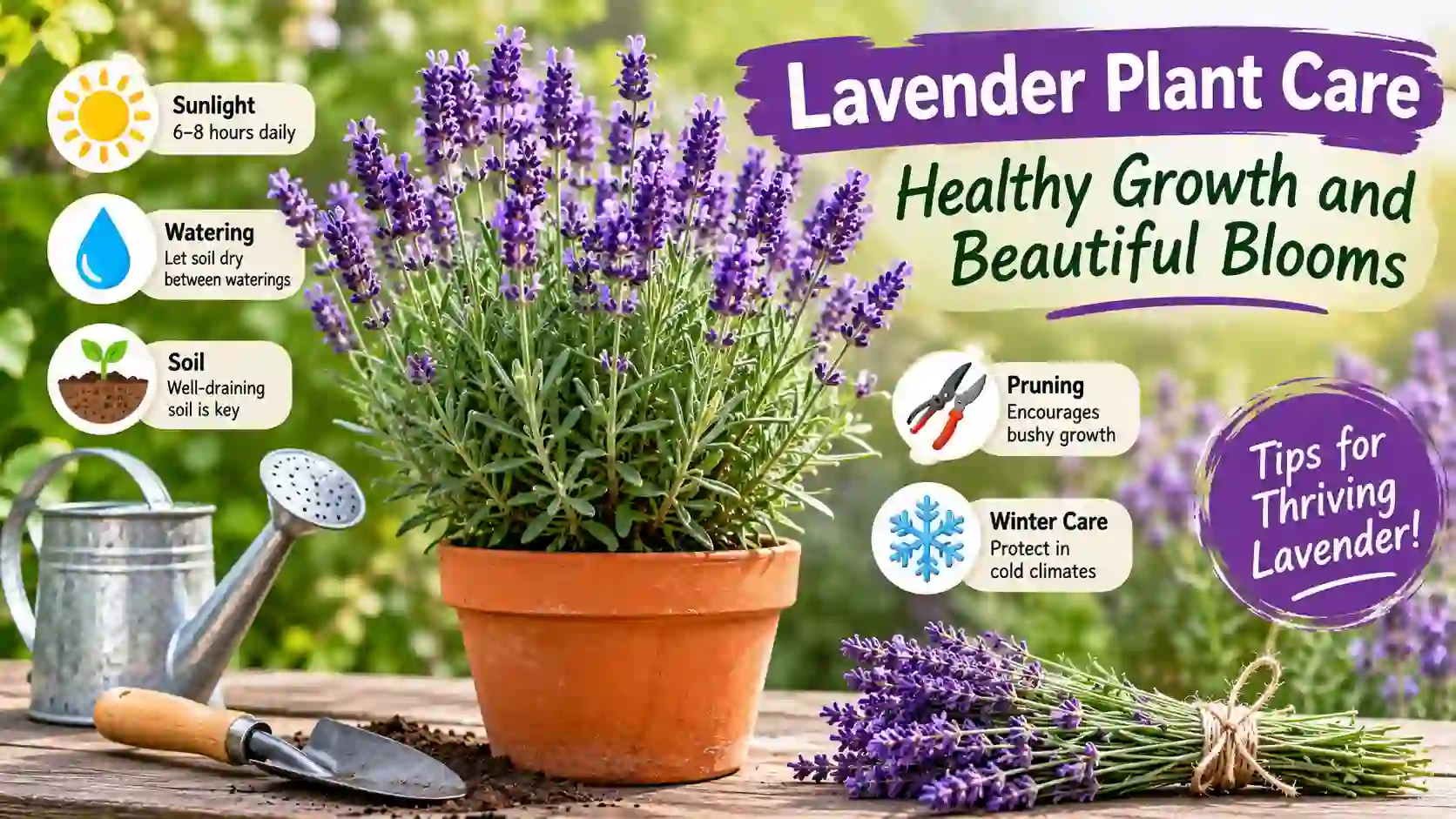
Lavender is a beautiful, fragrant plant known for its purple flowers, silvery-green foliage, and calming aroma. It adds color to gardens, attracts pollinators, and works well in containers, borders, and outdoor landscapes.
However, growing healthy lavender is not always easy for beginners. Some plants develop yellow leaves, stop flowering, become woody, or die because of excessive watering and poor drainage.
Successful lavender plant care requires understanding the plant’s natural growing conditions. Lavender originally comes from Mediterranean regions, where it experiences abundant sunshine, relatively dry conditions, and well-draining soil.
The good news is that lavender does not require constant attention. Once established in the right location, it can thrive with relatively little maintenance.
This guide explains how to grow lavender, choose the right soil, manage watering, encourage flowering, solve common problems, and maintain healthy growth throughout the year.
Quick Answer:
Lavender plant care starts with plenty of direct sunlight, well-draining soil, and careful watering. Grow lavender in a location that receives at least 6–8 hours of sunlight daily. Water deeply but allow the soil to dry between watering sessions. Use sandy or gritty soil, avoid excessive fertilizer, and prune lightly after flowering. Good drainage and proper airflow help prevent root rot and keep lavender healthy.
Understanding Lavender and Its Growing Requirements
Lavender belongs to the Lavandula genus in the mint family, Lamiaceae. It is an aromatic perennial herb or small shrub, depending on the variety.
Gardeners grow lavender for its fragrant flowers, attractive foliage, essential oils, and ability to attract bees and butterflies.
Before planting lavender, understand its basic growing requirements.
| Growing Factor | Ideal Conditions |
|---|---|
| Sunlight | 6–8 hours of direct sunlight |
| Watering | Moderate to low once established |
| Soil | Sandy, gritty, well-draining |
| Soil pH | Approximately 6.5–7.5 |
| Temperature | Mild to warm conditions |
| Humidity | Low to moderate |
| Fertilizer | Minimal feeding |
| Growth habit | Compact, bushy shrub |
| Propagation | Seeds, stem cuttings |
Expert insight: Lavender usually struggles more with excessive moisture than with short periods of dry soil. If you have heavy clay soil, improve drainage before planting rather than trying to correct problems later.
Choosing the Best Lavender Variety
Not every lavender variety has the same growing requirements. Some tolerate cold weather better, while others prefer warmer conditions.
Choosing the right variety makes a significant difference to long-term plant health.
| Lavender Variety | Main Features | Growing Requirements |
|---|---|---|
| English lavender | Fragrant purple flowers and compact growth | Cooler winters and good drainage |
| French lavender | Decorative flowers and toothed leaves | Warm conditions and mild winters |
| Spanish lavender | Distinctive flower heads with colorful bracts | Sunny, relatively warm locations |
| Lavandin | Larger plants and long flower spikes | Full sun and well-drained soil |
Which Lavender Variety Is Best for Beginners?
English lavender (Lavandula angustifolia) is an excellent choice for gardeners who want a fragrant, traditional lavender plant.
Spanish lavender (Lavandula stoechas) is another attractive option for warmer climates, although its cold tolerance differs from English lavender.
In hot regions, including parts of Pakistan, select a variety suited to local temperatures and protect plants from prolonged extreme heat and waterlogged soil.
Image suggestion: Create a four-panel lavender variety comparison showing English, French, Spanish, and Lavandin lavender with their botanical names.
How Much Sunlight Does Lavender Need?
Lavender needs plenty of direct sunlight to produce strong stems, healthy foliage, and abundant flowers.
Aim for 6–8 hours of direct sunlight daily. A sunny garden bed, south-facing outdoor space, or bright patio can provide suitable conditions.
What Happens When Lavender Does Not Get Enough Sunlight?
Insufficient light can cause several problems:
- Leggy growth: Stems become long and weak as they stretch toward light.
- Fewer flowers: The plant may produce healthy-looking leaves but very few blooms.
- Poor fragrance: Low light can reduce the plant’s overall vigor and flowering performance.
- Weak structure: Crowded, stretched growth makes the plant less attractive.
Best Sunlight Conditions
- Give lavender morning and midday sunlight whenever possible.
- Choose an open location with good airflow.
- Avoid planting it beneath large trees or beside dense shrubs.
- During extreme heat, protect container plants from harsh afternoon exposure if they show signs of heat stress.
Expert tip: In very hot climates, do not automatically assume that more afternoon sun is better. Strong morning sunlight with some protection during extreme afternoon heat can help container-grown lavender cope with intense summer conditions.
How to Water Lavender Without Causing Root Rot
Watering is one of the most important parts of lavender plant care. Although young plants need consistent moisture, established lavender prefers relatively dry conditions.
Its roots need oxygen as well as water. Permanently wet soil prevents proper airflow around the roots and increases the risk of root rot.
How Often Should You Water Lavender?
Watering frequency depends on the plant’s age, container size, soil composition, and weather.
| Growing Situation | Watering Guidance |
|---|---|
| Newly planted lavender | Water regularly while roots establish |
| Established garden lavender | Water during prolonged dry periods |
| Potted lavender in summer | Check soil frequently and water when sufficiently dry |
| Lavender during winter | Reduce watering considerably |
| Lavender during rainy weather | Avoid additional watering if soil remains wet |
These are guidelines rather than fixed schedules. Always check the soil before watering.
Step-by-Step Lavender Watering Method
- Check the top 2 inches of soil with your finger.
- If the soil is still moist, wait before watering.
- If the root zone has dried sufficiently, water slowly around the soil.
- Allow excess water to escape through the drainage holes.
- Empty any water collected in the saucer.
Signs of Overwatering
- Yellowing leaves.
- Soft or blackened stems near the base.
- Unpleasant-smelling soil.
- Drooping despite wet soil.
- Dark, mushy roots.
Signs of Underwatering
- Dry, brittle foliage.
- Drooping stems.
- Extremely dry potting soil.
- Slower growth during prolonged drought.
Important: Drooping does not always mean lavender needs water. Check the soil first. A plant with damaged roots can wilt even when its soil is wet.
Image suggestion: A three-stage watering infographic showing dry soil, proper watering at the root zone, and excess water draining through a terracotta pot.
What Is the Best Soil for Growing Lavender?
Lavender grows best in loose, well-draining soil that does not hold excessive moisture.
Heavy clay soil is particularly problematic because it stays wet for long periods. This can suffocate roots and encourage fungal diseases.
Ideal Soil Characteristics
The best lavender soil should have:
- Excellent drainage.
- A loose, crumbly texture.
- Moderate to low fertility.
- Good airflow around the roots.
- A slightly acidic to mildly alkaline pH, around 6.5–7.5.
DIY Lavender Potting Mix
You can prepare a simple growing medium using:
| Ingredient | Amount | Purpose |
|---|---|---|
| Quality potting soil | 40% | Provides basic growing support |
| Coarse horticultural sand | 30% | Improves drainage |
| Perlite or pumice | 20% | Creates air spaces |
| Fine gravel or grit | 10% | Helps maintain a free-draining structure |
Mix the ingredients thoroughly before planting.
Avoid using fine construction sand, which can compact the growing medium. Use coarse horticultural sand instead.
Can Lavender Grow in Regular Garden Soil?
Yes, if the soil drains well.
Test your garden soil by watering a small area and observing how quickly excess water disappears. If the soil remains sticky and saturated, consider growing lavender in a raised bed or container.
Expert tip: Do not bury the base of the lavender stems under soil or thick, moisture-retaining mulch. Keep the crown exposed and dry.
How to Choose the Right Pot for Lavender
Growing lavender in containers is a practical option when garden soil drains poorly.
A suitable pot gives the roots enough room to develop while allowing excess water to escape.
Best Pot Size
For a single young lavender plant, begin with a pot approximately 12 inches wide. Mature plants may need a container around 14–16 inches or larger, depending on their variety and root system.
Which Pot Material Is Best?
| Pot Material | Advantages | Considerations |
|---|---|---|
| Terracotta | Porous and allows moisture to evaporate | Dries out faster |
| Ceramic | Attractive and relatively stable | Must have drainage holes |
| Plastic | Lightweight and retains moisture | Requires careful watering |
| Fabric | Provides good aeration | Dries out quickly in hot weather |
Terracotta is often a good choice because it allows the growing medium to dry more readily.
Container Planting Steps
- Select a pot with several drainage holes.
- Add a layer of suitable potting mix.
- Carefully remove lavender from its nursery container.
- Place the root ball at its original soil level.
- Fill the surrounding space with potting mix.
- Water thoroughly and allow excess water to drain.
- Move the pot to a sunny, well-ventilated location.
Avoid placing stones at the bottom as a substitute for drainage holes. The drainage system and growing medium must work together.
Temperature and Humidity Requirements for Lavender
Lavender generally prefers warm, sunny conditions with relatively dry air.
However, temperature tolerance varies considerably between species and cultivars. English lavender is generally more cold-hardy than French and Spanish lavender.
Ideal Growing Conditions
- Warm daytime temperatures.
- Cool to moderately warm nights.
- Plenty of sunlight.
- Good ventilation.
- Low to moderate humidity.
How Does High Humidity Affect Lavender?
High humidity can make lavender more vulnerable to fungal problems, particularly when the foliage remains wet and plants are crowded.
To reduce humidity-related problems:
- Space plants appropriately.
- Avoid overhead watering.
- Remove dead or diseased foliage.
- Provide good air circulation.
- Use a free-draining growing medium.
Growing Lavender in Hot Climates
In regions with extremely hot summers, container-grown lavender needs special attention.
Try these measures:
- Provide morning sunlight.
- Use a light-colored or appropriately sized container if roots overheat.
- Avoid keeping the pot against heat-reflecting walls.
- Check soil moisture more frequently during heatwaves.
- Protect the plant from extreme afternoon heat when necessary.
Do not keep lavender permanently indoors to escape summer temperatures. It still needs substantial light and ventilation.
Does Lavender Need Fertilizer?
Lavender is a relatively low-feeding plant. It does not require frequent fertilizer applications to produce attractive foliage and flowers.
Excessive nitrogen can encourage leafy growth at the expense of flowering. It may also produce weak, stretched stems.
Best Fertilizer for Lavender
Choose a light, balanced fertilizer only when the plant genuinely needs additional nutrients.
Suitable options include:
- A mild, balanced slow-release fertilizer.
- A small amount of mature compost before planting.
- A low-dose general-purpose fertilizer when soil testing identifies a deficiency.
When Should You Fertilize Lavender?
| Season | Fertilizing Advice |
|---|---|
| Spring | Feed lightly only if necessary |
| Summer | Avoid unnecessary feeding |
| Autumn | Generally avoid stimulating new growth |
| Winter | Do not fertilize dormant or stressed plants |
Common Fertilizing Mistakes
Using too much nitrogen: This can encourage excessive foliage and fewer flowers.
Fertilizing dry roots: Apply fertilizer according to its label and avoid concentrating it around the crown.
Feeding without identifying a problem: Yellow leaves may result from waterlogged soil rather than nutrient deficiency.
Expert tip: If lavender is growing well and flowering normally, additional fertilizer is usually unnecessary.
How to Prune Lavender for Bushier Growth and More Flowers
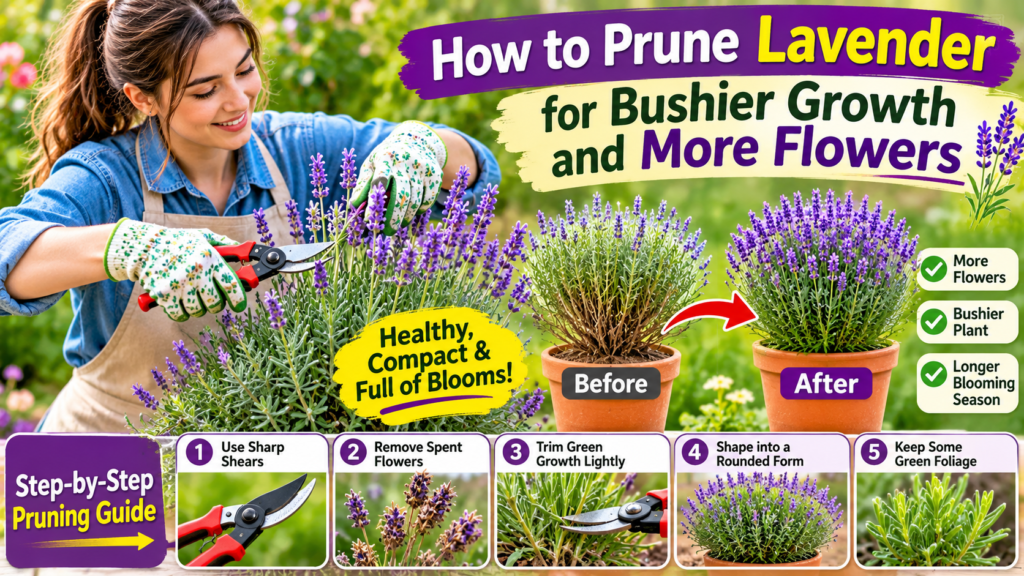
Pruning helps lavender maintain a compact shape, encourages branching, and reduces the development of an untidy woody structure.
Without regular pruning, many lavender plants gradually become woody and open in the center.
When Should You Prune Lavender?
The best pruning time depends on the variety and local climate.
- After flowering: Remove spent flower stems and lightly shape the plant.
- Early spring: Remove winter-damaged growth and lightly trim emerging shoots.
- Late autumn: Avoid severe pruning that could expose vulnerable stems before cold or wet weather.
Step-by-Step Pruning Method
- Use clean, sharp pruning shears.
- Remove dead and damaged flower stems.
- Identify the green leafy growth.
- Trim a small amount of green growth to maintain a rounded shape.
- Leave healthy foliage on the plant.
- Avoid cutting deeply into old, leafless woody stems.
Can You Cut Lavender Back to the Ground?
No. Severe cutting into old, bare wood is risky because lavender often produces little or no new growth from those sections.
Always leave healthy green growth above the woody base.
Expert tip: Regular light pruning is safer than allowing the plant to become overgrown and attempting a dramatic restoration later.
How to Make Lavender Bloom More Frequently
Lavender flowers best when its basic growing conditions are correct.
If your plant produces plenty of leaves but very few flowers, examine its sunlight, soil, watering, and pruning routine.
Ways to Encourage More Flowers
- Provide at least 6 hours of direct sunlight.
- Avoid excessive nitrogen fertilizer.
- Use well-draining soil.
- Maintain an appropriate watering routine.
- Prune lightly after flowering.
- Choose a variety suited to your climate.
- Avoid overcrowding plants.
Why Is My Lavender Not Flowering?
| Possible Cause | Practical Solution |
|---|---|
| Insufficient sunlight | Move the plant to a sunnier location |
| Excessive nitrogen | Reduce or stop unnecessary feeding |
| Overwatering | Improve drainage and adjust watering |
| Incorrect pruning | Avoid cutting into old woody stems |
| Young plant | Allow time for establishment |
| Unsuitable variety | Select a climate-appropriate cultivar |
Remember that flowering seasons differ by variety and climate. Some cultivars bloom earlier, while others produce flowers later in the growing season.
How to Propagate Lavender Successfully
You can grow new lavender plants from seeds or stem cuttings. Cuttings are generally more reliable when you want new plants that resemble the parent.
Method 1: Growing Lavender from Cuttings
- Select a healthy, non-flowering stem.
- Cut a section approximately 3–4 inches long.
- Remove the leaves from the lower portion.
- Insert the cutting into a moist, free-draining propagation mix.
- Keep it in bright light without harsh direct sun initially.
- Maintain light moisture without waterlogging.
- Once roots develop, gradually acclimate the cutting to stronger sunlight.
Avoid pulling the cutting frequently to check for roots. This can damage developing root systems.
Method 2: Growing Lavender from Seeds
Growing lavender from seeds takes patience.
Follow these steps:
- Fill a seed tray with a light seed-starting mix.
- Sow seeds according to the packet instructions.
- Cover them lightly with growing medium.
- Keep the medium slightly moist.
- Place the tray in a bright location.
- Transplant seedlings after they develop several true leaves.
Some lavender varieties germinate slowly and unevenly. Certain cultivars may also produce seedlings that differ from the parent plant.
Which Propagation Method Is Better?
| Method | Main Advantage | Main Disadvantage |
|---|---|---|
| Stem cuttings | Produces plants similar to the parent | Requires a healthy parent plant |
| Seeds | Allows you to grow many plants | Slower and less predictable |
For beginners who want to reproduce a favorite lavender plant, stem cuttings are usually the better option.
Common Lavender Plant Problems and How to Fix Them
Even though lavender is relatively easy to maintain, unsuitable growing conditions can cause serious problems.
The best solution is to identify the underlying cause rather than treating every symptom with fertilizer or additional water.
Problem 1: Lavender Leaves Turning Yellow
Possible causes:
- Overwatering.
- Poor drainage.
- Root damage.
- Nutrient imbalance.
- Natural aging of older foliage.
How to fix it:
Check the soil moisture first. If the soil stays wet, improve drainage and reduce watering. Inspect the roots if the plant continues declining.
Do not automatically add fertilizer. Yellow leaves do not always indicate nutrient deficiency.
Problem 2: Lavender Leaves Turning Brown
Possible causes:
- Severe underwatering.
- Excessive heat.
- Root rot.
- Winter damage.
- Old woody growth.
How to fix it:
Check whether the soil is excessively dry or consistently wet. Remove dead material and correct the underlying watering or drainage problem.
Problem 3: Lavender Wilting
Wilting can result from both insufficient water and damaged roots.
How to fix it:
- Check soil moisture.
- Inspect drainage holes.
- Protect the plant from extreme heat.
- Water if the root zone is genuinely dry.
- Avoid adding water if the soil is already saturated.
Problem 4: Lavender Not Growing
Possible causes:
- Poor sunlight.
- Root-bound container.
- Poor drainage.
- Unsuitable temperatures.
- Damaged roots.
How to fix it:
Move the plant into a brighter location, check its roots, and consider repotting if the container is too small.
Problem 5: Lavender Becoming Woody
Possible causes:
- Lack of regular pruning.
- Aging plant structure.
- Excessively shaded growth.
How to fix it:
Prune lightly while leaving green foliage intact. If most of the plant is bare and woody, taking cuttings to establish replacement plants may be more successful than attempting severe rejuvenation.
Problem 6: Lavender Flowers Turning Brown
Possible causes:
- Flowers reaching the end of their life cycle.
- Excessive moisture.
- Prolonged rain.
- Heat stress.
How to fix it:
Remove spent flower stems and improve airflow. Avoid wetting the foliage unnecessarily.
Common Pests and Diseases That Affect Lavender
Lavender is not especially attractive to many common garden pests, but it can still experience insect and disease problems.
| Pest or Disease | Symptoms | Recommended Action |
|---|---|---|
| Aphids | Small insects on soft growth | Wash off with a gentle stream of water |
| Whiteflies | Small white insects around foliage | Monitor and use appropriate insecticidal soap if needed |
| Spittlebugs | White frothy material on stems | Remove the foam and inspect the plant |
| Root rot | Mushy roots and declining foliage | Correct drainage and remove severely damaged roots |
| Leaf spot | Discolored or spotted foliage | Remove affected leaves and improve airflow |
How to Prevent Lavender Diseases
- Avoid waterlogged soil.
- Provide adequate spacing.
- Water at soil level.
- Remove dead and infected plant material.
- Disinfect pruning tools.
- Avoid excessive fertilizer.
Root rot is particularly important because it can destroy a plant before obvious symptoms appear above the soil.
University gardening guidance consistently emphasizes full sunlight, good drainage, and appropriate airflow as key preventive measures. RHS+2
Seasonal Lavender Plant Guide
Lavender needs slightly different attention throughout the year.
Your local climate and variety should determine the exact timing of planting, watering, and pruning.
| Season | Care Tasks |
|---|---|
| Spring | Inspect new growth, remove dead stems, and plant new lavender |
| Summer | Monitor moisture, enjoy flowering, and remove spent blooms |
| Autumn | Complete light post-flowering pruning and reduce watering as temperatures fall |
| Winter | Avoid waterlogged soil and protect varieties sensitive to cold |
Spring Care
Spring is a good time to inspect your lavender plant.
- Remove dead or damaged growth.
- Check for overcrowded roots.
- Refresh the potting mix if necessary.
- Increase watering gradually as growth resumes.
- Plant new lavender after suitable weather arrives.
Summer Care
Summer is often the main flowering season for many lavender varieties.
- Provide adequate sunlight.
- Check containers regularly.
- Avoid unnecessary fertilizer.
- Harvest flowers when appropriate.
- Maintain airflow around the plant.
Autumn Care
After flowering, lightly shape the plant if its variety and climate allow.
Avoid severe pruning late in the season, especially in regions with cold or wet winters.
Winter Care
Lavender dislikes remaining in cold, saturated soil.
Keep container plants protected from excessive winter rain, and avoid watering unless the growing medium needs it.
Can You Grow Lavender Indoors?
Yes, lavender can grow indoors, but it is generally easier to maintain outdoors.
Indoor environments often lack sufficient sunlight and airflow. These conditions can lead to weak growth and limited flowering.
Indoor Lavender Care Requirements
Light: Place the plant near a bright, sunny window where it receives approximately 5–6 hours or more of direct sunlight.
Watering: Allow the growing medium to dry sufficiently between watering sessions.
Soil: Use a gritty, well-draining potting mix.
Air circulation: Keep the plant away from stagnant, humid corners.
Temperature: Avoid placing the plant directly beside heating or cooling vents.
Why Is Indoor Lavender Struggling?
If indoor lavender becomes leggy, produces few flowers, or develops yellow leaves, check its lighting and drainage first.
A bright window may still provide insufficient light, especially during shorter winter days. A suitable grow light can help when natural sunlight is inadequate.
My recommendation: If you want abundant flowers and a stronger fragrance, grow lavender outdoors whenever your climate permits.
How to Grow Lavender in Hot and Humid Climates
Lavender originates from Mediterranean-type growing conditions. It generally prefers sunshine, relatively dry air, and soil that drains quickly.
Hot and humid climates can make cultivation more challenging, particularly during periods of heavy rainfall.
Practical Tips for Hot Regions
- Select a variety suited to warmer conditions.
- Grow lavender in raised beds or containers if garden soil retains water.
- Provide morning sunlight and protection from extreme afternoon heat when necessary.
- Use coarse, free-draining potting material.
- Space plants to encourage airflow.
- Avoid frequent watering during humid weather.
- Protect container roots from excessive heat.
Which Lavender Varieties Are Worth Considering?
Some Spanish lavender varieties and selected heat-tolerant cultivars may perform better in warmer locations.
Goodwin Creek lavender is another option worth researching for warm climates. However, performance depends on local humidity, drainage, and seasonal temperatures.
Do not assume that a variety advertised as heat-tolerant will automatically tolerate tropical humidity or waterlogged soil. UC Agriculture and Natural Resources+2
How to Harvest and Store Lavender Flowers
Lavender flowers are useful for dried arrangements, decorative sachets, potpourri, and certain culinary preparations.
Harvesting at the correct stage helps preserve their fragrance.
When Should You Harvest Lavender?
For dried flower stems, harvest when the buds are developed and the first flowers are beginning to open.
For a stronger floral display in the garden, leave some flower stems untouched.
Step-by-Step Harvesting
- Choose a dry morning after any surface moisture has evaporated.
- Select healthy flower stems.
- Cut stems with clean scissors or pruning shears.
- Gather small bundles.
- Tie the stems loosely.
- Hang them upside down in a dark, dry, ventilated location.
- Store fully dried flowers in an airtight container away from direct sunlight.
What Can You Do With Lavender Flowers?
- Make decorative dried-flower arrangements.
- Prepare scented sachets.
- Add fragrance to potpourri.
- Use suitable culinary varieties in recipes.
- Collect seeds from mature flower heads.
Only use correctly identified, food-safe lavender for culinary purposes. Use flowers sparingly because their flavor can be strong.
Common Mistakes to Avoid When Growing Lavender
Even experienced gardeners sometimes struggle with lavender because they apply care routines designed for moisture-loving plants.
Here are the mistakes most likely to affect growth.
| Common Mistake | Why It Causes Problems | Better Approach |
|---|---|---|
| Watering every day | Keeps roots excessively wet | Check soil before watering |
| Growing in heavy clay | Restricts drainage and airflow | Use raised beds or containers |
| Providing too little sunlight | Reduces flowering and weakens growth | Provide at least 6 hours of direct light |
| Using excessive fertilizer | Encourages leafy, weak growth | Feed only when necessary |
| Pruning into old wood | Can prevent regrowth | Leave healthy green growth |
| Crowding plants | Reduces airflow | Allow adequate spacing |
| Using pots without drainage | Traps excess water | Choose containers with drainage holes |
| Ignoring climate suitability | Causes repeated heat or humidity stress | Choose an appropriate cultivar |
The most important lesson: Lavender usually needs better drainage and more sunlight, not more fertilizer and water.
Practical Lavender Care Checklist
Use this checklist to maintain a healthy lavender plant.
- Choose a suitable lavender variety.
- Provide at least 6 hours of direct sunlight.
- Use loose, well-draining soil.
- Select a pot with drainage holes if growing in containers.
- Water according to soil moisture.
- Avoid excessive fertilizer.
- Maintain good airflow.
- Remove dead and damaged stems.
- Prune lightly without cutting into old wood.
- Inspect leaves and stems regularly.
- Adjust care according to seasonal weather.
A simple weekly inspection can help you identify problems before they become serious.
Frequently Asked Questions About Lavender Plant
1. Is lavender easy to grow for beginners?
Yes. Lavender is relatively easy to grow when it receives enough sunlight and grows in well-draining soil. Beginners should focus on avoiding overwatering.
2. How much sunlight does lavender need daily?
Lavender generally needs at least 6 hours of direct sunlight daily. Around 6–8 hours is a useful target for healthy growth and flowering.
3. How often should I water lavender?
Water newly planted lavender regularly while it establishes. Mature garden plants need much less water. Container plants require more frequent checks, especially during hot weather.
4. Does lavender prefer wet or dry soil?
Lavender prefers soil that drains quickly and dries between watering sessions. Permanently wet soil can cause root rot.
5. Can lavender grow in pots?
Yes. Lavender grows well in containers when the pot has drainage holes and contains a gritty, well-draining growing medium.
6. Why is my lavender plant dying?
Common causes include overwatering, root rot, poor drainage, insufficient sunlight, and unsuitable growing conditions. Check the roots and soil before changing your watering routine.
7. Why is my lavender not flowering?
Insufficient sunlight, excessive nitrogen, incorrect pruning, and unsuitable growing conditions can reduce flowering.
8. Should I cut off dead lavender flowers?
Yes. Removing spent flower stems helps maintain a tidy appearance and may encourage additional flowering, depending on the variety.
9. Does lavender need fertilizer?
Usually not. Lavender grows well in relatively low-fertility soil. Excessive fertilizer can encourage leafy growth instead of flowers.
10. Can lavender survive winter?
Some varieties, especially English lavender, tolerate cold weather better than others. Winter survival also depends on drainage and local temperatures.
11. Can lavender grow indoors all year?
It can, but maintaining enough direct light and airflow is challenging. A sunny window or supplemental grow light may be necessary.
12. How long does a lavender plant live?
Many garden lavenders can live for several years. Their lifespan depends on variety, climate, drainage, and pruning. Some plants gradually become woody and less productive as they age.
13. What is the best soil pH for lavender?
A soil pH around 6.5–7.5 is generally suitable. Good drainage is more important than making small pH adjustments when the soil is already within a suitable range.
14. Can lavender grow from cuttings?
Yes. Healthy non-flowering stem cuttings can develop roots in a suitable propagation medium. This is a useful way to produce plants similar to the parent.
15. Does lavender attract bees and butterflies?
Yes. Its flowers provide nectar and pollen for various pollinators, making lavender a useful addition to pollinator-friendly gardens.
Conclusion: Grow Healthy Lavender With the Right Care
Successful lavender plant care does not require complicated gardening routines. It requires the right growing environment and consistent attention to a few important details.
Give lavender plenty of sunlight, use well-draining soil, avoid excessive watering, and prune carefully to maintain its shape.
Choose a suitable variety for your climate, particularly if you experience extreme summer heat or high humidity. Container growing can make drainage and placement easier to manage.
Most importantly, learn to recognize what your plant needs instead of following a rigid watering or fertilizing schedule.
With the right conditions, lavender can reward your garden with fragrant foliage, beautiful purple flowers, and a welcoming environment for pollinators.